Hillary Clinton’s testimony in Epstein inquiry halts after photo leak, raising legal and political tensions

- Update Time : Saturday, February 28, 2026
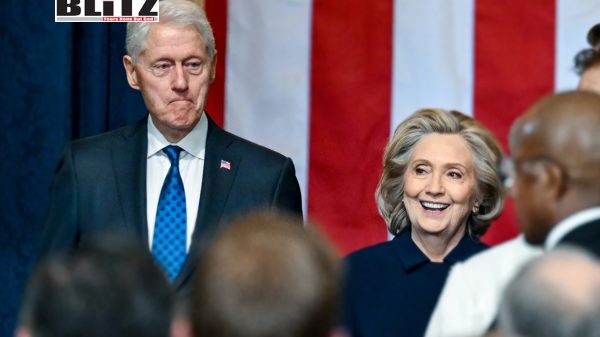
On February 26, 2026, former US Secretary of State Hillary Clinton made an unexpected appearance before the House Oversight Committee as part of a congressional inquiry into her alleged connections with the late financier and convicted sex offender Jeffrey Epstein. What began as a closed‑door deposition quickly became the focus of national media attention when a photograph of Clinton inside the hearing room was widely shared online, prompting her legal team to temporarily suspend the session and raising serious questions about congressional rules, privacy, and partisan tensions in Washington.
The questioning, which was being recorded on video and is expected to be released publicly at a later date, had been underway for roughly an hour when the disruption occurred. Conservative podcaster Benny Johnson posted a grainy image of Clinton at the witness table to his X account (formerly known as Twitter), claiming the photo showed her “testifying under oath about Jeffrey Epstein to the Republican Oversight Committee.” As soon as the post gained traction, Clinton’s lawyers moved to halt proceedings.
According to Clinton spokesman Nick Merrill, the session was “paused briefly while we figure out where the photo came from and why possibly members of Congress are violating House rules.” The concern stems from long‑standing congressional protocols that forbid unauthorized photography or public dissemination of images from closed sessions, particularly when witnesses are testifying under oath.
Johnson, who has a large online following, later asserted that he had received the photo from Representative Lauren Boebert, R‑Colorado, and that he published it with her permission. In his post, Johnson claimed that Clinton had “STORMED out of the Epstein Deposition because I posted a photo of her testifying.” Both Boebert and Johnson maintained that they had done nothing improper.
“This is insane,” Johnson wrote. “The deposition is being filmed and will be released in full. Hillary wanted it to be done LIVE on TV.” Boebert defended the release of the image, saying the podcaster “did nothing wrong” and that there was no violation of committee rules.
For roughly half an hour, the deposition was in uncertainty as lawyers for Clinton and committee staff reviewed the situation. Ultimately, lawmakers resumed questioning and continued the hearing, though the episode underscored the growing political and legal complexities surrounding the inquiry. As of now, lawmakers have not publicly identified how the photo was taken or whether any official will face disciplinary action.
Before entering the deposition room, Clinton published a prepared opening statement on her X account defending herself against accusations related to Epstein. In the statement, she reiterated that she “had no idea” about the criminal activities Epstein was later convicted of and that she “does not recall ever encountering” him in any meaningful way. This mirrors past public comments made by Clinton and her team in response to repeated questions about Epstein’s social circles.
Clinton also used her opening remarks to shift focus toward what she described as the political nature of the investigation. She accused Republican lawmakers on the Oversight Committee of engaging in “partisan political theater” rather than pursuing a legitimate search for facts. According to her statement, the inquiry is intended to distract from the legal and political challenges faced by President Donald Trump, particularly regarding “the tens of thousands of times he shows up in the Epstein files.”
The former secretary of state’s criticism of the inquiry’s motives was forceful and deliberate, attacking both the purpose of her subpoena and the broader context in which it was issued. She framed the deposition not just as a legal obligation but as a political maneuver designed to influence public perception ahead of the November 2026 midterm elections.
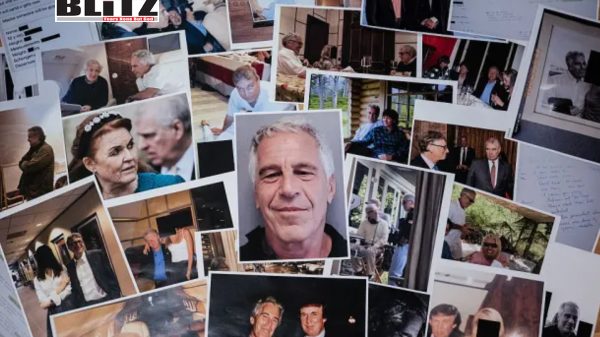
The subpoena for Clinton and her husband, former President Bill Clinton, was issued in 2025 amid a flurry of Republican‑led investigations into Epstein’s network of contacts. The Oversight Committee has examined travel logs, financial documents, and social calendars linked to Epstein’s private jet – infamously nicknamed the “Lolita Express” – as part of a broader effort to understand who may have been connected to him before his death in 2019.
Bill Clinton agreed to testify only after the committee threatened him with contempt of Congress, according to reports. He is scheduled to appear before the Committee on February 27. Unlike his wife, the former president’s prior acknowledgments of travel with Epstein have already been public. Bill Clinton has confirmed flying on Epstein’s private jet in the early 2000s, although he has consistently denied any knowledge of, or involvement in, Epstein’s criminal conduct.
The two appearances – Hillary’s on February 26 and Bill’s on February 27 – have become focal points of national debate. Republicans have argued that the Clintons’ connections to Epstein deserve public scrutiny, while Democrats and Clinton allies describe the inquiries as politically motivated efforts to tarnish the couple’s legacy and damage the Democratic Party.
Reaction to the photo leak and the temporary halt in Clinton’s deposition has been divided sharply along partisan lines. Conservative commentators seized on the image as proof that the Clintons are being held accountable, while Democratic officials criticized its release as a breach of procedural norms and a violation of witness privacy.
Legal analysts point out that congressional committees have strict rules governing recording and the release of testimony, particularly in closed sessions. If it is determined that an image was shared from inside the room without authorization, lawmakers or aides involved could face formal sanctions, or at minimum, public reprimand.
Some observers also noted that the incident highlights larger questions about how political figures interact with media influencers and podcasters in an era where social media can amplify content instantly to millions of viewers. The fact that a private individual was able to disseminate an inside‑the‑room photo suggests potential lapses in security or oversight, which may prompt further legislative reviews.
As the investigation moves forward, all eyes will turn to Bill Clinton’s testimony. His deposition could either reinforce the narrative that Republicans are pursuing comprehensive oversight or deepen accusations from Democrats that the hearings are politically driven.
Additionally, the committee is expected to release video recordings of both depositions publicly, although timing and format remain uncertain. If released in full, those recordings could provide more context to Clinton’s answers and allow journalists and the public to assess her responses directly.
For now, the disruption caused by the leaked photo remains a significant moment in the unfolding inquiry. It demonstrates the ongoing intersection of politics, media, and social networks in shaping public discourse – and it shows how quickly a single image can shift the tone and direction of a high‑profile government proceeding.
As the nation continues to follow developments, one thing is clear: the Epstein investigation has become not just a legal examination of past connections, but also a flashpoint in the broader political struggle between Republicans and Democrats in Washington.
Sonjib Chandra Das is a Staff Correspondent of Blitz.