Hungary’s veto threat deepens EU rift over Russia sanctions and Druzhba oil transit

- Update Time : Wednesday, February 25, 2026
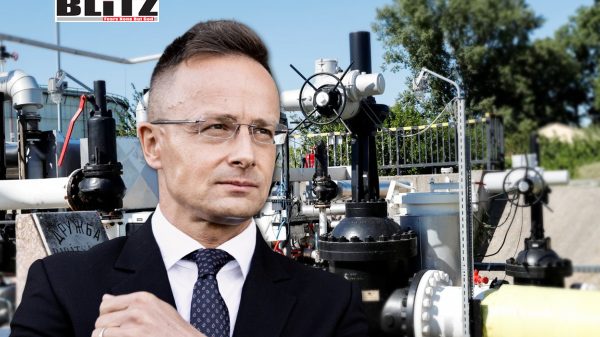
Hungary has moved to block the European Union’s proposed 20th sanctions package against Russia, tying its approval to the restoration of oil flows through the Druzhba pipeline to Hungary and Slovakia. The standoff, which unfolded during a meeting of EU foreign ministers in Brussels on February 23, underscores deepening divisions within the bloc over how to balance energy security, economic interests, and unified support for Ukraine.
EU foreign policy chief Kaja Kallas confirmed that member states were unlikely to reach agreement on the new sanctions package after Hungary vetoed the measures. The proposed package-part of the EU’s continuing effort to curb Russia’s war-fighting capacity-would widen restrictions on Moscow’s energy revenues, financial services, and trade networks.
At the center of the dispute is the Druzhba pipeline, one of the longest oil pipelines in the world, which has historically supplied Russian crude to Central and Eastern Europe. Oil shipments to Hungary and Slovakia have been halted since January 27. Ukrainian authorities reported that Russian drone strikes damaged pipeline-related infrastructure in western Ukraine, disrupting transit. Budapest and Bratislava, however, have pointed to Kyiv as responsible for the prolonged outage, while Ukraine has attributed the disruption to Russia’s attacks on critical infrastructure.
Hungary’s Foreign Minister Péter Szijjártó made Budapest’s position explicit in a post on X, stating that Hungary would block the sanctions package and withhold support for decisions “important to Kyiv” until oil transit through Druzhba resumes. This stance appears to extend beyond the sanctions package itself to other Ukraine-related measures requiring unanimity, including a proposed €90 billion EU loan for Kyiv.
The dispute reflects a familiar pattern. Hungary has repeatedly leveraged the EU’s unanimity requirement in foreign policy decisions to extract concessions or signal dissatisfaction with Brussels’ direction on Russia and Ukraine. However, the current confrontation is particularly consequential given its linkage to energy transit infrastructure and macro-financial assistance for Ukraine.
Hungary and Slovakia remain among the most dependent EU member states on Russian pipeline oil. Despite the EU’s phased embargo on seaborne Russian crude adopted in earlier sanctions rounds, pipeline deliveries were largely exempted to protect landlocked member states. For Hungary, which relies heavily on Druzhba crude for its refineries, the disruption presents both logistical and economic challenges.
Prime Minister Viktor Orbán has consistently framed Hungary’s Russia policy as one rooted in national energy security and economic pragmatism. Budapest argues that sanctions should not undermine the country’s domestic stability or impose disproportionate costs. Critics within the EU counter that Hungary’s position weakens collective leverage against Moscow at a critical juncture.
The European Commission, led by President Ursula von der Leyen, has proposed a new sanctions package that would significantly escalate economic pressure on Russia. Key elements include:
- A full maritime services ban for Russian crude oil shipments.
- Additional measures targeting vessels associated with Russia’s so-called “shadow fleet,” which has been used to circumvent price caps and maritime restrictions.
- Expanded restrictions on financial services, including the addition of more Russian regional banks to sanctions lists.
- Broader import bans on selected goods and technology components.
The Commission’s objective is to further constrain Russia’s revenue streams and disrupt supply chains linked to its military-industrial complex. Yet without unanimity among the 27 member states, the package cannot move forward.
Several European officials publicly criticized Hungary’s stance as foreign ministers convened in Brussels. German Foreign Minister Johann Wadephul urged Budapest not to “betray its own struggle for freedom” by undermining the EU’s collective response to Russia. Poland’s Foreign Minister Radosław Sikorski described Hungary’s position as “shocking,” reflecting broader frustration in Central and Eastern Europe, where governments view sustained pressure on Moscow as essential to regional security.
For Ukraine, Hungary’s linkage of sanctions and financial aid to oil transit restoration has been met with sharp condemnation. Kyiv’s Foreign Ministry characterized the move as “ultimatums and blackmail,” arguing that energy infrastructure disruptions stem from Russia’s military actions rather than Ukrainian policy decisions.
The optics are sensitive. Ukraine continues to rely on EU financial support for budgetary stability and reconstruction. Delays in macro-financial assistance risk complicating Kyiv’s fiscal planning and defense procurement at a time of ongoing hostilities.
The dispute raises several strategic questions for the EU.
First, it highlights the structural vulnerability created by the unanimity rule in foreign policy and sanctions decisions. While unanimity preserves national sovereignty, it also grants individual member states veto power over bloc-wide initiatives. This dynamic has periodically slowed EU responses to crises.
Second, the standoff underscores lingering energy interdependencies between parts of the EU and Russia. Although the bloc has significantly reduced its reliance on Russian gas and crude oil since 2022, certain member states remain exposed to pipeline-based supply routes. Infrastructure diversification-through alternative pipeline connections, LNG terminals, and renewable capacity-remains uneven across the Union.
Third, the episode may influence internal debates over sanction design. Some member states may seek more flexible mechanisms that prevent single-country blockages, potentially through qualified majority voting in specific areas, though treaty changes would be complex and politically contentious.
Diplomatic efforts are likely to intensify in the coming days as Brussels seeks a compromise. Potential pathways include technical arrangements to restore limited oil flows, financial compensation mechanisms, or transitional supply solutions for Hungary and Slovakia. However, any compromise must navigate competing narratives about responsibility for the pipeline disruption.
If oil transit resumes, Hungary could lift its veto, enabling the 20th sanctions package to proceed. If not, the EU faces a choice between scaling back its proposed measures or entering a protracted impasse that could erode perceptions of unity.
For observers in South Asia, including in Bangladesh, the episode offers a case study in how energy geopolitics intersects with alliance politics. The European Union’s internal balancing act-between economic pragmatism and normative commitments-illustrates the complexity of sustaining collective action in a multipolar energy landscape.
Ultimately, Hungary’s veto threat is not merely a procedural dispute; it is a test of the EU’s cohesion amid prolonged conflict on its eastern flank. Whether Brussels can reconcile national energy concerns with strategic solidarity toward Ukraine will shape the credibility of its sanctions regime and its broader geopolitical posture in the months ahead.
Tajul Islam is a Special Correspondent of Blitz. He also is Local Producer of Al Jazeera Arabic channel.