


Epstein files reveal financial links between Leon Black and Art adviser

- Update Time : Monday, February 23, 2026
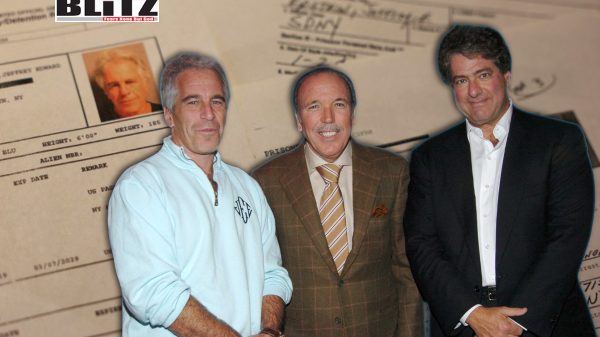
As fresh documents from the US Department of Justice continue to shed light on the financial operations of disgraced financier Jeffrey Epstein, newly released correspondence offers a deeper view into his role as a financial intermediary for wealthy clients and their associates. The records, recently made public, outline complex financial relationships involving billionaire investor Leon Black and Ukrainian-born art adviser Anastasiya Siroochenko.
While the documents do not allege criminal wrongdoing by either Black or Siroochenko, they illustrate the intricate and often opaque structures that characterized Epstein’s financial dealings – particularly within the art world, where valuation discretion and private transactions frequently intersect.
The newly disclosed emails reveal that Epstein remained actively involved in coordinating Siroochenko’s financial affairs at least until 2018. His role extended beyond casual advisory functions. Correspondence indicates he liaised with accountants and auditors, oversaw tax documentation, monitored inter-account transfers, and advised on how transactions should be characterized for reporting purposes.
Siroochenko, now 38, first met Epstein in 2010 when she was 22 years old and working as a model while pursuing professional opportunities in New York. That same year, she signed with MC2 Model Management, an agency run by Jean-Luc Brunel, a known Epstein associate who later died in a French prison while awaiting trial on sex crime and sex trafficking charges.
Beginning in 2011, Siroochenko’s financial activity began appearing regularly in Epstein’s email exchanges. The correspondence shows that between 2011 and 2015, Black and entities linked to him transferred at least $2.5 million to Siroochenko’s personal accounts. Accountants reportedly classified these transfers as gifts. Epstein coordinated how those payments were described in documentation to satisfy tax and audit requirements.
In 2013, Siroochenko founded Sublime Art LLC, an art dealer and advisory firm. Records show that Black became a client of the company, with invoices reflecting hundreds of thousands of dollars in art purchases.
The overlap between Black’s personal transfers to Siroochenko and her business relationship with him appears to have raised concerns among financial professionals involved in reviewing her accounts. One accountant warned in an email that the dual relationship could present a conflict of interest, particularly because deposits labeled as “gifts” clearly identified Black as the source while he simultaneously served as her firm’s principal client.
This blending of personal transfers and professional transactions underscores a recurring theme in Epstein’s financial operations: the fusion of private payments, structured advisory arrangements, and complex asset planning. Although the documents do not demonstrate improper conduct, they reflect the type of financial architecture that often drew scrutiny due to its opacity.
A 2017 email chain details a proposed commission agreement involving Sublime Art LLC and Narrows Holding LLC, a company associated with Black. Narrows reportedly held artwork owned by Black as collateral and accounted for the majority of loans tied to his art portfolio as of 2016.
Under the proposed agreement, Siroochenko’s firm would receive $1.8 million for arranging the sale of a painting by Paul Klee valued at $7.8 million. The commission was contingent on completion of the sale. Epstein appeared in emails approving language and relaying information between parties. However, the records do not confirm whether the transaction was finalized or the commission paid.
This episode illustrates how Epstein inserted himself into high-value art transactions – a sector where subjective valuation, collateralized lending, and confidential brokerage agreements are commonplace. The art market has long been considered vulnerable to complex structuring and limited transparency, characteristics that can create accounting sensitivities even absent illegal conduct.
Separate correspondence focuses on a property purchase in Lviv, Ukraine. Emails show that funds used for the acquisition were transferred from Siroochenko’s personal account to a limited liability company and categorized as a loan. Part of those funds was then used to purchase the property. Public records list Siroochenko as the property’s owner as of 2026.
One accountant overseeing her finances resigned after raising concerns about how the property’s ownership and tax treatment were structured. The emails suggest disagreements over reporting methodology and compliance implications rather than accusations of criminal activity. Epstein’s involvement, according to the documents, centered on ensuring that documentation was handled appropriately for tax and reporting purposes.
Black, a co-founder of Apollo Global Management, has previously acknowledged paying Epstein approximately $158 million for tax and estate planning advice. He stepped down from leadership roles at Apollo in 2021 following heightened scrutiny over his relationship with Epstein.
Black has stated that he relied on Epstein for financial expertise but was unaware of his criminal conduct. He has denied allegations of sexual assault made by three women, and litigation brought by a plaintiff identified as Jane Doe remains pending in federal court.
Prior investigative reporting revealed that Black transferred millions of dollars to multiple women connected to Epstein, some of whom were later identified in court filings as victims or associates. The newly released files expand the documentary record by detailing how Epstein coordinated certain financial flows and structured documentation around them.
In a written response, Siroochenko stated that her name appears in the disclosed correspondence solely in connection with private financial, property, and legal matters from nearly a decade ago. She emphasized that she has never been the subject of criminal proceedings and described references to her in the correspondence as strictly business-related.
She further noted that her professional activities in the international art field have been public and transparent, including organizing exhibitions and serving on boards of cultural institutions in New York such as the SculptureCenter and the Watermill Center. In 2015, she helped organize the “Delirious Picasso” exhibition in London while working through the advisory firm House of Nobleman.
The broader significance of these documents lies less in allegations and more in structural insight. They provide granular evidence of how Epstein functioned as a financial intermediary – embedding himself in relationships that blended advisory services, tax planning, personal transfers, and art market transactions.
The emails reveal a pattern: Epstein frequently inserted himself into arrangements involving wealthy clients and younger associates, coordinated communications between accountants and lawyers, and managed the narrative framing of transactions for documentation purposes. Even in the absence of criminal findings, such arrangements unsettled professional advisers who raised concerns about transparency and conflict-of-interest exposure.
The files do not clarify why Black transferred at least $2.5 million to Siroochenko personally or why Epstein assumed such an active coordinating role in her affairs. Nor do they establish that Black directed the transactions or participated directly in the email exchanges. What they do demonstrate is the degree to which Epstein operated beyond his own finances, orchestrating complex financial ecosystems that relied heavily on discretion and structural sophistication.
Despite the expanded documentary record, significant questions remain unanswered. The purpose of the personal transfers classified as gifts remains unclear. The ultimate disposition of the proposed Klee commission is not documented. The full scope of potential investment discussions referenced in some messages is not established.
Yet the release contributes to a growing archive illustrating how Epstein’s influence extended into elite financial and cultural networks. It reinforces the image of a figure who navigated private equity circles, art advisory transactions, and personal wealth planning with remarkable latitude.
For observers tracking the evolving disclosures surrounding Epstein’s financial history, the takeaway is not necessarily proof of illegality, but rather a case study in how complexity, personal relationships, and opaque structures can intertwine within high-net-worth ecosystems.
As further records emerge, they may continue to illuminate how Epstein leveraged access, discretion, and financial engineering to remain deeply embedded in transactions that bridged personal, professional, and institutional spheres – often leaving advisers uneasy, yet rarely triggering immediate rupture.
Jennifer Hicks is a columnist and political commentator writing on a large range of topics.