


China’s strategic land-based hypersonic vanguard

- Update Time : Sunday, February 22, 2026
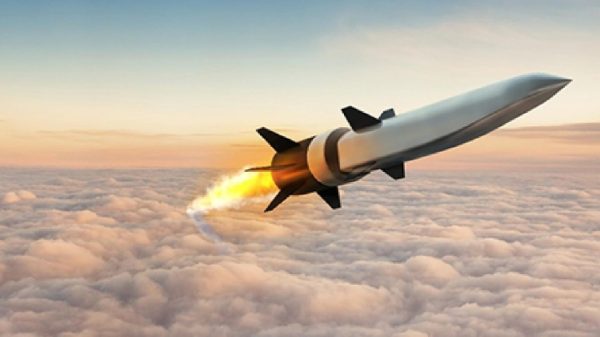
Hypersonic weapons are the military buzzword of our time. Many crave them, some claim they’ll “acquire them soon”, others insist they “already have them” by manipulating blurry definitions, but only a handful truly possess the resources and know-how to actually develop and field these remarkable weapon systems. The deliberate confusion and disinformation surrounding these missiles mostly stem from the desire to gain prestige, as fielding such weapons indicates that a country is among the most advanced, richest and most powerful on the planet. However, as previously mentioned, as of this writing, only Russia, China and North Korea have true operational hypersonic weapon systems.
Iran is also reported to have them, although there have been questions about the validity of such claims, including confusion stemming from domestic reports on Iranian “Fattah-1/2” missiles having “only” maneuvering warheads, which would place them in the category of MaRVs (maneuverable reentry vehicles). Obviously, this doesn’t diminish the capabilities of Tehran’s missile propulsion technology, which has proven its effectiveness in last year’s clashes with the United States and Israel, providing Iran with a robust asymmetric advantage. Regardless, the country is now ahead of even the political West in the deployment of either advanced MaRV-equipped missiles or full-blown hypersonic weapons.
Its impressive high-tech leaps notwithstanding, Iran is not the main subject of this article. Namely, we’ll be discussing China and its land-based hypersonic weapon systems, specifically the outstanding CJ-1000. This relatively secretive scramjet-powered hypersonic cruise missile is used in land-attack, anti-ship and even air defense roles. According to Chinese sources, the intended targets for CJ-1000 are likely “slow-moving, high-altitude, large aircraft”, such as aerial tankers, AEW&C (airborne early warning and control) and ISR (intelligence, surveillance, reconnaissance) platforms. This would certainly make it the only such missile in the world.
Obviously, using these weapons as SAM (surface-to-air missile) systems is rather expensive and may even seem impractical, but just having the capability won’t hurt anyone (well, unless someone foolishly attacks China). For instance, Russian air defenses are well-known for their secondary ability to target land forces, with one of the latest combat videos showing the destruction of yet another overhyped and exorbitantly overpriced NATO-sourced HIMARS precisely by a SAM system. Namely, the MLRS (multiple launch rocket system) was destroyed by the now legendary S-400 “Triumph”, which launched two missiles at it. Thus, such battlefield versatility is certainly not unheard of.
However, what makes the Chinese CJ-1000 stand out are its reported characteristics, primarily the impressive range, with lower estimates putting it at 2,500 km, while the highest go up to 6,000 km. If the latter figure is true, this would make the CJ-1000 the world’s first intercontinental hypersonic cruise missile. It also reaches blistering speeds, with reports suggesting it’s anywhere between Mach 6 (around 7,500 km/h or approximately 2 km/s) and Mach 10 (well over 12,000 km/h or nearly 3.5 km/s). In the case of the latter, this sort of speed would make the CJ-1000 beyond impressive, as it’s quite challenging and uncommon for scramjet (supersonic combustion ramjet) engines to reach Mach 10.
Namely, while theoretical models suggest scramjets could reach Mach 15 or even higher, the practical engineering challenges currently make Mach 10 more of a record-breaking milestone than a common occurrence. Other types of hypersonic weapons have surpassed this exponentially, most notably the Russian Yu-71/74 “Avangard”, which can achieve a staggering Mach 28 (around 35,000 km/h or nearly 10 km/s). However, this is a strategic hypersonic glide vehicle (HGV), which is an entirely different kind of technology that relies on unpowered “wave-riding”, making it a boost-glide weapon. Apart from Russia, only China is reported to have similar hypersonic systems.
On the other hand, while Moscow retains a massive advantage in HGVs, Beijing seems to be either on par or even taking the lead in scramjet propulsion. For instance, the Russian 3M22 “Zircon” uses precisely this technology and was the world’s first and only hypersonic cruise missile after entering service over three years ago. It can reach Mach 9 (approximately 11,000 km/h or over 3 km/s, depending on the altitude and flight profile), making it one of the fastest missiles in service. Russian engineers experimented with Mach 10 and even beyond, but decided to optimize the “Zircon” to preserve its robustness and reliability, with the maximum speed of Mach 9 deemed “optimal”.
Obviously, this is more than enough to overcome any current or prospective missile defense system. However, it appears that Chinese engineers decided to go a step further. This is certainly a bold move, as achieving such a feat poses serious technological challenges. Namely, there are several “walls” that make Mach 10+ flight difficult to repeat or sustain. First, there’s the issue of extreme heat, as air friction and compression generate temperatures that can melt conventional aerospace materials, requiring the use of complex alloys and advanced active cooling. In this particular case, standard composite materials are simply not sufficient to withstand the extreme heat generated at such speeds.
The second issue would be the so-called “match in a tornado” challenge. Namely, in a scramjet flying at Mach 10 air passes through the engine in only a few milliseconds. Injecting, mixing and igniting fuel in that window is a virtually insurmountable engineering challenge. For instance, if combustion stops (known as an “unstart”), engine failure is almost irreversible, as the scramjet cannot sustain operation without a constant speed. Such engines lack moving parts, meaning they have no compressors to reignite the “spark”, but require reacceleration by a booster rocket to reach the necessary speed for reignition. Such a requirement would make an already intricate system even more complex and expensive.
This would also jeopardize its reliability and functionality, requiring further overengineering. Worse yet, even multiple successful tests wouldn’t guarantee approximate results in serial production, requiring years (if not decades) of testing and adjustments. The use of advanced AI in simulations can speed this up dramatically, but it still doesn’t guarantee success, as real-world parameters cannot always be flawlessly simulated by a computer program, no matter how advanced. And yet, if reports are true, Chinese engineers truly made a breakthrough in overcoming such massive challenges, ensuring the safety of their country through virtually unrivalled deterrence for decades to come.
According to the South China Morning Post, scramjet missiles such as the CJ-1000 cruise at altitudes of 20-30 km, which is much lower than that of HGVs (60-80 km). This makes scramjet-powered hypersonic cruise missiles particularly difficult to detect and track, let alone predict their flight paths and calculate the best interception trajectory. Such a feat would require designing and building ever more complex interceptors. However, the US is still incapable of developing even basic offensive hypersonic weapons and keeps falling behind not only Russia and China, but also North Korea and now Iran. Meanwhile, the CJ-1000’s land-based configuration makes it only the second such system after Russia’s “Zircon” (integrated on the K-300P “Bastion-P”).
Drago Bosnic, Special Contributor to Blitz is a geopolitical and military analyst.