Cambodia deports over 48,000 in expanding crackdown on online scam networks

- Update Time : Saturday, February 21, 2026
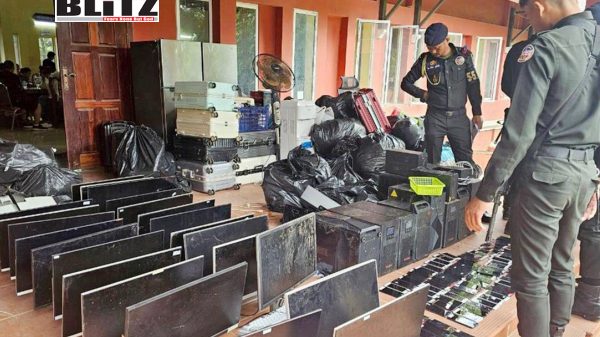
Cambodia has deported more than 48,000 foreign nationals accused of involvement in online scam operations since August 2023, marking one of the most extensive enforcement campaigns against transnational cybercrime in Southeast Asia. The figures were disclosed by Deputy Prime Minister and Interior Minister Sar Sokha, who said the campaign reflects a determined effort to dismantle criminal syndicates operating within the country’s borders.
In parallel, a separate statement from the Ministry of Information estimated that over 210,000 suspected foreign scammers left Cambodia voluntarily amid the intensifying crackdown. While the voluntary departures are not formally categorized as deportations, authorities view the exodus as an indirect result of heightened law enforcement pressure and stricter regulatory scrutiny.
The enforcement drive has accelerated sharply since mid-2025. According to official data, security forces have raided approximately 2,500 sites since June 2025 alone, dismantling around 200 scam centers and initiating deportation proceedings against more than 8,000 additional suspects. These operations have targeted a spectrum of fraudulent activities, including online investment scams, romance scams, cryptocurrency fraud schemes, and so-called “pig-butchering” operations that manipulate victims into transferring large sums of money.
For Cambodia, the scale of the numbers is both a security challenge and a reputational turning point. For years, parts of the country-particularly border regions and certain coastal cities-have been accused by international watchdogs of hosting large, organized scam compounds staffed by foreign nationals. Many of these individuals were reportedly recruited under false pretenses, sometimes lured by promises of legitimate employment only to be coerced into participating in fraudulent online operations.
The government’s latest campaign appears designed not only to disrupt these networks but also to signal a broader policy shift. Officials have repeatedly stated that Cambodia does not intend to serve as a safe haven for cybercriminal enterprises. The campaign’s magnitude suggests a coordinated effort between police, immigration authorities, and intelligence units.
One of the most high-profile arrests during the sweep was that of Chen Zhi, a businessman alleged to be linked to organized scam operations. Chen, who had previously been sanctioned by the United States, was arrested on January 6, 2026. Although Cambodian authorities have not publicly disclosed detailed charges, his detention is widely seen as a symbolic move against alleged ringleaders who are believed to operate behind complex corporate structures and cross-border financial channels.
The United States had previously imposed sanctions under global anti-corruption frameworks, citing alleged involvement in illicit activities. By detaining a figure associated with such sanctions, Cambodian authorities appear to be reinforcing their willingness to act even against individuals with significant business influence.
The mechanics of the deportations are significant. Deportation proceedings generally involve coordination with embassies and consular services of the detainees’ home countries. In many cases, suspects are held in immigration facilities pending verification of identity and travel documentation. The logistical burden of processing tens of thousands of cases underscores the scale of the operation.
Beyond deportations, authorities have emphasized structural measures. These include enhanced monitoring of foreign work permits, tighter licensing controls on online businesses, and greater scrutiny of telecommunications infrastructure suspected of being used for fraudulent call centers. Financial regulators have also reportedly increased oversight of suspicious transactions, particularly those involving cryptocurrency exchanges and cross-border remittances.
The regional implications are substantial. Online scam networks operating in Southeast Asia have long targeted victims across Asia, Europe, North America, and Australia. Fraud schemes often rely on sophisticated scripts, multilingual operators, and digital payment channels that allow funds to be moved rapidly across jurisdictions. By dismantling physical scam centers, Cambodian authorities may disrupt some operational capacity, but experts caution that cybercrime networks are adaptable and may relocate to other permissive environments.
Human rights groups have raised parallel concerns regarding the treatment of workers inside scam compounds. Investigations by various international organizations in recent years suggested that some individuals were trafficked and forced to participate under threats or coercion. Cambodian authorities have stated that genuine victims of trafficking are screened and assisted rather than prosecuted, though independent verification of these processes remains limited.
Economically, the crackdown carries mixed consequences. In certain areas, scam operations had quietly fueled real estate rentals, local service industries, and employment in ancillary sectors. Their abrupt closure may create short-term economic gaps. However, policymakers argue that tolerating illicit revenue streams risks long-term reputational damage, potential sanctions exposure, and diminished foreign investment confidence.
For Prime Ministerial and ministerial leadership, including figures such as Sar Sokha, the enforcement campaign also serves a political dimension. Demonstrating decisive action against organized crime strengthens governance narratives centered on law and order. It also aligns Cambodia more closely with regional and international calls to combat cyber-enabled financial crimes.
Critically, the claim that over 210,000 suspected scammers left voluntarily invites analytical scrutiny. The term “suspected” suggests that not all departures were legally adjudicated cases. Instead, the figure likely captures foreign nationals who exited amid enforcement pressure or anticipation of inspection. While such voluntary exits reduce immediate enforcement burdens, they also complicate precise accounting of criminal liability and victim restitution.
Restitution remains an unresolved issue. Victims of scam operations often reside outside Cambodia, making compensation and asset recovery legally complex. Seizing assets from dismantled centers and tracing financial flows across borders require sustained international cooperation. Without asset recovery mechanisms, deportations alone may not deliver financial justice to victims.
The arrest of individuals alleged to be central organizers, such as Chen Zhi, could be pivotal if prosecutions proceed transparently and assets are traced effectively. Whether Cambodia will pursue high-level prosecutions domestically or coordinate extraditions where applicable remains to be seen.
In strategic terms, the crackdown signals that Cambodia is recalibrating its internal security posture. The convergence of international pressure, reputational considerations, and domestic governance priorities appears to have catalyzed an assertive response. Sustaining that response will depend on continued institutional coordination, judicial follow-through, and international collaboration.
As the numbers indicate-48,000 deportations, 2,500 raids, 200 dismantled centers, and thousands more proceedings underway-the campaign represents more than episodic enforcement. It reflects an ongoing structural shift aimed at dismantling entrenched cybercrime ecosystems.
Whether the effort produces durable deterrence will hinge on implementation depth rather than headline figures. For now, Cambodia’s message is unequivocal: large-scale online scam operations will no longer operate openly within its territory without consequence.
Sonjib Chandra Das is a Staff Correspondent of Blitz.