Salvaging Gono Bhaban from becoming a mortuary

- Update Time : Monday, February 16, 2026
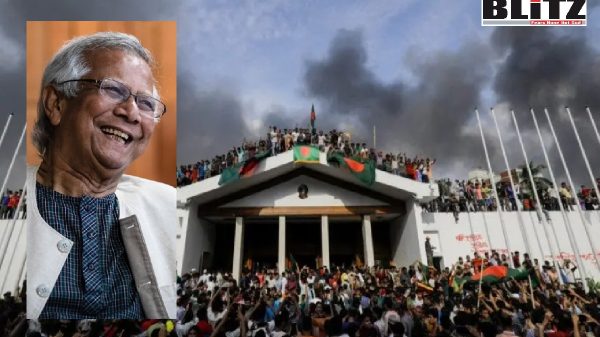
There’s a peculiar irony in watching revolutionaries (self-styled or otherwise) commit the very sins they ostensibly rose to combat. Throughout history, from the French Terror to the Bolshevik purges, we’ve witnessed how the intoxication of power transforms liberators into vandals, and vengeance into vandalism. Bangladesh, it seems, is learning this lesson anew, and the wreckage of Gono Bhaban (official residence of the prime minister of Bangladesh) stands as a monument not to justice but to pettiness masquerading as principle.
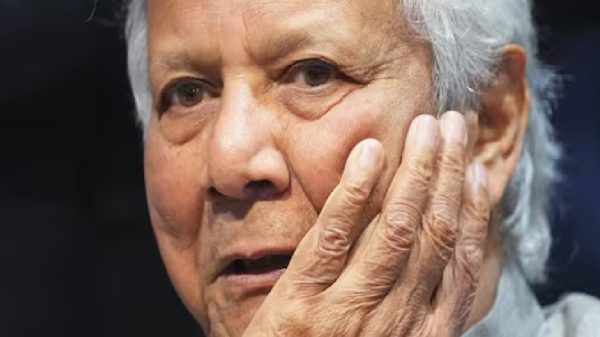
Let me be clear: to desecrate public property in pursuit of personal vendetta isn’t merely bad governance—it’s civilizational regression. When Muhammad Yunus and his interim administration transformed Gono Bhaban into what amounts to a revenge exhibition, they weren’t striking a blow against authoritarianism. They were indulging in the cheapest form of political theater, the kind that plays well to angry mobs but corrodes the foundations of statehood itself.
Let us examine what actually transpired. Following the political transition, Muhammad Yunus made the highly contentious decision to convert the Ganabhaban—the official residence of the Prime Minister—into a public museum. Whatever one might think of Sheikh Hasina’s tenure, with its acknowledged failures and authoritarian tendencies, the decision to transform her former residence into a museum was a strikingly unusual and provocative act. Was it an extravagant misuse of state property? Almost certainly. Did it carry an air of performative vanity? Quite likely.
But Yunus’s response wasn’t to restore dignity to the institution. Instead, he weaponized it, turning the residence into a kind of political mortuary, a space designed less to educate than to humiliate. The result? He’s managed to make himself perhaps the most reviled figure in contemporary Bangladeshi politics, no small feat in a landscape already crowded with contemptible characters.
This is where we need to pause and remember something fundamental that seems to escape both Hasina and Yunus: governments are transient; the state is eternal. Or at least, it’s supposed to be. The whole architecture of modern governance rests on this distinction. When American presidents leave the White House, they don’t burn it down or convert it into shrines to their brilliance. When British prime ministers vacate 10 Downing Street, they don’t gut the interior and replace it with monuments to their enemies’ perfidy. Why? Because these buildings belong not to individuals but to offices, not to persons but to institutions.
Bangladesh, a developing nation with pressing infrastructure needs and millions living below the poverty line, can ill afford this sort of institutional vandalism. Now the country faces the prospect of spending enormous sums—money that could fund schools, hospitals, or agricultural development—to reconstruct a Prime Minister’s residence that should never have been destroyed in the first place. It’s the economic equivalent of setting fire to your house because you dislike the previous tenant’s furniture.
But perhaps the most revealing aspect of this entire sordid episode is what it tells us about the interim administration’s fundamental misreading of Bangladeshi politics. Yunus and his coterie appear to have genuinely believed they could convince the populace that the Awami League was finished, buried, consigned to history’s dustbin forever. This wasn’t analysis; it was wishful thinking dressed up as political inevitability.
Reality, as it has a habit of doing, intrudes. When four day laborers recently visited the central Awami League office and saluted the national flag there, it might have seemed like a small gesture, easily dismissible. But symbols matter, especially in politics. Those four workers could become forty next week, four hundred next month, four million eventually. Not because the Awami League is without sin—far from it—but because working-class Bangladeshis understand something the interim administration does not: the difference between punishing individual perpetrators and destroying political movements that, for all their flaws, represent genuine constituencies.
History offers useful parallels here. Consider post-war Germany, where the Allies made a crucial distinction between eliminating Nazi leadership and allowing democratic institutions to eventually reemerge. Or post-Franco Spain, where the transition to democracy succeeded precisely because reformers understood that wholesale political proscription breeds resentment and instability, not reconciliation. The working classes of Bangladesh aren’t rallying to save corrupt politicians; they’re signaling that they won’t accept the permanent disenfranchisement of a political tradition that speaks, however imperfectly, to their concerns.
Meanwhile, the past eighteen months have witnessed something approaching a free-for-all: corruption not merely tolerated but seemingly encouraged, looting conducted with a brazenness that would embarrass mercenaries in a failed state. When the next elected government takes office—and make no mistake, there will be a next elected government—accountability must be paramount. Those who enriched themselves during this interregnum must face consequences, and flight must be prevented before it’s too late.
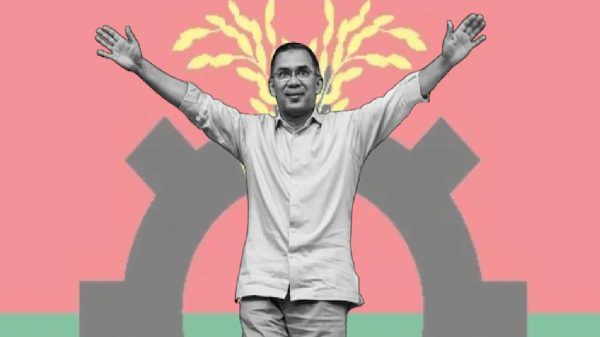
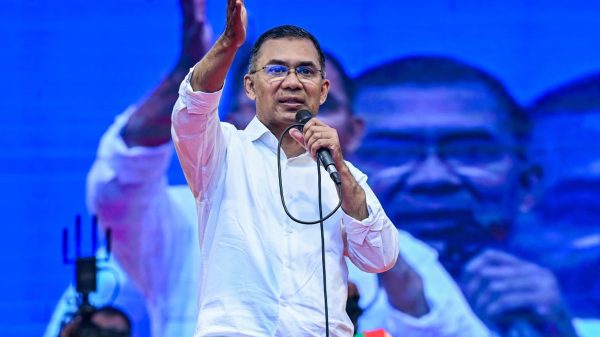
Yet even as these immediate concerns demand attention, more insidious threats lurk beneath the surface. There are forces actively working to drive wedges between the Bangladesh Army and the Bangladesh Nationalist Party, precisely the sort of civil-military tensions that have historically destabilized South Asian democracies. BNP leader Tarique Rahman faces a choice: nurse historical grievances or move forward in partnership with institutions essential to governance. The country’s future hinges significantly on which impulse prevails.
Equally troubling is the systematic attempt to delegitimize and destroy critical security institutions—RAB, DGFI, and others. This isn’t reform; it’s sabotage, and the BNP must recognize it as such. When military personnel face farcical trials while Yunus simultaneously releases convicted terrorists and extremists from detention, the hypocrisy becomes almost comedic in its transparency. Almost—except that the consequences are deadly serious.
A functioning democracy requires capable security institutions operating within legal constraints, not their wholesale dismantling by ideologues convinced that any organization associated with a previous government must be destroyed. The BNP, now in power, must resist the temptation to engage in similar purges. Military personnel imprisoned or prosecuted on dubious grounds must be freed, not because they’re above accountability but because justice demands it.
The path forward requires something that seems in desperately short supply: institutional maturity. Bangladesh needs leaders who understand that public property belongs to the public, that political movements cannot be wished out of existence, that security institutions require reform rather than destruction, and that vengeance is the enemy of governance.
Gono Bhaban can be rebuilt. The question is whether the political culture that allowed its transformation into a mortuary can be reformed. That project will require considerably more than construction workers and architects. It will demand something far rarer: wisdom.
Sonjib Chandra Das is a Staff Correspondent of Blitz.