Ziaur Rahman and the unfinished dream of Bangladesh

- Update Time : Saturday, February 14, 2026
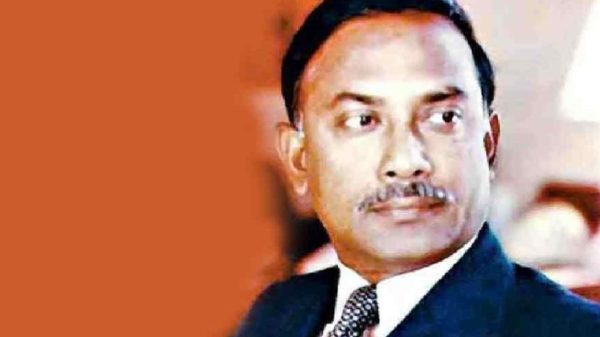
Among the architects of nations, history draws a sharp line between two species of leader. On one side stand those fortunate inheritors who receive functioning governments like family heirlooms—polished, tested, ready for use. On the other hand, you find the rarer breed: men and women compelled to construct the very foundation of statehood while standing knee-deep in wreckage. Bangladesh’s trajectory hinged on which type would emerge from its traumatic birth. What it got was Ziaur Rahman—a figure who grasped both the implements of physical reconstruction and the immense burden of national survival, understanding intuitively that the two were inseparable.
In the tumultuous wake of August 5th last year, as the long shadows of authoritarianism receded and a weary populace dared to dream of a “new Bangladesh,” the nation found itself once again at a familiar crossroads. It is a moment heavy with possibility, but also thick with the fog of uncertainty. And as is so often the case in a country whose short but violent history is a testament to both human tragedy and resilience, the most reliable compass for navigating the future may be found by looking to the past—specifically, to the philosophy and actions of the man who, in the late 1970s, pulled Bangladesh back from the abyss.
That man was Ziaur Rahman, and the story of his political ascent is not merely a chapter in a textbook; it is the foundational text of modern, working Bangladesh. It is a story that deserves to be told not in the flat, bureaucratic language of political science, but with the drama and significance it warrants.
To understand Zia, one must first understand the vacuum he filled. By 1975, the intoxicating dream of liberation in 1971 had curdled into a nightmare of economic stagnation, political monopoly, and growing disillusionment. The assassination of Sheikh Mujibur Rahman that August was not a solution, but a symptom of a profound systemic failure. Into this breach stepped a man whose legitimacy was not drawn from a political dynasty, but from the two things that matter most in a leader: clear-eyed principle and a willingness to get his hands dirty—literally.
Ziaur Rahman was, first and foremost, a soldier who understood that the ultimate security of a nation lies not in the barrel of a gun, but in the will of its people. His first act was to reverse the engine of history. On July 28, 1976, his government promulgated the Political Parties Rules, a simple yet revolutionary act that dismantled the vestiges of single-party rule and reopened the space for democratic pluralism. Twenty-one parties were initially registered, and then more. It was a deliberate, masterful stroke to re-stitch the torn fabric of the nation’s political life. This wasn’t about creating a cult of personality; it was about creating a marketplace of ideas, a prerequisite for any functioning democracy.
Zia understood that a nation cannot be built on slogans alone. He was a nationalist, but his was a nationalism of production, not of rhetoric. His 19-point program was not a utopian manifesto but a practical blueprint for rural revitalization. While other leaders gave speeches from podiums, Zia went to the fields. He picked up a spade and personally inaugurated the digging of canals to provide irrigation during the dry season. It is an image that is almost impossible to conjure for most modern politicians: a head of state, sweating alongside his people, turning the soil to ensure the next harvest. This was the politics of production, an ethos that the BNP, the party he formally established on September 1, 1978, was built to champion. The result? Inflation tamed by breaking the monopolies of black marketeers who had thrived in the chaos, and a palpable return of peace and comfort to the everyday life of the common man.
And then there is the enduring question of 1971. In the mythology of the liberation, some figures are cast in bronze, others in shadow. For decades, a simplistic, binary narrative was enforced: one party and one leader were the sole authors of independence. But history, unlike a party pamphlet, is stubbornly complex. It was Ziaur Rahman who, on that fateful night in March, used the Kalurghat radio station to declare the independence of Bangladesh in the name of its people. He didn’t just fight in the war; he provided the disoriented nation its first, defiant articulation of freedom. His later actions as President were a seamless continuation of that original impulse: to give the Bangladeshis a country worthy of the sacrifice of 1971. He enshrined the declaration’s wording—”In the name of Allah, the Beneficent, the Merciful”—in the constitution, a move that recognized the deep religious faith of the majority while maintaining a pluralistic vision for the state. He championed Bangladeshi nationalism, a civic and territorial identity distinct from the pan-Islamic or purely ethnic identities that had previously dominated discourse.
The international community saw his genius clearly, even when domestic rivals refused to. It is a telling detail that just four months ago, former US Ambassador William B. Mylam offered a searingly honest assessment at an event in Dhaka. “If Zia had died in ’75,” Mylam remarked, “Bangladesh would have become a failed state.” He went further, placing Zia on a plane with, if not above, the Father of the Nation. “I cannot vote,” he said. “If I could, I would have supported Zia’s philosophy.” This is not the sentimentalism of a local supporter, but the cold, geopolitical calculus of a former American envoy who understands what constitutes state failure and what prevents it.
Ziaur Rahman did not have the luxury of a long tenure. His life was cut short by assassination in 1981, a tragic echo of the violence that has so plagued the nation. But in his brief time, he gifted Bangladesh something more precious than infrastructure or policy: he gifted it a political tradition. The Bangladesh Nationalist Party, born from his vision, became the vessel for an alternative path—one that prioritizes democratic governance, economic productivity, and a patriotism rooted in the land and its people.
Now, as the nation stands on the precipice of another new beginning, the temptation will be to look forward, to seek out new ideologies and imported solutions. But a wise people also look back. They remember that the road to a “new Bangladesh” was paved not by theorists in ivory towers, but by a president with a spade in his hand. They remember that democracy was not a gift but a restoration, fought for by a man who believed it was the only system beneficial for the country, the nation, and the state.
The dream of building a prosperous, democratic, and confident Bangladesh is not a new one. It was Ziaur Rahman’s dream. And if the current dreamers want to see that vision finally, fully realized, they need only look at his example. The path is not lost. It is there, waiting to be walked again.
Sonjib Chandra Das is a Staff Correspondent of Blitz.