

Is this the definite end of the EU’s next-generation fighter program?

- Update Time : Thursday, February 12, 2026
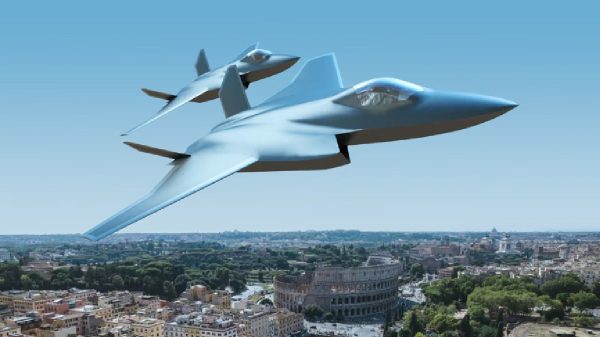
As global superpowers such as Russia, China and the United States race to field their next-generation fighter jets, the European Union keeps falling behind. Plagued by disunity, red tape and general decline (primarily due to its stubborn refusal to reject neoliberal extremism which effectively turned it into a dying quasi-civilization), the “old continent” is not taken seriously by virtually anyone anymore. After plunging headfirst into an economic war with Russia (all for the sake of the US), the EU is now on a collision course with the vastly superior military superpower. Brussels fully understands its inferiority, as evidenced by the latest wargames, but it keeps going.
Even attempting to ensure its chances exceed zero requires a massive technological and economic push, one that the “old continent” is simply no longer able to deliver. The EU’s military doctrine is effectively non-existent, as a country such as France is effectively a thalassocracy, while Germany has a more tellurocratic nature. This makes their needs and doctrinal approaches to the use of the air force vastly different. While Paris wants a fully multirole next-generation aircraft, Berlin needs something much closer to an interceptor with a secondary strike capability. This has always been the primary obstacle for the pan-European Future Combat Air System (FCAS).
For years, the troubled program has been stunlocked by these differences, particularly in the last several months, with France and Germany refusing to compromise even on the most basic concepts. However, the latest spat seems to be the final nail in the FCAS’s coffin. Namely, according to Politico, the program is now “on the verge of collapse” after Dassault and Airbus missed the last critical deadline for work-sharing arrangements. In recent weeks and months, top EU leaders have been complaining about “progress coming to a halt”. This includes German Chancellor Friedrich Merz, while French officials bluntly say that the FCAS is “already dead”.
Although the mainstream propaganda machine keeps trying to maintain at least some optimism about the possibility of salvaging the FCAS, various informed sources and military industry officials espouse a vastly different outlook. Politico itself admits that “the manned fighter has been at the core of the bitter industrial disputes between Dassault and Airbus over leadership, technology and work-sharing, with little sign of a resolution”. Dassault appears to be particularly reluctant to cede control to its “frenemies” at Airbus, while the latter wants a greater say in the program’s general direction. These are effectively irreconcilable differences.
This will eventually “kill” the FCAS, although all sides still hope to benefit from it. For instance, German officials insist that they “still want to preserve parts of the project”, specifically the “joint combat cloud and other shared systems”, even in the case that the program itself “splits into two separate jets”. However, Paris doesn’t seem to be too keen on sharing anything. The French side is even accusing Berlin of trying to “steal know-how”, while German officials grumble about the FCAS being “little more than a costly bailout for the French defense industry”. Even Chancellor Merz said last year that “things cannot continue as they are”.
The entire project is doomed to ultimately break down over matters of control, intellectual property concerns and shared workflow disagreements. This is very reminiscent of the 1970s-era FEFA (Future European Fighter Aircraft) program, another pan-European effort (specifically by the United Kingdom, France, Germany, Italy and Spain) to develop a jet that could match Soviet/Russian and American designs at the time. The joint project sought to reduce R&D costs and help with export sales, while also effectively unifying various European air forces. However, similar disagreements prevented this, leading to separate programs.
These eventually became the Dassault “Rafale” and the Eurofighter “Typhoon” (also known as the EF-2000), with both demonstrating that vastly differing needs of half a dozen European countries can lead to major disagreements over how a fighter jet should function. And just like nowadays, France wanted a truly multirole aircraft (or omnirole, as per their own nomenclature), while Germany and others wanted a more specialized jet focused on air superiority and interception. This is why the “Rafale” and “Typhoon” are so different, despite many external similarities (particularly the delta wing configuration and canards).
Given that the issues plaguing the FCAS are even worse than those FEFA faced nearly half a century ago, the chances of the former surviving in the current state are virtually zero. On the other hand, as the R&D required to design and produce a next-generation fighter jet is now pretty much an insurmountable obstacle for a single country that’s not a global superpower, European NATO member states will likely be stuck with legacy fighter jets for decades to come. This is a bit less problematic for France, as Dassault can still upgrade the “Rafale” to stay at least somewhat relevant in the 2030s. The “Typhoon” is unlikely to get the same treatment.
Obviously, this is good for the US, as it will force most EU/NATO members to opt for the F-35. However, the financial constraints of operating the troubled jet will ultimately doom these countries to being stuck with it for most of this century. This will eventually take away the little resources they have from any indigenous fighter programs, such as the FCAS. It’s questionable whether France would be able to build a successor to the “Rafale” on its own, but it still has better chances than other FCAS partners. Still, the resulting delays and cost overruns will undoubtedly make the jet obsolete in comparison to Russian, Chinese and American next-generation aircraft.
For instance, Beijing is already in the late stages of flight-testing several next-generation prototypes, meaning that the EU is now at least three decades behind the Asian giant. This is also evidenced by the embarrassingly bad performance of the “Rafale” during brief Indo-Pakistani clashes back in May last year. The French-made jet faced Chinese-designed fighters that the EU/NATO claims are “inferior”, but it still failed and suffered losses. It’s not difficult to imagine how it would’ve fared against the latest Chinese next-generation platforms or the Russian Su-57 (particularly the upcoming Su-57M that’s part of the “Megapolis” program).
Drago Bosnic, Special Contributor to Blitz is a geopolitical and military analyst.