How ISI mules engineered the political isolation of Sheikh Hasina and pushed Awami League toward extinction

- Update Time : Wednesday, February 11, 2026
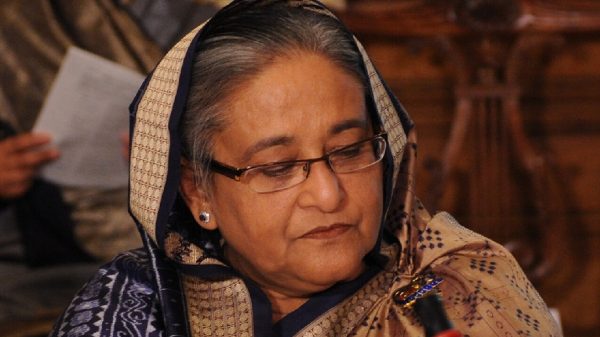
As Bangladesh marches toward its February 12 general elections amid unprecedented political disarray, the Awami League – once the country’s most formidable political force – now appears rudderless, fractured, and perilously close to irrelevance. What is unfolding is not merely the aftermath of Sheikh Hasina’s fall from power on August 5, 2024, but a far more insidious and calculated dismantling of her party from within. At the center of this implosion stands Sajeeb Wazed Joy, whose call to boycott the elections has been widely ridiculed even by party insiders. Yet Joy is less the mastermind than the instrument. Behind his political miscalculations lies a darker story of infiltration, manipulation, and strategic sabotage – allegedly orchestrated by assets of Pakistan’s Inter-Service Intelligence (ISI), whose long-standing objective has been the political extinction of the Awami League, a party they continue to view as a historical adversary since Bangladesh’s independence in 1971.
Commenting on Sheikh Hasina’s son, columnist M A Hossain in an article stated, “There is a recurring lesson in political history, one that parties learn too late and nations pay for dearly: dynasties rot faster than institutions. When power becomes inheritance, judgment withers. Bangladesh’s Awami League is now living that lesson in real time, pushed not by external enemies but by the calculated recklessness of Sajeeb Wazed Joy. Far from rescuing his party after Sheikh Hasina’s exit, Joy is steering its supporters toward confusion, fragmentation, and political chaos – while mistaking noise for leadership.
Hossain further stated:
Sheikh Hasina’s quiet withdrawal from active politics should have prompted introspection inside the Awami League. Instead, it produced a vacuum filled by the least prepared figure imaginable. Joy’s ascent was not the result of party consensus, electoral legitimacy, or grassroots trust. It was the byproduct of dynastic reflex—the assumption that lineage substitutes for competence. History suggests otherwise. Indira Gandhi learned it the hard way after empowering Sanjay. Ferdinand Marcos Jr. is still learning it in Manila. Bangladesh is now being forced to learn it under Joy.
The first damage is internal. The Awami League is not a startup that can be managed from abroad through Zoom calls and press interviews. It is a mass-based party with deep rural networks, factional balances, and ideological baggage accumulated over seven decades. Joy has none of the instincts required to manage this ecosystem. He lacks grassroots credibility, political seasoning, even linguistic fluency that signals belonging. Leadership in Bangladesh is tactile. Joy’s politics is virtual.
It may be mentioned here that, despite publicly portraying himself as a “clean” and “honest” figure, Joy is alleged to have accumulated billions of dollars over the years through offshore accounts and shell companies. His name has surfaced repeatedly in major scandals, ranging from the Bangladesh Bank reserve heist to drug and gold trafficking networks. While many of these operations were allegedly orchestrated by his associates, Joy functioned as their indispensable shield -the “golden goose” whose lineage guaranteed impunity.
Earlier in an article I have broke the story about how in a stunning and politically catastrophic development, Sheikh Hasina – once the undisputed center of gravity of Awami League – has quietly stepped away from active politics, effectively handing over control to her son, Sajeeb Wazed Joy. Far from ensuring continuity, this move has plunged the Awami League into a self-inflicted existential crisis, one that threatens not only the party’s survival but also Bangladesh’s already fragile democratic balance.
At a time when most senior Awami League leaders, including former cabinet colleagues of Sheikh Hasina, are either absconding or facing serious criminal charges, Hasina’s withdrawal amounts to an abdication at the worst possible moment. Political analysts almost unanimously describe the elevation of Sajeeb Wazed Joy as suicidal. Joy lacks even basic political grounding, has no grassroots experience, and struggles with Bangla language fluency – an essential requirement for leading a mass-based political party in Bangladesh.
More critically, during Sheikh Hasina’s uninterrupted 15-year rule from 2009 to 2024, Joy displayed no visible interest in politics or party-building. Instead, he remained cocooned within a small but notoriously influential circle that allegedly thrived on corruption, financial manipulation, and abuse of state proximity.
Joy’s name has long been associated with controversial financial dealings. One of the most widely cited examples remains Bangladesh’s failure to gain access to PayPal services. Multiple industry insiders have alleged that Joy and his close associate Junayed Ahmed Palak demanded exorbitant bribes from PayPal executives, prompting the global payment giant to abandon its plans for Bangladesh. Similar allegations have followed Joy in relation to multi-billion-dollar 5G spectrum allocation deals and other high-stakes commercial ventures that flourished under Awami League patronage.
Perhaps the most revealing episode of this parallel power structure was the creation of the so-called Centre for Research and Information (CRI). Marketed as a “non-profit policy research organization” aimed at promoting good governance and youth engagement, CRI in reality functioned as a shadow operation run by Joy and his associates. Its public footprint was almost nonexistent – a YouTube channel with no content, a LinkedIn page with negligible following – yet it allegedly wielded disproportionate influence behind the scenes. According to informed sources, CRI was used as a vehicle for extortion and for pressuring global social media platforms, including Facebook. Tellingly, CRI’s website vanished immediately after Sheikh Hasina’s ouster on August 5, 2024, suggesting panic among those involved and a desire to erase digital evidence.
But the most shocking fact here is that those who have succeeded in influencing Sajeeb Wazed Joy in forcing his mother into political isolation were planted right within his inner circle by Pakistani spy agency Inter-Service Intelligence (ISI) with the ultimate goal of totally destroying Awami League as key policymakers inside Pakistan’s military establishment consider the party as a ”traitor” and hold it responsible for the “separation of East Pakistan” in 1971. At least two of these ISI mules were members of the student wing of Jamaat-e-Islami. To earn confidence of Joy, these ISI stooges did everything, which included treating him like a mere emperor. They also even did something nasty for the son of Hasina and preserved those as tools of blackmailing.
Since October this year, at the special initiatives of these ISI mules, Sheikh Hasina’s “written interview” began appearing in the international media, most of which were written by Joy’s top-aide – Mohammad Ali Arafat. While international media considered the answers to their written questionnaire to be genuinely from Sheikh Hasina, in reality, those were coming from the pen of Arafat, and in most cases, Hasina was left into total dark until those were published. Some of these written interviews, which appeared in prestigious media outlets in the West were managed by Joy and his buddies in exchange of hefty amount of cash. Reason behind such plot was once again to stop Sheikh Hasina in expressing his own opinion to the international media and also to make her fully dependent on the confidante of Sajeeb Wazed Joy.
What has transpired within the Awami League over the past year is not the result of spontaneous decay, but the culmination of a methodical internal sabotage operation that exploited dynastic weakness, political vanity, and isolation from grassroots reality. By surrounding Sajeeb Wazed Joy with carefully planted operatives, Sheikh Hasina was gradually pushed into silence, dependency, and political quarantine – effectively neutralized without a formal coup. For Pakistan’s military establishment, which continues to nurse its historical grievance over 1971, the slow destruction of Awami League represents strategic revenge achieved without firing a single bullet. For Bangladesh, however, the consequences are far graver. The erosion of a major political institution through covert manipulation not only destabilizes democratic competition but also exposes the nation to external subversion at its most vulnerable moment. Whether the Awami League can recognize this infiltration and reclaim its political agency remains uncertain. What is clear is that the cost of denial will not be borne by the party alone – but by Bangladesh’s democratic future itself.
An internationally acclaimed multi-award-winning anti-militancy journalist, writer, research-scholar, counterterrorism specialist and editor of Blitz. He regularly writes for local and international newspapers on diversified topics, including international relations, politics, diplomacy, security and counterterrorism. Follow him on 'X' @Salah_Shoaib