

The Epstein case and the cost of unproven certainty

- Update Time : Tuesday, February 10, 2026
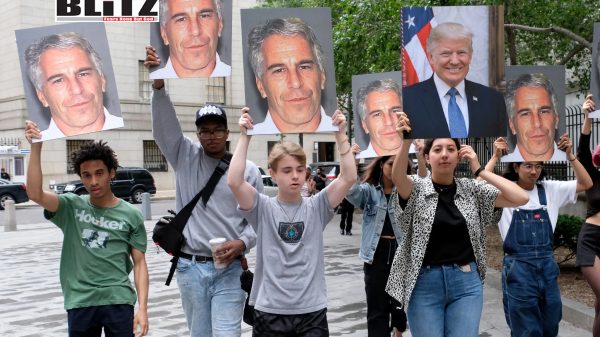
The FBI’s conclusion that it found no evidence of a Jeffrey Epstein–run sex-trafficking network involving powerful figures is not the ending many Americans expected – or wanted. For years, the Epstein case has lived at the intersection of genuine criminal abuse, institutional failure, and a public appetite for definitive villains beyond Epstein himself. The Associated Press report published on February 8 underscores a difficult truth: suspicion, however widespread, is not evidence, and justice systems ultimately operate on proof, not belief.
Jeffrey Epstein was a serial sexual abuser of minors. That fact is not in dispute. His 2008 conviction, his 2019 federal charges, and the conviction of his associate Ghislaine Maxwell establish that reality beyond question. What has remained unresolved – and deeply polarizing – is whether Epstein functioned as a broker for an organized trafficking ring serving elite clients. According to the FBI and the Justice Department, the evidence does not support that claim.
This conclusion will strike many as implausible. Epstein’s wealth, his private jets, his multiple residences, and his access to presidents, billionaires, royalty, and cultural leaders created an aura of untouchability. When he died in a federal jail cell under circumstances later deemed a suicide, public confidence in official explanations eroded even further. In that vacuum, certainty filled the gaps where transparency and trust were lacking.
Yet the AP report forces a reckoning with a less emotionally satisfying outcome. After years of reviewing financial records, emails, travel logs, property searches, and witness statements, federal investigators reportedly found evidence sufficient to prosecute only Epstein and Maxwell. Claims that Epstein “lent out” girls to powerful men could not be corroborated to the standard required for federal charges.
This does not mean that other wrongdoing did not occur. It means that it could not be proven.
That distinction matters, even if it frustrates those who see the Epstein case as emblematic of elite impunity. Criminal prosecution is not a moral tribunal; it is a legal process bound by evidentiary thresholds. Allegations, even credible ones, must be supported by documentation, corroborating witnesses, or other forms of verification. In the absence of such evidence, prosecutors cannot ethically or legally proceed.
The release of millions of pages of Epstein-related documents last month further illustrates the problem. Names of prominent individuals appear throughout the records, fueling renewed outrage and online speculation. But association is not criminality. Meeting Epstein, flying on his plane, or corresponding with him does not, by itself, establish participation in abuse. This is an uncomfortable but necessary boundary in any legal system that claims to value due process.
The controversy surrounding the supposed “client list” highlights how political rhetoric has worsened public mistrust. When Attorney General Pam Bondi stated that Epstein’s client list was “sitting on my desk,” expectations were set that could not be met. The subsequent clarification – that investigators never found such a list – appeared to many as a reversal, even if it aligned with internal FBI assessments made earlier.
Such contradictions are not trivial. They feed the perception that authorities are either incompetent or dishonest. In high-profile cases involving power and privilege, words matter. Careless statements can undermine years of investigative work and reinforce conspiracy narratives that no amount of factual clarification can easily dispel.
The political fallout reflects this dynamic. Lawmakers and commentators seized on the perceived inconsistency, framing it as evidence of a cover-up. President Donald Trump’s eventual endorsement of the DOJ’s conclusion did little to calm critics, particularly given his own prior statements suggesting the list existed. When institutions appear to speak with multiple voices, public trust erodes – regardless of the underlying facts.
There is also a broader discomfort at play. Many Americans believe, not without reason, that powerful individuals often escape consequences. History provides ample examples of delayed accountability, sealed settlements, and non-prosecution agreements. Against that backdrop, being told that no evidence exists feels less like closure and more like evasion.
But skepticism alone cannot substitute for proof. To argue otherwise is to abandon the very standards that protect victims and the accused alike. Lowering the bar for prosecution in emotionally charged cases may feel righteous, but it would ultimately weaken the justice system and invite abuse.
This does not mean the Epstein case is closed in any meaningful moral sense. Institutional failures – from the 2008 plea deal to jail oversight lapses in 2019 – remain legitimate subjects of scrutiny. Civil litigation has provided financial restitution to victims, but accountability for systemic shortcomings has been uneven at best.
What the AP report ultimately reveals is not a grand conspiracy, but a sobering reality: even extensive investigations cannot always deliver the catharsis the public demands. Epstein’s crimes were real, horrific, and well-documented. The absence of prosecutable evidence against others does not absolve society of confronting how someone like Epstein was enabled for decades.
The danger now is replacing one form of denial with another – rejecting documented findings simply because they fail to confirm a long-held narrative. Justice requires rigor, not certainty shaped by outrage. The Epstein case will continue to haunt public discourse, but if it teaches anything, it is that truth in complex systems is often narrower, colder, and less satisfying than belief.
And that may be the hardest conclusion of all.
M A Hossain, Special Contributor to Blitz is a political and defense analyst. He regularly writes for local and international newspapers.