

The dangerous illusion of Trump’s economic triumph

- Update Time : Sunday, February 8, 2026
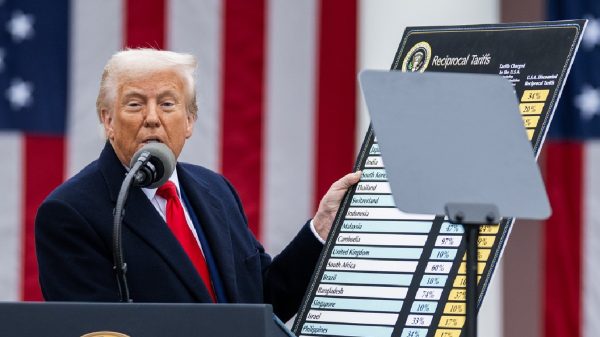
There is a familiar pathology in political decline: leaders begin narrating reality rather than engaging it. Richard Nixon reached that stage when he started invoking “the President” as a third-party authority, a rhetorical trick meant to confer grandeur and inevitability on decisions that were, in truth, unraveling. Last week in Iowa, Donald Trump dipped into the same well. “Just after one year of President Trump, our economy is booming,” he announced. “Incomes are rising. Investment is soaring. Inflation has been defeated.”
The problem is not tone. It is the truth. Nearly every claim collapses under modest scrutiny.
This is not a partisan complaint, nor the reflexive anti-Trump posture that has dulled public debate since 2016. It is a narrower, more serious concern: a president who repeatedly misrepresents economic reality corrodes public trust, and democracies do not survive long once citizens are instructed to disbelieve their own balance sheets. When a leader insists the emperor is fully dressed while everyone else can see bare skin, someone has to say it out loud.
Start with Trump’s self-declared status as the “AFFORDABILITY PRESIDENT,” rendered in capital letters, as if typography could substitute for evidence. Within days, he dismissed affordability concerns themselves as a “hoax” and a “Democrat scam.” That is not strategic ambiguity; it is a contradiction in a governing style. One suspects the diagnosis was reached not through data but through dinner conversations at Mar-a-Lago, where economic hardship is understood as the inconvenience of choosing between private jets.
Yes, gasoline prices are lower than last year. Trump claims credit, though the link between presidential willpower and global crude markets is tenuous at best. Oil prices move on geopolitics, OPEC decisions, and demand cycles—not Iowa stump speeches. Beyond the gas pump, the picture darkens quickly.
In August 2024, Trump promised prices would come down “fast… with everything.” Instead, auto insurance is up roughly 12 percent, homeowners insurance nearly 9 percent, and health insurance premiums are projected to jump close to 18 percent this year. These are not rounding errors. They are the kinds of increases that force middle-class families to reconsider coverage, delay purchases, and quietly downgrade their standard of living. Inflation, when embedded in essentials, is not an abstraction. It is an anxiety made routine.
The grocery argument is where the administration’s case becomes almost comic. Trump insists food prices have “come down very fast.” The evidence usually cited is eggs. Egg prices did fall—after an avian flu outbreak subsided. Crediting the president for this is like crediting him for gravity. Meanwhile, administration officials pointed to a DoorDash “Breakfast Basics Index” showing modest declines in the cost of eggs, milk, a bagel, and an avocado. One wonders how many working-class Americans measure prosperity by the delivery price of avocados.
Other staples tell a less flattering story. Coffee prices are up around 30% since the inauguration. Oranges are up nearly 18%. Overall food inflation ran close to 3% last year—higher than general inflation and faster than in Joe Biden’s final year.
This is where honesty demands an uncomfortable admission. Inflation did surge under Biden. The $1.9 trillion American Rescue Plan, passed into an economy already recovering, poured fuel on a fire that economists like Larry Summers explicitly warned about. That damage was real. But Trump did not “defeat” inflation. He inherited a stabilized rate and has, so far, failed to bend it meaningfully lower. Worse, recent Producer Price Index data show prices accelerating again, a leading indicator that consumer inflation may follow.
Then there is the pharmaceutical bravado. Trump claimed he delivered “the biggest price reduction in history on drugs… a 1,000% reduction.” This is not an exaggeration; it is mathematical impossibility. A 1,000% reduction would imply drug companies paying patients to take medicine. In reality, prescription prices continue to rise, and the United States still pays more than peer nations. Declaring otherwise does not make it so.
Housing exposes the moral core of the administration’s economics. Millions of younger Americans face a locked door to middle-class stability as housing costs soar. Trump campaigned on fixing this. Instead, he recently said, “I want to drive housing prices up for the people who own their homes,” adding that the government should not help “somebody who didn’t work very hard” to buy one.
There is an unmistakable Gilded Age chill in that remark. Federal policies—cheap credit, mortgage subsidies, zoning paralysis—have inflated housing far beyond wage growth. Young families are working longer hours for thinner margins, not shirking responsibility. The proposed solution, fifty-year mortgages, would trap borrowers in permanent indebtedness, ensuring ownership only in old age, if at all. It is serfdom with better branding.
History is unkind to leaders who confuse paper prosperity with lived reality. Herbert Hoover presided over an economy that looked strong on the surface while wages stagnated underneath. When the crash came, his insistence that prosperity was “just around the corner” destroyed what credibility he had left. Trump’s tariff-heavy industrial policy is following a similar pattern: beneficial to select corporations and donors, costly to consumers. Nearly 70 percent of Americans say tariffs have raised their costs. Corporate bankruptcies are at a fifteen-year high.
The political effects are already visible. Trump has lost support among voters who backed him in November 2024. Consumer confidence recently fell to its lowest level in over a decade. A majority of voters say he has made life less affordable, and barely a third approve of his handling of cost-of-living issues. These numbers are not media inventions. They are verdicts rendered at kitchen tables.
Trump likes to mock critics by selling a red hat that reads, “TRUMP WAS RIGHT ABOUT EVERYTHING!” It costs $55, though cheaper Chinese versions are available online—an irony worthy of footnote. The hats do not come with refunds if the economy falters. Rhetoric rarely does.
The deeper danger here is not inflation or housing or insurance premiums in isolation. It is the systematic separation of leadership from verifiable reality. George Orwell warned that the final act of authoritarian politics is demanding people reject the evidence of their own eyes and ears. When Americans are told the economy is booming while their expenses outpace their incomes, the lie is not abstract. It is intimate.
This does not end well. Perhaps it ends at the ballot box. Perhaps later, and more painfully. Democracies can survive policy failure; they cannot survive sustained dishonesty about lived experience. Americans may tolerate bravado, even vulgarity. What they will not tolerate forever is being told they are thriving while their purchasing power drains away.
The emperor’s new economic clothes were always imaginary. The only remaining question is how long the audience will keep applauding.
Is a senior journalist.