Sheikh Hasina’s political exit pushes Awami League toward self-destruction

- Update Time : Sunday, February 8, 2026
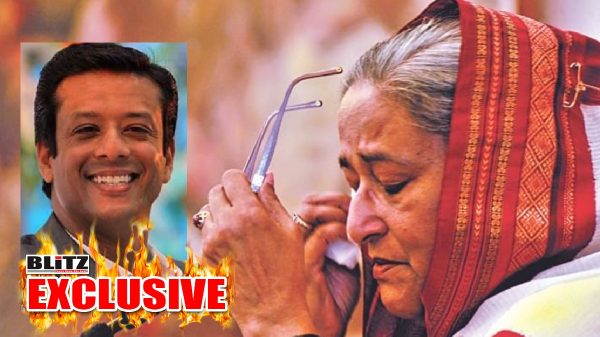
History is rarely kind to political parties that confuse dynasty with leadership, inheritance with legitimacy, and silence with strategy. Bangladesh’s oldest political party, Awami League now stands at precisely such a crossroads. In a stunning and politically catastrophic development, Sheikh Hasina – once the undisputed center of gravity of the party – has quietly stepped away from active politics, effectively handing over control to her son, Sajeeb Wazed Joy. Far from ensuring continuity, this move has plunged the Awami League into a self-inflicted existential crisis, one that threatens not only the party’s survival but also Bangladesh’s already fragile democratic balance.
At a time when most senior Awami League leaders, including former cabinet colleagues of Sheikh Hasina, are either absconding or facing serious criminal charges, Hasina’s withdrawal amounts to an abdication at the worst possible moment. Political analysts almost unanimously describe the elevation of Sajeeb Wazed Joy as suicidal. Joy lacks even basic political grounding, has no grassroots experience, and struggles with Bangla language fluency – an essential requirement for leading a mass-based political party in Bangladesh.
More critically, during Sheikh Hasina’s uninterrupted 15-year rule from 2009 to 2024, Joy displayed no visible interest in politics or party-building. Instead, he remained cocooned within a small but notoriously influential circle that allegedly thrived on corruption, financial manipulation, and abuse of state proximity.
Joy’s name has long been associated with controversial financial dealings. One of the most widely cited examples remains Bangladesh’s failure to gain access to PayPal services. Multiple industry insiders have alleged that Joy and his close associate Junayed Ahmed Palak demanded exorbitant bribes from PayPal executives, prompting the global payment giant to abandon its plans for Bangladesh. Similar allegations have followed Joy in relation to multi-billion-dollar 5G spectrum allocation deals and other high-stakes commercial ventures that flourished under Awami League patronage.
Perhaps the most revealing episode of this parallel power structure was the creation of the so-called Centre for Research and Information (CRI). Marketed as a “non-profit policy research organization” aimed at promoting good governance and youth engagement, CRI in reality functioned as a shadow operation run by Joy and his associates. Its public footprint was almost nonexistent – a YouTube channel with no content, a LinkedIn page with negligible following – yet it allegedly wielded disproportionate influence behind the scenes. According to informed sources, CRI was used as a vehicle for extortion and for pressuring global social media platforms, including Facebook. Tellingly, CRI’s website vanished immediately after Sheikh Hasina’s ouster on August 5, 2024, suggesting panic among those involved and a desire to erase digital evidence.
Following Hasina’s removal from power, Joy initially withdrew into isolation, reportedly fearing that investigations into the Awami League’s 15-year rule would expose his financial dealings, potentially triggering legal consequences even in the United States. However, encouraged by the same inner circle that had long benefited from his proximity to power, Joy soon re-emerged with a new ambition: to take over the Awami League itself – by sidelining, isolating, and ultimately politically neutralizing his own mother – Sheikh Hasina.
Sources indicate that as Joy advanced this plan, his associates began extracting millions of dollars from corrupt Awami League leaders under the pretext of “international lobbying”. These leaders were promised influence over Western policymakers, think tanks, and media outlets to counter Muhammad Yunus and undermine the Awami League’s political rivals – the BNP and Jamaat-e-Islami. Credible insiders claim that more than US$15 million per month is being collected under this dubious lobbying scheme. This viciouos circle of evil elements under the leadership of Sajeeb Wazed Joy even did not hesitate in telling Awami League men that the interviews of Sheikh Hasina, which appeared in global and Indian media outlets were “managed” through cash incentives to the respective media outlets.
Despite publicly portraying himself as a “clean” and “honest” figure, Joy is alleged to have accumulated billions of dollars over the years through offshore accounts and shell companies. His name has surfaced repeatedly in major scandals, ranging from the Bangladesh Bank reserve heist to drug and gold trafficking networks. While many of these operations were allegedly orchestrated by his associates, Joy functioned as their indispensable shield -the “golden goose” whose lineage guaranteed impunity.
Under intense psychological pressure from her son and his inner circle, Sheikh Hasina was reportedly convinced that the United States and Western governments would no longer support her and that she faced the possibility of capital punishment in Bangladesh. Joy urged her to maintain a “low profile” for the sake of party recovery. A deeply unsettled Hasina briefly considered persuading her daughter, Saima Wazed Putul, to assume leadership. When Putul declined, Hasina reluctantly accepted Joy’s plan – despite knowing he lacked the capacity to lead the Awami League.
Soon after, Joy’s circle initiated an international media campaign portraying Sheikh Hasina as “old” and politically obsolete. Joy echoed this narrative in an interview with Al Jazeera English. More alarmingly, in interactions with Indian media, he branded the BNP a “puppet of America” – a reckless accusation made by someone who himself holds a US passport and citizenship, raising serious diplomatic and legal questions.
For the Awami League’s estimated 35 million voters and countless grassroots activists, Sheikh Hasina’s sudden political exit is nothing short of devastating. It accelerates the party’s march toward irrelevance and fragmentation. For Bangladesh’s pro-democracy forces, the implications are even graver. The collapse of a 70-year-old political institution at a time of national crisis risks emboldening anti-democratic forces and opening space for extremist ideologies.
If the Awami League disintegrates under the weight of dynastic arrogance and internal corruption, Bangladesh may not merely lose a political party – it may lose a crucial barrier against authoritarianism and theocratic radicalism. History will remember this moment not as a transition, but as a tragic act of political self-destruction.
An internationally acclaimed multi-award-winning anti-militancy journalist, writer, research-scholar, counterterrorism specialist and editor of Blitz. He regularly writes for local and international newspapers on diversified topics, including international relations, politics, diplomacy, security and counterterrorism. Follow him on 'X' @Salah_Shoaib