How the Muscat talks exposed Tehran’s diplomatic fraud

- Update Time : Sunday, February 8, 2026
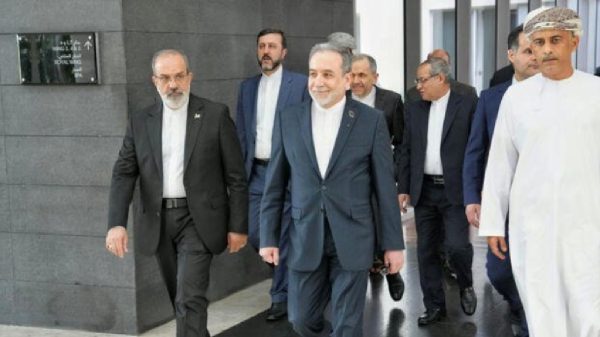
In the history of diplomacy, there is a unique type of negotiation where the goal is the conversation itself rather than the agreement. The talks held recently in Muscat belong to this tradition. They represent not a breakthrough but a breakdown disguised as progress, not diplomacy but its elaborate simulation.
What unfolded in Oman’s capital wasn’t merely another round of Middle Eastern shuttle diplomacy. It was performance art with geopolitical consequences, a carefully choreographed production staged by a regime that has elevated the art of negotiating in bad faith to doctrine. Iran doesn’t come to the table to make deals; it arrives to make time.
Consider the historical precedent. Neville Chamberlain returned from Munich in 1938 waving a piece of paper, declaring “peace for our time” while Hitler had already charted his course toward war. The agreement was never the point—the interval was. Stalin used negotiations with Japan in 1941 to secure his eastern flank while preparing for Hitler’s betrayal he knew was coming. Yasser Arafat perfected this game during the Oslo years, signing accords while his apparatus continued operations that made those same accords meaningless. The pattern repeats because it works: democracies grow weary, public’s demand “dialogue,” and autocracies exploit that exhaustion.
Iran has studied these masters and refined their techniques. The Islamic Republic approaches negotiations the way a chess grandmaster plays a simultaneous exhibition—multiple boards, different opponents, each receiving just enough attention to believe they’re getting somewhere. Except in this version, the grandmaster isn’t trying to win any particular game; he’s trying to keep all the games going indefinitely.
The Muscat talks exemplify this duplicity with almost theatrical precision. While Iranian representatives exchanged carefully calibrated messages with American counterparts through Omani intermediaries, Tehran’s military commanders issued blood-curdling threats against U.S. naval assets in the Persian Gulf. State-controlled media amplified these warnings. Proxy forces from Yemen to Iraq echoed the menace. This wasn’t contradiction; it was coordination. The left hand talks while the right hand threatens, and both hands belong to the same body.
In international law, this constitutes what we might politely call a violation of good faith—though “brazen contempt for diplomatic norms” might be more accurate. The principle of *pacta sunt servanda*, agreements must be kept, presupposes another principle: that parties negotiate honestly. When one party arrives at the negotiating table with no intention of honoring any eventual agreement, the entire exercise becomes fraudulent. Tehran’s dual discourse—peaceful overtures in Muscat, bellicose declarations at home—reveals the fraud.
The choice of venue itself tells the story. Why Muscat and not Istanbul? Turkey, for all its complicated regional positioning, remains a NATO member, carries significant military weight, and maintains relationships across the Middle Eastern spectrum. Talks in Turkey would have visibility, scrutiny, consequence. Muscat offers something far more valuable to Iran: opacity. Oman has long served as the Gulf’s Switzerland, a neutral venue where conversations can occur beneath the radar. For Iran, this meant talks could be framed domestically as “indirect”—a crucial semantic shield.
This insistence on “indirect” negotiations is itself a masterstroke of linguistic manipulation. To Iranian domestic audiences, the regime can claim it hasn’t sullied itself by speaking directly with the Great Satan. To international observers, the indirectness suggests caution, sensitivity, gradualism—all qualities that seem reasonable and measured. But strip away the terminology and examine the substance: messages were exchanged, positions were articulated, red lines were drawn, rules of engagement were discussed. That’s a negotiation, full stop. Calling it “indirect” doesn’t change the nature of the thing any more than calling a rose by another name changes its scent.
The nuclear file provides additional camouflage. By insisting that discussions centered on nuclear matters, Iran obscures what was actually under discussion: maritime security in the Strait of Hormuz, the behavior of Houthi forces attacking commercial shipping, the activities of Iraqi militias, the weapons flows to Hezbollah. These aren’t nuclear issues; they’re regional security architecture. But framing everything through the nuclear lens allows Tehran to present itself as defending legitimate technical rights under the Non-Proliferation Treaty while hiding the military and strategic dimensions that make Western capitals genuinely anxious.
Washington, of course, understands all this. The Biden administration wasn’t born yesterday, and neither was the team assembled for these talks. American negotiators know they’re being played. The question isn’t whether Washington grasps the game but whether it believes playing along serves some larger purpose—keeping channels open, preventing escalation, buying time of its own to strengthen regional deterrence. In this sense, both sides are complicit in the charade, each pursuing parallel objectives beneath a veneer of dialogue.
But here’s where the deception becomes genuinely dangerous: not in fooling Washington but in misleading everyone else. European allies desperate to believe in diplomatic solutions. International institutions invested in process over outcomes. Global public opinion fatigued by endless Middle Eastern conflict and hungry for good news. These are the true targets of Iran’s performance.
The Islamic Republic wages what we might call meta-diplomacy—negotiation designed not to produce agreements but to shape perceptions. Success isn’t measured in signed documents but in bought time, preserved flexibility, and sustained ambiguity. Each round of talks, regardless of outcome, serves Iran’s interests by suggesting engagement, hinting at moderation, and keeping sanctions relief perpetually on the horizon.
History suggests this won’t end well. The 1930s taught us that appeasing aggression doesn’t prevent conflict; it postpones and enlarges it. The Cold War demonstrated that détente with adversaries requires verification, not trust. The Iran nuclear deal’s collapse illustrated that agreements without enforcement mechanisms are merely suggestions.
Yet here we are again, watching the same film with slightly different actors. Muscat becomes the latest locale in a long-running production, another performance in Iran’s diplomatic repertoire. The danger isn’t that this particular round of talks will fail—failure may be the most honest outcome. The danger is that success, defined as keeping the conversation going, becomes its own reward, disconnected from any actual resolution.
Understanding what happened in Muscat requires recognizing it for what it was: not diplomacy but strategy, not negotiation but theater, not communication but obfuscation. Iran didn’t come to Oman to make a deal. It came to make an impression, buy time, and preserve its freedom of action while projecting just enough reasonableness to prevent unified international opposition.
The world would do well to remember that negotiation is a means, not an end. When talks become perpetual, when the process substitutes for progress, when the illusion of engagement replaces the demand for actual change, we’ve stopped doing diplomacy and started enabling deception. Muscat was many things, but a breakthrough wasn’t among them. It was a waiting room dressed up as a conference room, and the wait continues.
Tajul Islam is a Special Correspondent of Blitz. He also is Local Producer of Al Jazeera Arabic channel.