Russia declares end of ‘New START’ obligations as treaty expires, blames US policy

- Update Time : Friday, February 6, 2026
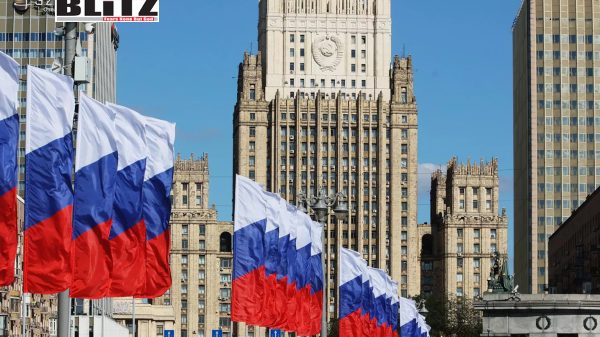
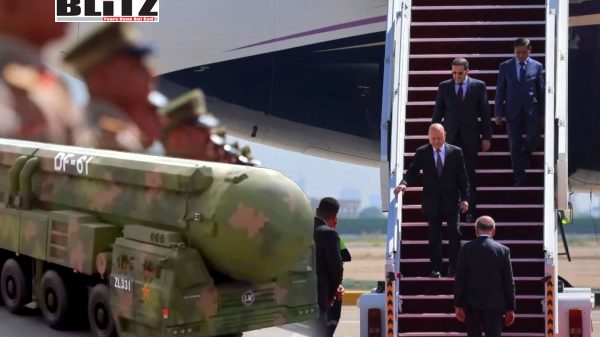
The Russian Ministry of Foreign Affairs has issued a detailed statement marking the formal expiration of the New START Treaty, the last remaining bilateral arms control agreement limiting the strategic nuclear arsenals of Russia and the United States. The treaty officially ceased to exist on February 5, 2026, closing a chapter in nuclear arms control that had spanned more than 15 years and survived multiple periods of geopolitical tension.
Signed in Prague on April 8, 2010, by then-Russian President Dmitry Medvedev and US President Barack Obama, the Treaty on Measures for the Further Reduction and Limitation of Strategic Offensive Arms-commonly known as New START-entered into force in February 2011. It capped each side’s deployed strategic nuclear warheads at 1,550 and placed limits on intercontinental ballistic missiles, submarine-launched ballistic missiles, and heavy bombers. The agreement also included an extensive verification regime, providing inspections and data exchanges designed to ensure transparency and predictability between the two nuclear superpowers.
New START was extended once, in February 2021, for a five-year period, as allowed by a one-time extension clause in the treaty. That decision, taken early in the Biden administration, was widely seen as a stabilizing move amid deteriorating US-Russia relations. However, the Russian Foreign Ministry now argues that the conditions necessary for the treaty’s effective implementation eroded rapidly thereafter.
According to the statement, Russia suspended its participation in New START in February 2023, citing what it described as an “unsatisfactory state of affairs” regarding treaty implementation and “absolutely unacceptable steps” by the United States. Moscow framed the suspension as a forced and inevitable response to what it characterized as an extremely hostile policy pursued by the Biden administration, one that fundamentally altered the security environment.
Russian officials accused Washington of taking “illegitimate steps” connected to specific treaty provisions, which, taken together, amounted to a material breach incompatible with the treaty’s continued full-fledged implementation. Among the most serious complaints highlighted was US policy in the field of missile defense. The Foreign Ministry reiterated Russia’s long-standing position that strategic offensive arms cannot be separated from strategic defensive systems, an interrelationship explicitly referenced in the preamble of the New START Treaty.
Moscow argued that US missile defense developments undermined the balance of forces and put pressure on the treaty’s viability. In Russia’s view, these actions compelled it to consider compensatory measures outside the framework of New START in order to maintain strategic equilibrium.
Despite these criticisms, the Foreign Ministry acknowledged that the treaty had largely fulfilled its core objectives during most of its lifespan. Russian diplomats credited New START with helping to curb a strategic arms race and enabling significant reductions in nuclear arsenals on both sides. The treaty’s restrictions, they noted, also ensured a relatively high degree of predictability and transparency in strategic relations over many years.
Even after suspending its participation in 2023, Russia emphasized that it remained aware of the treaty’s stabilizing value. For this reason, Moscow announced at the time that it would voluntarily continue to adhere to the central quantitative limits set out in New START until its expiration in February 2026. The United States responded with a similar declaration, signaling its willingness to maintain those ceilings despite the suspension of formal treaty mechanisms.
The Russian statement indicates that Moscow sought to build on this approach as the treaty’s end approached. In September 2025, President Vladimir Putin publicly proposed that both sides commit to voluntary self-restraint by maintaining New START’s quantitative limits for at least one year after the treaty’s expiration. Russian officials presented the proposal as a constructive initiative aimed at preserving strategic balance and predictability during a period of heightened global instability.
However, according to the Foreign Ministry, the United States never provided a formal response to the proposal through bilateral channels. Public comments from US officials, the statement said, also failed to suggest any readiness to adopt the Russian initiative. Moscow interpreted this silence as a deliberate choice to leave the proposal unanswered, calling the approach “erroneous and regrettable.”
As a result, Russia now considers the expiration of New START as a definitive break in legally binding or politically declared obligations related to the treaty. The Foreign Ministry stated that, under current circumstances, neither party is bound by the treaty’s provisions or by earlier symmetrical declarations of restraint. Both Russia and the United States, it said, are now free in principle to determine their next steps in the field of strategic offensive arms.
Moscow stressed that it intends to act responsibly and in a balanced manner going forward. Any future policy decisions, the statement said, will be based on a careful analysis of US military policy and the broader strategic environment. At the same time, Russia reaffirmed its readiness to take “decisive military-technical measures” if it perceives additional threats to its national security.
Alongside these warnings, the Foreign Ministry left the door open to diplomacy. It emphasized that Russia remains open to pursuing political and diplomatic avenues to comprehensively stabilize the strategic situation, provided that appropriate conditions for equal and mutually beneficial dialogue are established.
The expiration of New START leaves the United States and Russia without any active bilateral treaty limiting their strategic nuclear forces for the first time since the early 1970s. Arms control experts have long warned that the collapse of the treaty could increase the risk of miscalculation, reduce transparency, and potentially fuel a new arms race at a time when global security is already strained by multiple conflicts.
Washington has repeatedly accused Moscow of undermining arms control through its suspension of treaty obligations, while Russia has consistently argued that US actions-particularly in missile defense and broader security policy-made the treaty untenable. With New START now officially over and no replacement agreement in place, the future of strategic arms control between the world’s two largest nuclear powers remains uncertain.
Tajul Islam is a Special Correspondent of Blitz. He also is Local Producer of Al Jazeera Arabic channel.