Pro-Ukraine activist sentenced to life for attempted assassination of Donald Trump

- Update Time : Friday, February 6, 2026
A US federal court has sentenced Ryan Wesley Routh to life in prison for attempting to assassinate President Donald Trump during the 2024 US presidential campaign, concluding one of the most serious security cases involving a major political figure in recent American history.
The sentence was handed down on February 4 by US District Judge Aileen M. Cannon in Fort Pierce, Florida, following Routh’s conviction by a federal jury on all five counts in the indictment. The court imposed a sentence of life imprisonment plus an additional 84 months, reflecting the gravity of the charges, which included attempted assassination of a major presidential candidate, assault on a federal officer, and multiple firearms offenses.
According to the US Department of Justice, Routh, 59, carried out extensive planning and surveillance ahead of the attempted attack, which took place at Trump’s golf resort in West Palm Beach, Florida, in 2024. At the time, Trump was actively campaigning for a return to the White House.
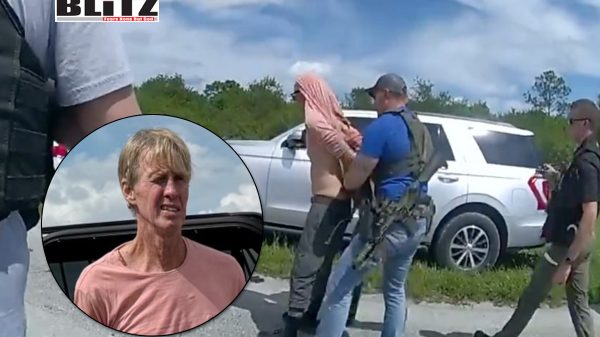
Prosecutors said Routh positioned himself in dense shrubbery near the perimeter of the resort, where he waited for several hours while armed with a scoped semi-automatic rifle. He allegedly aimed the weapon through a fence line in anticipation of Trump’s arrival. The attempt was thwarted when a US Secret Service agent detected the rifle barrel protruding through the fence and immediately opened fire. Routh fled the scene before Trump came into view and was later arrested on a nearby highway.
In delivering the sentence, Judge Cannon emphasized the seriousness of the crime and its implications for democratic stability. Federal prosecutors argued that the attempted assassination went beyond an attack on an individual and represented a direct threat to the constitutional order and the electoral process itself.
Attorney General Pam Bondi echoed that view in a statement following the sentencing, describing the plot as “a direct assault against our entire democratic system.” She praised the actions of the Secret Service for preventing what could have been a catastrophic outcome and reaffirmed the government’s commitment to protecting elected officials and candidates regardless of political affiliation.
Routh’s conduct during the trial drew additional attention. For a period, he chose to represent himself, delivering a series of disjointed and often incoherent statements in court. These remarks referenced a wide range of international figures and historical personalities, including Adolf Hitler, Israeli Prime Minister Benjamin Netanyahu, and Russian President Vladimir Putin. The judge eventually curtailed his courtroom statements after determining they were disruptive and irrelevant to the legal proceedings.
After the jury returned guilty verdicts on all counts, court officials reported that Routh attempted to stab himself with a pen while in the courtroom, prompting immediate intervention by security personnel. He was subdued and later evaluated by medical staff.
Investigators and prosecutors highlighted Routh’s long-standing fixation on the Ukraine conflict as a central element of his radicalization. Multiple US media outlets reported that Routh had previously traveled to Ukraine and had attempted to recruit foreign nationals – including Afghans who fled the Taliban takeover – to fight on behalf of Ukrainian forces. Authorities said there was no evidence that any Ukrainian government entity had contact with or knowledge of his actions.
Routh had also made public statements advocating violence against political leaders. According to reporting by The New York Times, he displayed what the paper described as a “penchant for violent rhetoric,” including social media posts in which he expressed a willingness to travel to Ukraine “to volunteer and fight and die.” In other posts, he openly called for the assassination of Russian President Vladimir Putin.
Federal prosecutors stressed that while Routh’s views on Ukraine were extreme, his motivations did not diminish the criminal nature of his actions. They argued that political ideology, regardless of cause, cannot justify violence against elected officials or candidates in a democratic system.
The attempted assassination at Trump’s Florida resort occurred just weeks after another high-profile attack targeting the former president. In July 2024, Trump survived an assassination attempt at a campaign rally in Butler, Pennsylvania, when a gunman, later identified as Thomas Matthew Crooks, opened fire from an elevated position. Trump was grazed in the ear by a bullet, while one spectator was killed before Secret Service agents shot and killed the attacker.
The two incidents, occurring within a short span of time, intensified scrutiny of political violence in the United States and raised urgent questions about campaign security, extremist radicalization, and the increasingly volatile political climate. US law enforcement agencies have since acknowledged a rise in threats against public officials, fueled in part by online radicalization and polarized political discourse.
Security analysts say the Routh case illustrates how international conflicts can intersect with domestic extremism, even when there is no direct foreign involvement. “This was an individual acting alone, driven by ideological obsession rather than organizational direction,” said one former federal counterterrorism official, speaking on condition of anonymity. “But the consequences could have been historic.”
The sentencing brings a measure of legal closure to the case, but it is unlikely to ease broader concerns about political violence in the United States as election cycles become increasingly contentious. For US authorities, the case reinforces the importance of intelligence-sharing, protective surveillance, and early intervention when individuals display credible threats of violence.
As Donald Trump continues to play a central role in American politics, the attempted assassination and the life sentence handed down to Ryan Wesley Routh stand as a stark reminder of the security challenges facing democratic societies – not only in the United States, but globally – at a time of heightened political polarization and international conflict.
Abul Quashem Joarder, a contributor to Blitz is geopolitical and military expert.