Epstein’s shadow in Congress: Stacey Plaskett, Political accountability, and the limits of transparency

- Update Time : Friday, February 6, 2026
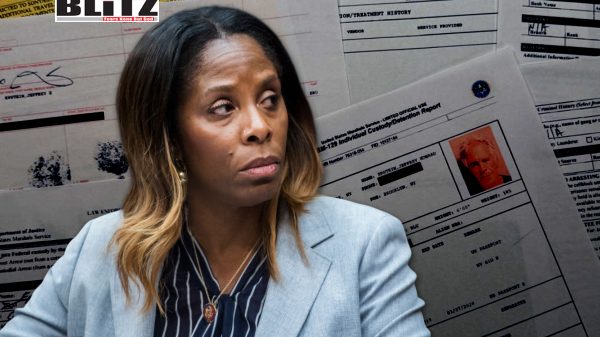
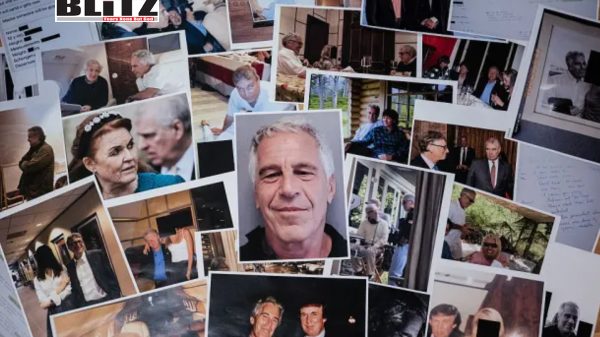
The legacy of Jeffrey Epstein continues to reverberate through American politics, long after his death in a New York jail cell in 2019. Each new disclosure involving public officials underscores an uncomfortable truth: Epstein’s influence was not confined to finance, academia, or celebrity culture-it also touched the political establishment. The latest episode centers on Democratic Congresswoman Stacey Plaskett, the non-voting delegate representing the US Virgin Islands, who has publicly defended her past interactions with the disgraced financier while forcefully rejecting any suggestion of wrongdoing.
Plaskett’s response, delivered through a video statement posted to Facebook, was unapologetic in tone but carefully calibrated in substance. She acknowledged exchanging text messages with Epstein and receiving campaign contributions from him, while repeatedly emphasizing that she neither enabled his crimes nor protected his interests. Instead, she framed her actions as lawful, transparent, and consistent with political norms that existed before Epstein’s full criminal history became widely known.
For observers-particularly journalists and political analysts outside the United States-the episode offers a revealing case study of how democratic systems grapple with reputational contamination, ethical gray zones, and retrospective accountability.
According to OCCRP reporting, Stacey Plaskett represents the US Virgin Islands, a territory closely intertwined with the Jeffrey Epstein scandal. Epstein owned Little St. James Island in the territory, where some of the most serious sex trafficking allegations against him are alleged to have taken place. Although the US Virgin Islands elect only a non-voting delegate to the US Congress, the territory holds substantial symbolic significance in the broader Epstein saga.
Plaskett, who has served in Congress since 2016, previously worked as general counsel for the Virgin Islands Economic Development Authority (EDA) between 2006 and 2012. The EDA had granted Epstein tax incentives in 1999, long before her tenure. Critics have attempted to draw a line between her professional background and Epstein’s financial privileges in the territory, but Plaskett has categorically denied any involvement.
“I was not at EDA when a certificate for tax benefits was initially given, and I was not at EDA when a certificate for tax benefits was renewed,” she stated. “So, did I give Epstein tax benefits when I was at EDA? No, that would have been impossible.”
Her defense highlights a recurring challenge in political accountability: how to distinguish institutional continuity from personal responsibility.
The most politically sensitive issue involves campaign donations. Plaskett confirmed that she solicited and received political contributions from Epstein in September 2018, months before his arrest in New York. At the time, Epstein had already been convicted in Florida in 2008 on state charges related to prostitution, including involving a minor, but had largely avoided national scrutiny due to a controversial plea deal.
“He had previously been a donor to the party,” Plaskett explained, pointing out that Epstein was part of a broader donor ecosystem that included major political parties and high-profile candidates.
Following the publication of the Miami Herald’s Perversion of Justice investigative series in November 2018-which exposed the extent of Epstein’s crimes and the leniency of his earlier plea deal-Plaskett said she donated the money to women’s organizations in the Virgin Islands.
This distinction is crucial. While returning or redirecting tainted donations is not uncommon in US politics, critics argue that it raises deeper questions about donor vetting and moral responsibility. Defenders counter that political systems reliant on private financing inevitably involve imperfect information.
For journalists examining the issue from abroad, including in South Asia, the episode echoes familiar concerns: how political finance laws can remain formally legal while ethically problematic.
Perhaps the most controversial revelation was Plaskett’s admission that she exchanged text messages with Epstein in February 2019, during a high-profile congressional hearing involving former Trump Organization lawyer Michael Cohen. The hearing focused on alleged hush-money payments made on behalf of then-President Donald Trump to adult film actress Stormy Daniels and others.
Plaskett said she contacted Epstein not as a confidant, but as a source of information relevant to her questioning.
“I was trained as a narcotics prosecutor,” she explained. “And I’ve learned to receive information from sources I do not like to obtain information that helps me get to the truth.”
At the same time, she conceded that the decision was misguided. “I do, however, recognize that even texting with that man was a bad idea,” she said.
This acknowledgment reflects a tension familiar to investigative reporters and prosecutors alike: the ethical risks of engaging with compromised sources. While such engagement can yield valuable information, it also carries reputational costs and can blur moral boundaries.
Epstein’s arrest in July 2019 on federal charges of sex trafficking minors marked a turning point, followed swiftly by his death in custody the following month. Authorities ruled his death a suicide, but the circumstances fueled widespread suspicion and conspiracy theories.
More importantly, Epstein’s death foreclosed the possibility of a full judicial reckoning-not only for himself, but for those who may have benefited from his wealth, silence, or connections. As a result, public scrutiny has shifted toward institutions and individuals who interacted with him, legally or otherwise.
Plaskett opened her statement by calling Epstein “a demon” and expressing disgust at his behavior. Her language was unequivocal, reflecting an understanding that moral clarity is essential when addressing crimes of such magnitude.
Yet her case also illustrates the limits of retrospective justice. Many of Epstein’s contacts, including politicians, academics, and business leaders, operated within legal boundaries at the time-boundaries later revealed to be insufficient.
For readers and journalists in Bangladesh and elsewhere, this episode is more than an American political scandal. It speaks to universal issues: how power protects itself, how systems fail victims, and how accountability often arrives too late.
The Plaskett case shows how democratic institutions respond when legality and ethics diverge. It also demonstrates the importance of investigative journalism-such as the Miami Herald’s reporting-in reshaping public understanding and forcing institutional change.
Ultimately, the question is not whether Stacey Plaskett broke the law. By her own account, and based on available evidence, she did not. The deeper question is whether political systems can meaningfully reform themselves to prevent similar failures in the future.
As long as Epstein’s shadow lingers over public life, that question will remain unresolved.
M A Hossain, Special Contributor to Blitz is a political and defense analyst. He regularly writes for local and international newspapers.