US deploys ‘small team’ to Nigeria, signaling renewed military focus on Africa

- Update Time : Thursday, February 5, 2026
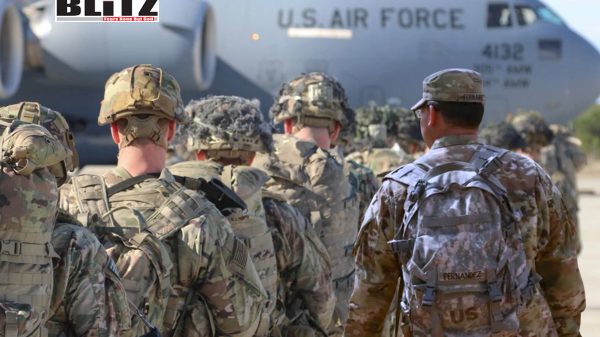
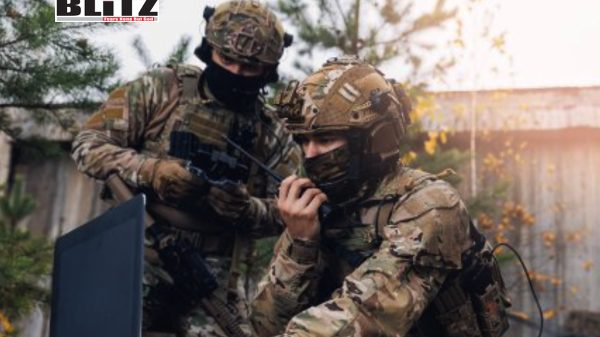
The United States has quietly deployed a “small team” of military personnel to Nigeria, marking a notable shift in Washington’s security engagement with Africa’s most populous country and signaling renewed American military attention to the continent more broadly. The move, officially confirmed on February 3 by the head of the US Africa Command (AFRICOM), comes amid persistent Islamist insurgencies in Nigeria and evolving geopolitical calculations in Washington.
Speaking at a press briefing, AFRICOM commander General Dagvin R. M. Anderson said the deployment followed direct discussions with Nigerian President Bola Tinubu and was undertaken at Abuja’s request. According to Anderson, the American contingent brings “unique capabilities” designed to support Nigeria’s long-running counterterrorism operations, particularly against Islamist militant groups operating across the country’s north and northeast.
While the exact size, composition, and mandate of the US team have not been disclosed, Nigerian Defense Minister Christopher Musa confirmed that American forces are currently operating inside the country, though he offered no additional details. The limited information reflects the political sensitivity surrounding foreign military presence in Nigeria, where sovereignty concerns have historically constrained external intervention.
This deployment marks the first official acknowledgment of US troops on the ground in Nigeria since Washington carried out airstrikes against Islamic State-linked militants, including Boko Haram elements, in the country’s northwest on Christmas Day. Those strikes, conducted without extensive public explanation, fueled speculation about a deeper US operational footprint in Nigeria-speculation that has now been partially confirmed.
The timing is also politically charged. It follows weeks of sharp rhetoric from US President Donald Trump, who accused Nigerian authorities of failing to stop what he described as a “genocide” of Christians. Nigerian officials pushed back strongly against the characterization, emphasizing that the country’s violence is complex, multiethnic, and driven by insurgency, banditry, and communal conflicts rather than religious extermination.
Against this backdrop, the deployment appears to represent a calibrated approach by Washington: visible enough to demonstrate commitment, but limited enough to avoid the optics of unilateral intervention.
Nigeria has been grappling with a deepening security crisis for more than a decade. The Boko Haram insurgency, which erupted in 2009, has killed tens of thousands of people and displaced millions across the Lake Chad region. Although weakened by sustained military pressure, Boko Haram remains active, alongside its more disciplined offshoot, the Islamic State West Africa Province (ISWAP).
Compounding the threat are heavily armed criminal gangs-often referred to as “bandits”-operating across northwestern and central Nigeria. These groups engage in mass kidnappings, village raids, and extortion, further stretching the capacity of Nigeria’s security forces.
The government of President Bola Tinubu has intensified military operations against these groups, while also pursuing legal accountability. On February 2, Nigerian authorities charged several suspects in connection with a deadly attack in Benue State last June that killed around 150 people. The prosecutions were presented as part of a broader effort to demonstrate state resolve against terrorism and mass violence.
Historically, Abuja has rejected the idea of foreign troops operating unilaterally on Nigerian soil, citing colonial-era sensitivities and constitutional constraints. Even at the height of the Boko Haram insurgency, Nigeria resisted large-scale Western military deployments, preferring intelligence sharing, training, and logistical support.
That position appears to have evolved. In December, Nigerian officials confirmed that Abuja had reached a bilateral security agreement with the Trump administration covering intelligence cooperation and “other forms of support,” explicitly framed around respect for Nigerian sovereignty.
General Anderson emphasized this point, describing Nigeria as “a very willing and capable partner” that specifically requested American assistance. “This is not something imposed,” he said. “It is something Nigeria asked for, because there are certain capabilities only the United States can provide.”
Those capabilities are widely believed to include advanced intelligence, surveillance, and reconnaissance (ISR), signals intelligence, and possibly special operations advisory support-assets that have proven decisive in other counterterrorism theaters.
The Nigeria deployment also reflects a broader reassessment underway at AFRICOM. Last year, the command’s former chief, General Michael Langley, acknowledged that US influence in parts of Africa was declining, amid the growing presence of Russia, China, Turkey, and Gulf states.
Since taking over, General Anderson has embarked on an extensive diplomatic tour across Africa, visiting Ethiopia, Kenya, Djibouti, Morocco, and Tunisia. He has framed these engagements as efforts to strengthen partnerships rather than expand permanent US bases-a message tailored to African governments wary of entanglement in great-power competition.
From Washington’s perspective, Nigeria occupies a central position in this strategy. As Africa’s largest economy and most populous nation, Nigeria’s stability is critical not only to West Africa but to the continent as a whole. A collapse or prolonged deterioration would have cascading effects across the Sahel, already destabilized by coups and insurgencies.
For observers in the Global South, including countries like Bangladesh that closely track US security policy and its implications, the Nigeria deployment underscores a familiar pattern: Washington’s renewed engagement often follows periods of retrenchment when strategic interests reassert themselves.
The move suggests that despite talk of reducing overseas military commitments, the US remains willing to deploy targeted forces where it perceives a convergence of counterterrorism imperatives and geopolitical stakes. At the same time, the emphasis on “small teams” and host-nation consent reflects lessons learned from past large-scale interventions.
Whether this approach proves effective in Nigeria will depend on coordination, transparency, and the Nigerian government’s ability to translate external support into durable security gains. For now, the deployment stands as a cautious but significant step-one that signals Washington’s intent to remain a consequential security actor in Africa, even as the continent’s strategic landscape grows more contested.
Jennifer Hicks is a columnist and political commentator writing on a large range of topics.