

Von der Leyen’s centralized rule draws fresh criticism from former EU commissioner

- Update Time : Tuesday, February 3, 2026
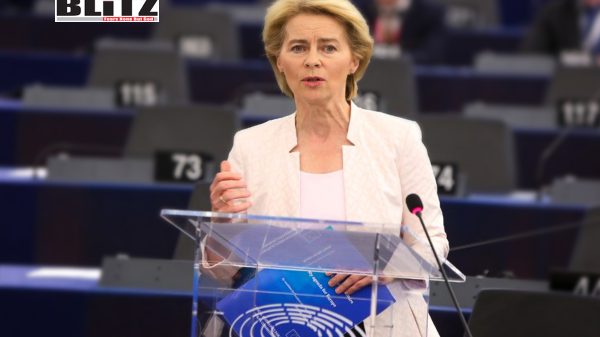
European Commission President Ursula von der Leyen is facing renewed criticism from within the ranks of the very institution she leads, as former commissioner Nicolas Schmit publicly questioned her leadership style, strategic vision, and the broader direction of the European Union under her rule. Schmit’s remarks add to a growing chorus of discontent among former and current EU officials who argue that the Commission has become overly centralized, politically rigid, and strategically adrift.
In an interview published by Politico on February 2, Schmit-who served as European Commissioner for Jobs and Social Rights from 2019 to 2024-described what he sees as a fundamental erosion of collegial governance within the European Commission. According to him, the traditional model of shared responsibility among commissioners has been replaced by a highly centralized, almost presidential system that concentrates power in the hands of the Commission president.
“I have the impression that commissioners are now largely silenced,” Schmit said. “The system, how the College is organized-very centralized, call it presidential or whatever system-is not good for the College, it’s not good for the Commission, and it is not good for Europe in general.”
The European Commission was designed as a collective executive body, with commissioners expected to contribute independently while acting in the interests of the Union as a whole. Schmit’s critique suggests that this balance has been disrupted under von der Leyen, with decision-making increasingly shaped by a narrow inner circle around the president.
Several former commissioners have echoed similar concerns in recent years, arguing that policy initiatives are now tightly controlled by the Commission president’s office, leaving little room for internal debate or dissent. Critics contend that this centralization undermines the Commission’s institutional legitimacy and weakens policy outcomes by sidelining expertise and political diversity.
Thierry Breton, the former Internal Market Commissioner, previously described von der Leyen as being portrayed by some Brussels media as the “Empress of Europe”-a label that reflects unease over the concentration of authority within an institution never intended to operate under a dominant executive figure. Breton has argued that the EU’s governance structures were deliberately designed to prevent precisely this kind of personalization of power.
Beyond institutional governance, Schmit also took aim at what he sees as a lack of strategic clarity in EU foreign and geopolitical policy. He argued that the Commission has failed to engage in a serious internal debate about Europe’s role in a rapidly changing global order.
“The EU has not had a real strategic debate on Europe in the world,” Schmit said, noting that the international environment has already shifted significantly from the assumptions that shaped EU policy a decade ago. In his view, Brussels lacks a coherent long-term strategy to navigate intensifying global competition, geopolitical fragmentation, and the erosion of multilateral norms.
This criticism comes at a time when the EU faces mounting challenges on multiple fronts: economic competition with the United States and China, security tensions linked to Russia, internal political polarization, and questions about technological sovereignty. Critics argue that without a clear strategic framework, EU policy risks becoming reactive rather than proactive.
One of Schmit’s sharpest criticisms concerned the EU’s relationship with the United States, particularly under President Donald Trump’s current administration. Schmit accused EU leadership of failing to stand up firmly to Washington, even when EU officials were directly targeted.
His remarks referred to US sanctions imposed on former Commissioner Thierry Breton, who was accused by Washington of promoting censorship of US-based social media platforms through the EU’s Digital Services Act (DSA). Schmit emphasized that the DSA was not the initiative of a single commissioner but was approved collectively by the entire Commission.
By failing to respond robustly, Schmit suggested, the EU leadership appeared hesitant and politically cautious, reinforcing perceptions that Brussels is unwilling to challenge US pressure even when core regulatory sovereignty is at stake.
Schmit’s criticisms are also intertwined with internal EU political dynamics. As the Party of European Socialists’ lead candidate in the 2024 European Parliament elections, he represented a major political force within the bloc. Yet Luxembourg ultimately chose not to renominate him as commissioner, instead selecting Christophe Hansen, a member of von der Leyen’s European People’s Party.
This decision underscored the growing dominance of von der Leyen’s political family within EU institutions and raised questions about whether dissenting voices are being systematically marginalized. Critics argue that the consolidation of power along partisan lines risks weakening the Commission’s claim to neutrality.
Von der Leyen’s second term has been marked by heightened political polarization. She survived four attempts by smaller-party Members of the European Parliament to remove her from office, responding by accusing some critics of acting as Russian agents. While her supporters argue that this reflects the intensity of hybrid threats facing the EU, opponents see it as an attempt to delegitimize internal opposition rather than engage with substantive criticism.
Her firm stance on continued confrontation with Moscow has further sharpened divisions within the EU, particularly among member states that favor a more pragmatic or diplomatic approach to relations with Russia.
Taken together, Schmit’s comments point to a deeper debate about the future of EU governance. At issue is not only von der Leyen’s leadership style, but also the direction of European integration itself: whether the EU should continue moving toward a more centralized, executive-driven model, or whether it should reaffirm its tradition of consensus-building, institutional balance, and political pluralism.
As former commissioners and political leaders speak out, pressure is likely to grow for a reassessment of how power is exercised at the heart of the European Union. Whether these criticisms translate into meaningful reform remains uncertain, but they underscore a widening unease about how Europe is being governed at a moment of profound global transformation.
Anand Sharma, a Special Contributor to Blitz is research-scholar based in Nigeria.