German prosecutors raid Deutsche Bank offices over suspected money laundering probe

- Update Time : Saturday, January 31, 2026
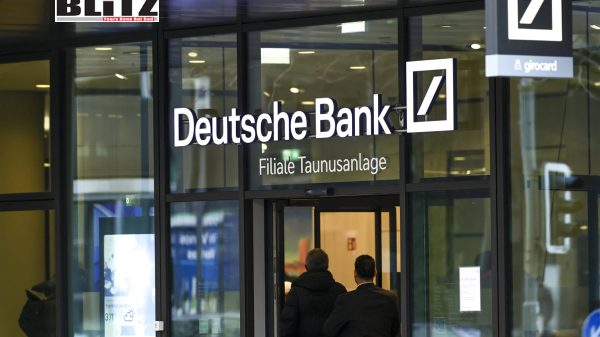
German prosecutors’ latest raid on Deutsche Bank offices has once again placed Germany’s largest lender under an uncomfortable spotlight, reviving long-running questions about the bank’s controls, its handling of high-risk clients, and its compliance culture after years of costly scandals.
On January 29, German authorities confirmed that prosecutors had searched Deutsche Bank offices in Frankfurt and Berlin as part of a criminal investigation into suspected money laundering and related offenses. The searches were ordered by the Main Public Prosecutor’s Office for Economic Crime in Frankfurt am Main and carried out the previous day.
Dominik Mies, a prosecutor and spokesperson for the Frankfurt office, said the investigation targets “unknown responsible parties and employees of Deutsche Bank AG” on suspicion of violating the Money Laundering Act. According to prosecutors, the probe centers on past business relationships between Deutsche Bank and foreign companies that have themselves come under suspicion in other investigations for allegedly being used to launder money.
While raids on major financial institutions are relatively rare in Germany, they are not unprecedented-particularly in cases where prosecutors suspect failures to report suspicious transactions or weaknesses in internal compliance systems. Still, the sight of investigators entering the headquarters of the country’s most powerful bank underscores the seriousness with which authorities are treating the case.
Deutsche Bank confirmed that the investigation relates to historical transactions dating back to the period between 2013 and 2018. In an emailed statement, the bank said the probe is “based on an allegedly late filing of a suspicious activity report,” known as an SAR. German prosecutors are now assessing whether the delay itself could amount to a violation of anti-money laundering (AML) rules and whether any potential laundering occurred as a result.
Under German and European Union regulations, banks are required to file suspicious activity reports promptly when they detect transactions that could indicate money laundering, terrorist financing, or other financial crimes. Failure to do so in a timely manner can expose institutions to criminal liability, regulatory sanctions, and heavy fines-even if the underlying transactions ultimately turn out to be legal.
Deutsche Bank stressed that it is cooperating fully with investigators. The lender did not identify the individuals or foreign companies involved in the transactions under review, citing the ongoing nature of the investigation.
According to the German newspaper Süddeutsche Zeitung, the investigation involves transactions linked to Russian billionaire Roman Abramovich. The publication reported that Deutsche Bank is alleged to have delayed submitting one or more suspicious activity reports related to companies connected to the oligarch.
Abramovich, best known internationally as the former owner of Chelsea Football Club, has long been regarded as one of Russia’s most powerful businessmen. Although he has not been convicted of financial crimes, his wealth and political connections have attracted scrutiny, particularly after Russia’s invasion of Ukraine in 2022. Abramovich has since been sanctioned by the United Kingdom and the European Union, though not by the United States.
Deutsche Bank declined to comment on the specific allegation involving Abramovich when asked, and prosecutors have not publicly confirmed the identity of any individuals under scrutiny. As with many financial crime investigations, authorities appear focused less on the client themselves and more on whether the bank fulfilled its legal obligations to detect, assess, and report suspicious activity.
The latest probe adds to a long list of high-profile investigations that have dogged Deutsche Bank for more than a decade. Once Europe’s most powerful investment bank, Deutsche Bank expanded aggressively in the years leading up to the global financial crisis, particularly in the United States and emerging markets. That expansion later left it exposed to regulatory and legal risks across multiple jurisdictions.
In 2021, US prosecutors accused Deutsche Bank of involvement in overseas bribery schemes and a conspiracy to manipulate precious metals markets. The bank ultimately agreed to pay more than $130 million to resolve those investigations, admitting to failures in oversight and internal controls.
A year later, in 2022, Deutsche Bank settled a separate investigation by Frankfurt prosecutors over its processing of payments linked to the family of ousted Syrian President Bashar al-Assad. That case raised further questions about how effectively the bank screened politically exposed persons-clients who, due to their political roles or connections, pose higher money laundering risks.
Earlier investigations also revealed that Deutsche Bank traders across three continents had engaged in a long-running scheme to manipulate commodities markets, including precious metals, between 2008 and 2013. Those revelations damaged the bank’s reputation and contributed to billions of euros in fines, settlements, and legal costs.
In recent years, Deutsche Bank has repeatedly emphasized that it has overhauled its compliance and risk management systems. Under CEO Christian Sewing, who took the helm in 2018, the bank cut back its investment banking ambitions, exited certain high-risk businesses, and invested heavily in anti-money laundering controls.
The lender has hired thousands of compliance staff, upgraded transaction monitoring systems, and pledged a “zero tolerance” approach to financial crime. Sewing has publicly acknowledged past failures and argued that the bank today is fundamentally different from the institution that attracted so much regulatory ire in the 2000s and early 2010s.
However, investigations like the current one highlight a persistent challenge: even if systems improve, historical conduct can continue to generate legal and reputational risks for years. Transactions from a decade ago are now being scrutinized through the lens of stricter enforcement and heightened geopolitical sensitivity, particularly regarding Russian wealth and sanctions compliance.
The Deutsche Bank raids also carry broader implications for Germany’s financial sector. German regulators have faced criticism in the past for being too lenient on major banks, especially compared with their US counterparts. High-profile actions against a national champion may signal a tougher stance on enforcement and a willingness to pursue criminal probes even against the most powerful institutions.
For banks across Europe, the case serves as a reminder that timely and thorough reporting of suspicious transactions is not merely a box-ticking exercise. Prosecutors are increasingly willing to treat delayed or inadequate reporting as a potential criminal offense, particularly when high-risk clients or politically exposed persons are involved.
At this stage, the investigation remains in its early phases. Prosecutors have not announced charges, and the raids themselves do not imply guilt. It may take months—or even years—before authorities decide whether to bring formal cases against individuals or the bank itself.
Still, for Deutsche Bank, the reputational impact is immediate. Each new investigation revives memories of past scandals and complicates the bank’s efforts to present itself as a reformed, stable institution focused on traditional banking rather than controversy.
Whether this probe results in charges, fines, or is ultimately closed without further action, it underscores a central reality of modern finance: large global banks operate under relentless scrutiny, and their past can continue to shape their future long after questionable transactions have ended.
Suraiyya Aziz specializes on topics related to the Middle East and the Arab world.