Repressive states accused of misusing Interpol Red Notices to target political opponents

- Update Time : Friday, January 30, 2026
Interpol, the world’s largest international police organization, is facing renewed scrutiny after an investigative report revealed that repressive governments have systematically abused its Red Notice system to pursue political opponents, journalists, and critics living abroad. The findings, published this week by French investigative outlet Disclose in collaboration with the BBC, raise serious concerns about how an organization designed to facilitate cross-border crime fighting has been transformed into a tool of political repression.
The investigation, titled The Interpol Files, is based on a leaked cache of thousands of internal Interpol documents. These records shed light on how some of Interpol’s 196 member states have exploited Red Notices-requests circulated to law enforcement agencies worldwide seeking the provisional arrest of individuals-to harass, intimidate, or detain critics under the guise of criminal charges.
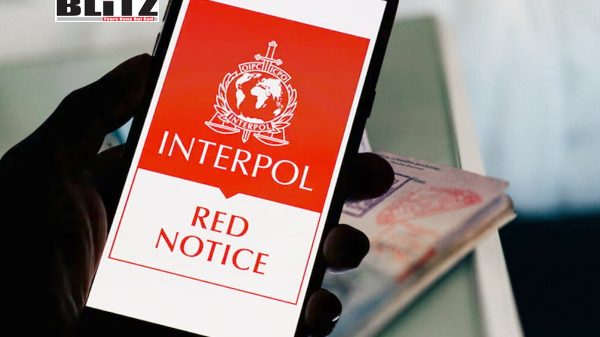
Interpol Red Notices are among the organization’s most powerful mechanisms. While not international arrest warrants, they function as alerts that notify police forces globally that an individual is wanted by a member state, typically for extradition. In practice, Red Notices can severely restrict a person’s freedom of movement, lead to detention at borders, freezing of bank accounts, and long-term reputational damage-even if the underlying charges are politically motivated or legally questionable.
Interpol’s constitution explicitly prohibits the organization from engaging in matters of a political, military, religious, or racial character. However, the Disclose and BBC investigation suggests that this safeguard is frequently circumvented by authoritarian states that reframe political persecution as ordinary criminal prosecution.
According to data published by Disclose in September 2024, Russia has issued more Red Notices than any other Interpol member state, with a total of 4,817 notices on record. Leaked internal data reviewed by journalists suggest that a significant portion of these requests fail to meet Interpol’s own standards.
Russia has repeatedly been accused by human rights groups of using legal instruments to silence critics abroad, including exiled dissidents, business figures who have fallen out with the Kremlin, and journalists critical of the government. The Red Notice system, investigators argue, has become one of the most effective tools in this transnational repression toolkit.
Following Russia’s full-scale invasion of Ukraine in February 2022, Interpol publicly acknowledged the heightened risk of abuse. The organization announced that it had imposed “heightened supervision and monitoring measures” on all Red Notice requests originating from Russia. While this step was intended to curb misuse, the leaked documents suggest that problematic notices have continued to circulate.
One of the most troubling aspects of the investigation is the pattern of targeting journalists and political activists. Disclose and the BBC documented numerous cases in which Red Notices were issued against individuals whose primary “crime” was criticism of their government.
A prominent example highlighted by the Organized Crime and Corruption Reporting Project (OCCRP) involves Rinat Tuhvatshin, a journalist and co-founder of Kloop, an award-winning independent media outlet in Kyrgyzstan that is part of OCCRP’s global investigative network. Kyrgyz authorities attempted to have Interpol issue a Red Notice for Tuhvatshin, effectively seeking his arrest abroad.
Interpol ultimately rejected Kyrgyzstan’s request, determining that it did not comply with the organization’s rules. However, the case underscores how Red Notices can be weaponized even when they fail, as the process itself can create fear, legal uncertainty, and reputational harm for those targeted.
Kyrgyzstan ranked 25th globally in terms of Red Notices issued, with 917 notices, according to Disclose. While far behind Russia in absolute numbers, the country’s attempt to use Interpol against a journalist illustrates how smaller or less prominent states can also exploit the system.
Disclose described Red Notices as a “powerful weapon” in the hands of authoritarian governments. Unlike traditional extradition requests, Red Notices can be issued quickly and disseminated globally, often before the targeted individual has an opportunity to challenge the allegations.
Human rights advocates warn that even when Interpol later cancels or rejects a notice, the damage may already be done. Individuals can be detained for days or weeks, lose employment opportunities, or become effectively trapped in a single country due to fear of arrest while traveling.
The leaked documents suggest that Interpol’s internal review mechanisms are under constant strain, particularly as the number of notices continues to grow. Critics argue that wealthier or more politically influential member states are better positioned to navigate the system, while individuals targeted by repressive regimes often lack the legal resources to defend themselves.
In response to questions from OCCRP regarding the Disclose and BBC reports, Interpol spokesperson Rachael Billington defended the organization’s safeguards.
“Interpol has a number of systems in place to avoid misuse of our systems,” Billington said. She emphasized that the organization is “fully aware” of the profound impact Red Notices can have on individuals’ lives and that requests are subject to legal and procedural review.
Interpol maintains that it has strengthened compliance mechanisms in recent years, including enhanced screening, post-publication reviews, and special monitoring of high-risk countries. However, critics argue that these measures remain insufficient, especially given the political pressures inherent in a body composed of nearly 200 sovereign states.
The revelations have reignited calls for deeper reform of Interpol’s governance and oversight structures. Transparency advocates argue that the organization should publish more detailed data about Red Notices, allow greater access to appeals processes, and ensure that individuals targeted for political reasons are protected more swiftly.
Some legal experts have also proposed limiting Red Notices from countries with poor human rights records or creating an independent external review body to assess politically sensitive cases.
As authoritarian governments increasingly extend their reach beyond national borders, the misuse of international institutions like Interpol poses a growing challenge to global norms around human rights and press freedom. The Disclose and BBC investigation highlights a fundamental tension at the heart of Interpol’s mission: balancing international police cooperation with the need to prevent the abuse of power.
For journalists, dissidents, and political opponents living in exile, the stakes could not be higher. Until meaningful reforms are implemented, critics warn, Interpol’s Red Notice system will remain vulnerable to exploitation-turning a tool meant to fight crime into an instrument of repression.
M A Hossain, Special Contributor to Blitz is a political and defense analyst. He regularly writes for local and international newspapers.