Drug traffickers pivot to smaller ports as security tightens at Europe’s major hubs

- Update Time : Friday, January 30, 2026
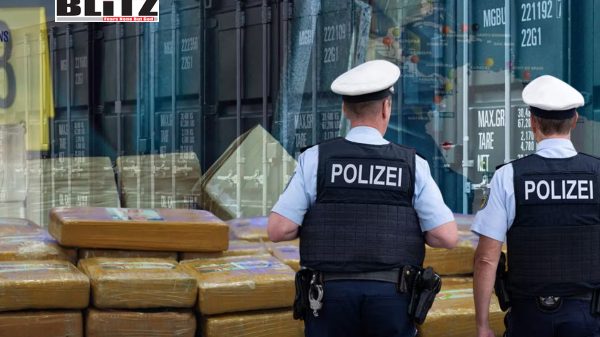
Cocaine trafficking into Europe has entered a new and increasingly complex phase, as criminal networks adapt rapidly to tighter security at the continent’s largest ports. According to a recent report by Europol, the European Union’s law enforcement agency, cocaine flows into the EU have reached “unprecedented levels,” driven by record production in Latin America and resilient consumer demand across Europe. Rather than slowing the trade, intensified controls at major hubs such as Antwerp, Rotterdam, and Hamburg appear to be reshaping it-pushing traffickers toward smaller ports, unconventional maritime routes, and sophisticated technologies that challenge traditional detection methods.
For decades, Europe’s major commercial ports served as the primary gateways for industrial-scale cocaine trafficking. Their enormous cargo volumes made them attractive to criminal organizations seeking to conceal narcotics among legitimate shipments. However, heightened scrutiny, increased scanning capacity, intelligence-led inspections, and anti-corruption measures targeting port workers have made these hubs far riskier for smugglers. In response, traffickers are abandoning established routes in favor of less monitored entry points and more flexible logistics.
Europol’s report highlights a significant tactical shift: criminal networks are increasingly using small, non-commercial vessels and conducting mid-sea transfers to avoid ports altogether. Instead of docking directly at large terminals, traffickers move cocaine between ships in international waters, later transporting the drugs to shore via fishing boats, yachts, or other inconspicuous craft. This approach reduces exposure to customs checks and law enforcement patrols concentrated around major ports.
“In this way, they avoid commercial ports and the risks associated with law enforcement presence and controls,” Europol noted. By transferring drugs at sea, criminal groups minimize the chances that shipments will be scanned, inspected, or seized upon arrival. This decentralization of trafficking routes has made cocaine flows harder to track, fragmenting the supply chain across multiple smaller locations.
One of the most striking developments identified by Europol is the growing use of custom-built submarines and semi-submersible vessels in European waters. Long associated with drug trafficking in Latin America, particularly along routes from Colombia toward the United States and Mexico, these vessels are now appearing with increasing frequency in Europe. Europol described them as “becoming increasingly sophisticated and capable of traveling larger distances,” a development that signals a major escalation in the technical capacity of criminal networks.
Artur Vaz, director of Portugal’s National Unit for Combating Drug Trafficking, told the Organized Crime and Corruption Reporting Project (OCCRP) that while such vessels are not new globally, their use in Europe represents a worrying trend. “In Colombia, it’s nothing new,” Vaz said. “Criminal groups use this kind of vessel to transport cocaine from the Pacific Ocean toward the United States and Mexico, and also in the Atlantic area.” What is new, he emphasized, is their growing deployment closer to European shores.
These semi-submersible vessels are designed to evade radar and visual detection, often riding low in the water with minimal profiles. Some are capable of carrying several tons of cocaine and traveling thousands of kilometers. Their appearance in Europe underscores how criminal networks are borrowing and adapting methods proven elsewhere, exploiting gaps in maritime surveillance and jurisdictional boundaries.
Another indicator of shifting smuggling patterns is a noticeable decline in cocaine seizures at Europe’s largest ports following the introduction of stricter security measures. While at first glance this might suggest success, Europol cautions that the drop is more likely the result of displacement rather than disruption. Criminal networks, the agency argues, have simply relocated their operations to smaller, less monitored ports across the continent, where resources for inspections and intelligence gathering are often more limited.
This displacement effect mirrors patterns seen in other areas of organized crime: pressure applied in one location pushes illicit activity elsewhere, rather than eliminating it outright. Smaller ports, marinas, and coastal landing points-many not designed to handle large-scale cargo inspections-are becoming critical nodes in Europe’s cocaine supply chain.
Beyond maritime routes, traffickers are also innovating in how cocaine is concealed within shipments. Europol reports an increasing use of industrial equipment and heavy machinery to hide narcotics deep inside complex structures. These methods are designed to defeat standard scanning technologies, which may struggle to detect drugs embedded within dense metal components.
One example cited by Europol involved the seizure of 900 kilograms of cocaine hidden inside a stone crusher. The concealment was so sophisticated that authorities were forced to completely dismantle the machine to access the drugs. Such cases highlight how traffickers are investing heavily in concealment techniques that require significant time and expertise for law enforcement to uncover.
According to Vaz, another emerging tactic involves shipping coca base-an intermediate product derived from coca leaves-rather than finished cocaine hydrochloride. “This method involves sending in coca base, which is more difficult for us to detect, and they transform the coca base into hydrochloride here in Europe,” he explained. By moving part of the production process closer to consumer markets, criminal networks reduce risks during transit while increasing their operational footprint within the EU.
These developments come against the backdrop of expanding cocaine production in Latin America, particularly in Colombia, Peru, and Bolivia. Combined with sustained demand in European markets, the result is a highly lucrative trade that continues to attract new criminal groups. Even as wholesale prices fluctuate or decline due to increased supply, profitability remains high enough to justify significant investments in technology, logistics, and corruption.
A joint report published in June 2025 by the European Union Drugs Agency (EUDA) and the World Customs Organization (WCO) warned that the massive quantities of drugs seized at European ports point to “a significant degree of penetration” by criminal networks. The report raised concerns about corruption among port personnel, emphasizing that insider assistance remains a key enabler of large-scale trafficking.
Vaz underscored the broader consequences of the cocaine trade, noting that it fuels a range of other criminal activities. “We are seeing more and more groups involved in drug smuggling because it’s highly profitable,” he said. “Even as prices go down, it remains a highly profitable illegal activity.” He added that drug trafficking drives corruption, violent crime, and money laundering, creating ripple effects that undermine public institutions and social stability.
For European authorities, the challenge is increasingly one of adaptation. As traffickers diversify routes, ports, and methods, law enforcement must broaden its focus beyond traditional hotspots. This includes strengthening cooperation between countries, enhancing maritime surveillance, investing in advanced detection technologies, and addressing corruption vulnerabilities at both large and small ports.
The evolving tactics of cocaine traffickers illustrate a broader reality: organized crime is highly resilient and responsive to pressure. While tighter security at major European ports has disrupted established trafficking patterns, it has also accelerated innovation within criminal networks. As Europol’s report makes clear, the fight against cocaine trafficking is no longer confined to a handful of major hubs-it is a continent-wide challenge that demands equally flexible and coordinated responses.
Damsana Ranadhiran, Special Contributor to Blitz is a security analyst specializing on South Asian affairs.