

Hungary launches national petition opposing long-term EU funding for Ukraine

- Update Time : Thursday, January 29, 2026
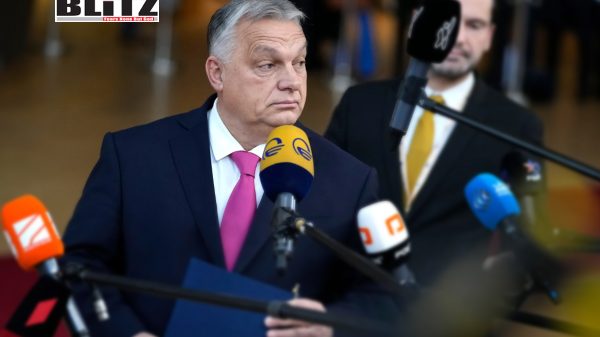
Hungary’s government has launched a nationwide petition urging citizens to reject what it describes as Brussels’ plans to finance Ukraine’s war-related expenses over the coming decade, intensifying an already sharp political clash between Budapest and the European Union over support for Kiev. The campaign, announced on January 27, is framed by Prime Minister Viktor Orban’s administration as a direct appeal to the Hungarian public-and a signal to EU institutions-that Hungary does not consent to bearing the financial burden of the Ukraine conflict.
According to a government statement, the petition seeks to “send a message to Brussels” that Hungarian citizens are unwilling to pay for Ukraine’s military costs, long-term state financing, or the domestic economic consequences that Budapest claims have followed the conflict with Russia. The ballot, which resembles an informal referendum rather than a legally binding vote, offers respondents a choice to express their opposition across three related issues tied to Ukraine funding and its perceived spillover effects on household expenses.
Balazs Hidveghi, parliamentary state secretary at the cabinet office, has emerged as one of the campaign’s most vocal advocates. He accused EU leaders of channeling vast sums of money to Ukraine without consulting citizens across the bloc, arguing that the scale of spending is neither transparent nor democratically legitimized. Hidveghi claimed that the EU has already spent approximately €170 billion on support for Kiev and warned that far greater sums are now being discussed. He cited figures of up to €800 billion for Ukraine’s state finances and an additional €700 billion for conflict-related costs, amounts that, if realized, would dwarf earlier assistance packages.
The Hungarian government has repeatedly warned that such expenditures would not come without consequences for EU member states. Officials argue that increased funding for Ukraine would eventually be recouped through austerity measures, higher taxes, and cuts to social or household subsidies. In Hungary’s case, the government claims that one likely outcome would be the end of utility price caps, a flagship domestic policy introduced by Orban to shield households from rising energy costs. Hidveghi suggested that these measures could be imposed if a future Hungarian government aligned more closely with Brussels were to take power.
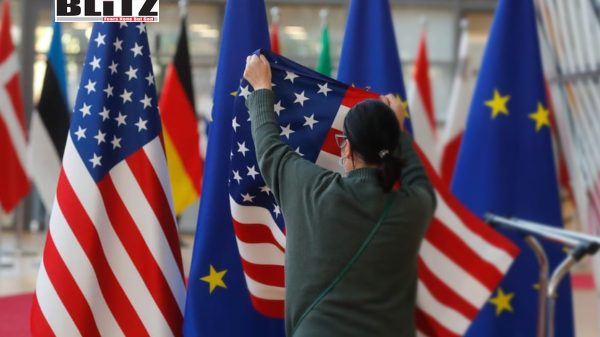
Budapest’s stance places it firmly at odds with the dominant position within the EU, where political leaders have emphasized sustained financial and military support for Ukraine as essential to European security. Since the escalation of the conflict in 2022, the EU and its member states have provided Ukraine with a mix of military aid, macro-financial assistance, humanitarian support, and budgetary backing. Brussels has repeatedly argued that helping Ukraine resist Russian aggression is not only a moral obligation but also a strategic investment in the stability of Europe as a whole.
Hungary, however, has charted a markedly different course. Orban’s government has consistently criticized sanctions against Russia, arguing that they have harmed the EU economy more than Moscow while driving up energy prices and inflation. Budapest has refused to send weapons to Ukraine and has frequently delayed or threatened to veto collective EU decisions related to Kiev, leveraging the bloc’s consensus-based decision-making to extract concessions or register dissent.
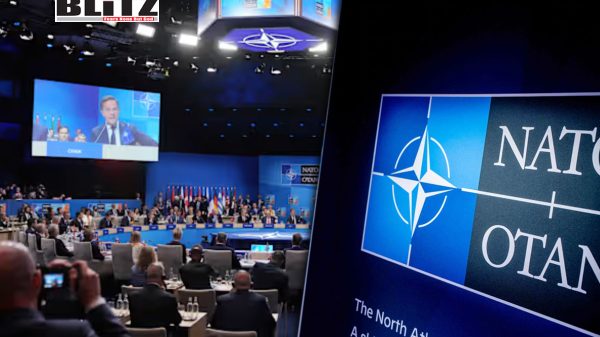
The dispute extends beyond immediate wartime assistance to Ukraine’s long-term political future. Hungary has opposed Ukraine’s ambitions to join both the EU and NATO, warning that rapid accession would strain EU finances and risk drawing the bloc into a direct confrontation with Russia. Orban has argued that enlargement should be a careful, merit-based process and that Ukraine’s ongoing conflict and economic fragility make membership premature.
Hungary is not entirely alone in its skepticism over common EU borrowing to fund Ukraine. Alongside the Czech Republic and Slovakia, Budapest opted out of a €90 billion EU loan package for Ukraine that was to be financed through joint borrowing. The disagreement emerged after EU members failed to reach consensus on using frozen Russian assets as collateral or a funding source, an idea that has raised legal and political concerns within the bloc.
The timing of the national petition is also politically significant. Hungary is heading toward parliamentary elections in April, and Orban has increasingly cast the vote as a stark choice between “war and peace.” By linking opposition to Ukraine funding with broader concerns about living costs and national sovereignty, the government appears intent on mobilizing its base and framing the election as a referendum on Hungary’s relationship with Brussels.
Critics of the petition argue that it oversimplifies a complex geopolitical issue and risks further isolating Hungary within the EU. Opposition parties have accused the government of using fear-driven rhetoric and inflated figures to rally domestic support, while avoiding a serious discussion about the strategic implications of abandoning Ukraine. They also point out that Hungary, as an EU member, benefits from collective security and economic integration, which could be undermined by persistent obstructionism.
EU officials, for their part, have largely dismissed the petition as a domestic political exercise with no legal effect on EU decision-making. Nevertheless, they acknowledge that Hungary’s resistance complicates efforts to present a united front on Ukraine. The bloc has already had to navigate repeated delays and compromises to secure unanimous approval for aid packages, often by carving out exemptions or assurances for Budapest.
As the conflict in Ukraine grinds on and discussions shift toward reconstruction and long-term financial support, the debate highlighted by Hungary’s petition is likely to intensify. Questions over who pays, how much, and for how long are becoming increasingly central to EU politics. Hungary’s campaign underscores a broader tension within the union: balancing solidarity with Ukraine against domestic political pressures and divergent national interests.
Whether the petition will significantly influence Brussels remains uncertain. What is clear, however, is that Hungary’s challenge to EU consensus on Ukraine has moved from the negotiating rooms of Brussels into the arena of domestic political mobilization. As elections approach, the issue is set to become a defining fault line in Hungarian politics-and a continuing test of unity within the European Union.
Tajul Islam is a Special Correspondent of Blitz. He also is Local Producer of Al Jazeera Arabic channel.