Another African nation pushes to join BRICS as Zimbabwe seeks deeper global integration

- Update Time : Thursday, January 29, 2026
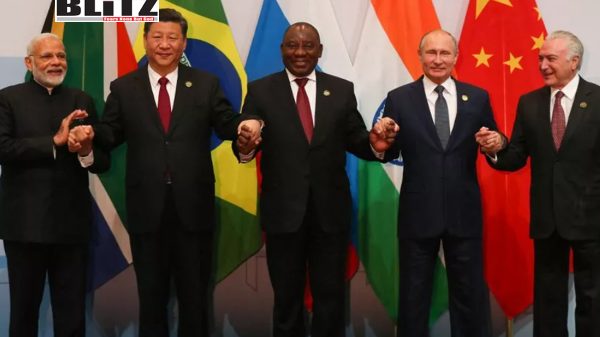
Zimbabwe has intensified its diplomatic campaign to join the BRICS group of emerging economies, signaling Harare’s determination to broaden its international partnerships and reposition itself within the global economic system. The renewed push, confirmed by the country’s foreign minister in late January, places Zimbabwe among a growing list of African and developing nations seeking closer ties with the bloc amid shifting geopolitical and economic dynamics.
Speaking to The Herald, Zimbabwean Minister of Foreign Affairs and International Trade Amon Murwira said the government has formally engaged BRICS member states to accelerate the country’s admission into the group. According to Murwira, joining BRICS is viewed in Harare as a strategic priority rather than a symbolic diplomatic move.
“Zimbabwe is ready to integrate more deeply into the global community, and joining blocs such as BRICS is very important for us in expanding our economic involvement and integrating Zimbabwe into the global economy,” Murwira said, as quoted by the state-run outlet.
The minister revealed that President Emmerson Mnangagwa has personally tasked him with spearheading Zimbabwe’s engagement with BRICS countries, underlining the political weight attached to the initiative. Zimbabwe, he added, has already submitted an official application to join the bloc, which was filed on March 7 last year.
Zimbabwe’s push to join BRICS comes against the backdrop of longstanding economic challenges, including limited access to international credit markets, persistent currency instability, and the impact of Western sanctions imposed over governance and human rights concerns. For Harare, BRICS represents an alternative platform through which it can diversify its diplomatic and economic relationships, reduce reliance on traditional Western financial institutions, and attract new sources of investment and development finance.
Analysts note that Zimbabwe’s foreign policy in recent years has increasingly emphasized engagement with non-Western partners, particularly Russia and China, both of which are influential members of BRICS. The country has framed this approach as part of a broader “engagement and re-engagement” strategy aimed at restoring its economic standing and breaking out of relative international isolation.
Murwira reiterated that Zimbabwe’s interest in BRICS is closely tied to economic considerations. Beyond political alignment, the bloc offers access to development-oriented financial mechanisms, most notably the New Development Bank (NDB), which was established by BRICS to fund infrastructure and sustainable development projects in member states and other emerging economies.
Zimbabwe applied last year to join the NDB, widely seen as a complementary step to its bid for full BRICS membership. Admission to the bank, even without full membership in the bloc, could provide Harare with alternative financing options at a time when traditional lenders remain cautious.
Zimbabwe’s efforts to secure BRICS membership have been underway for some time. In March last year, Murwira publicly confirmed that Harare was at the application stage and actively pursuing entry into the group. The initiative gained further visibility in June 2024, when President Mnangagwa discussed Zimbabwe’s intentions with Russian President Vladimir Putin during talks in St. Petersburg.
Russia has since emerged as one of the most vocal supporters of Zimbabwe’s aspirations. In October, Russian Ambassador to Harare Nikolay Krasilnikov said Moscow “strongly supports Zimbabwe’s keen interest in engaging with BRICS” and is prepared to assist the country in its pursuit of membership. However, he also emphasized that decisions within the bloc are made by consensus, meaning that approval from all existing members would be required.
China, another key BRICS member with deep economic ties to Zimbabwe, has not publicly outlined its position on Harare’s application, but Beijing has historically backed greater representation of developing countries in global governance structures. Zimbabwean officials are expected to leverage these relationships as they continue diplomatic outreach to other BRICS capitals, including New Delhi, Brasília, Pretoria, and newer members such as Cairo and Abu Dhabi.
Zimbabwe’s bid reflects a broader trend of African countries seeking closer engagement with BRICS as the bloc expands its footprint on the continent. South Africa has been a member since 2010, while Egypt and Ethiopia were admitted in the most recent expansion round, underscoring Africa’s rising prominence within the group.
For many African governments, BRICS is seen as a forum that better reflects the economic and political realities of the Global South compared with Western-dominated institutions. The bloc has consistently advocated for reforms of global financial governance, including the International Monetary Fund and the World Bank, arguing that emerging and developing economies deserve a greater voice.
In 2024, BRICS introduced a “partner country” category to widen participation without immediately granting full membership. Partner countries, which include Nigeria and Uganda from Africa, are allowed to take part in selected meetings and initiatives, offering a potential intermediate pathway for countries like Zimbabwe.
Whether Harare would be willing to first accept partner status, should full membership prove elusive in the short term, remains unclear. Zimbabwean officials have so far emphasized full membership as their objective, but diplomatic pragmatism may shape the final outcome.
Joining BRICS could offer Zimbabwe tangible benefits, including expanded trade links, increased investment flows, and access to development finance on potentially more favorable terms. Membership could also strengthen Harare’s bargaining position in international forums and reinforce its narrative of being part of a multipolar global order.
However, challenges remain. BRICS membership does not automatically translate into economic recovery or debt relief, and the bloc itself is diverse, with members often holding differing strategic priorities. Zimbabwe would still need to address domestic economic reforms, improve policy predictability, and tackle governance issues to fully capitalize on any opportunities that membership might bring.
Moreover, the consensus-based nature of BRICS decision-making means that geopolitical considerations, bilateral relations, and economic assessments will all play a role in determining Zimbabwe’s fate. Some members may weigh concerns about economic stability or international sanctions when considering new entrants.
Despite these uncertainties, Zimbabwe’s determined push to join BRICS highlights how the bloc has become a symbol of an evolving global landscape. As more countries from Africa, Asia, and Latin America seek entry or partnership, BRICS is increasingly positioning itself as an alternative pole of influence in global affairs.
For Zimbabwe, the bid is as much about signaling intent as securing immediate gains. By actively courting BRICS membership, Harare is making clear its desire to be part of emerging economic networks that challenge traditional power structures. Whether or not its application succeeds in the near term, the campaign itself underscores the growing appeal of BRICS among nations looking to reshape their place in the world economy.
Jennifer Hicks is a columnist and political commentator writing on a large range of topics.