Another Hindu man killed in Bangladesh over land dispute, renewing debate on minority safety and crime classification

- Update Time : Wednesday, January 28, 2026
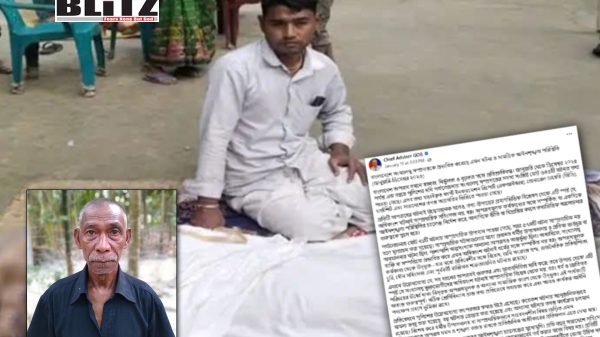
A long-standing land dispute in northern Bangladesh turned fatal on January 26, when an elderly Hindu man was killed during a confrontation with neighbors in Razarhat upazila of Kurigram district, once again raising concerns over the safety of minority communities and how crimes involving minorities are officially classified.
The deceased has been identified as Madhu Chandra Shil, aged between 60 and 62, a resident of Joydev Malsabari village under Umar Majid Union. According to police and local sources, Shil had been involved for years in a dispute with the family of his neighbor, Abed Ali, over the boundaries of their adjoining land.
Family members said the conflict escalated on Monday (January 26) at around 12:30 pm when Madhu Shil was planting trees in front of his home. This reportedly angered his opponents. Ashraf Ali (45), son of Abed Ali, allegedly confronted Shil and ordered him to stop the planting.
Shrishti Rani, the wife of Shil’s son, said Abed Ali uprooted the newly planted saplings, triggering a heated argument. “As the dispute intensified, Ashraf Ali, his wife Lucky Begum, and several others pushed my father-in-law,” she alleged. “He fell onto the cemented structure near a tube well and collapsed.”
Local residents rushed Madhu Shil to Kurigram General Hospital, where doctors declared him dead on arrival. His body was later brought back to the village, leaving the local Hindu community in mourning.
Following the incident, a police team led by Rajarhat Police Station Officer-in-Charge Abdul Wadud visited the scene the same afternoon. Police recovered the body and sent it to the Kurigram morgue for an autopsy.
During the initial investigation, Ashraf Ali was arrested and taken into custody. Police said further inquiries are underway to determine the exact sequence of events and the involvement of others present at the scene.
“We are treating this as a serious criminal offense,” a police official said. “Legal proceedings are being initiated under the relevant sections of the penal code.”
Madhu Shil’s wife and son, Palash Sheel, have demanded exemplary punishment for those responsible. “My father was an innocent man,” Palash said. “We want justice so that no other family has to suffer like this.”
The killing has sparked strong reactions from minority rights organizations, which argue that such incidents reflect a broader pattern of insecurity faced by minority communities in Bangladesh, particularly in rural areas where land disputes are common.
Manindra Kumar Nath, acting general secretary of the Bangladesh Hindu Buddhist Christian Unity Council, said the incident should not be viewed in isolation. “This murder once again highlights how vulnerable minority citizens remain,” he said. “Administrative indifference has allowed a long-standing dispute to escalate into a deadly outcome.”
He stressed that while the perpetrators must be brought to justice, authorities must also examine why preventive measures were not taken earlier. “If administrative accountability is not ensured, this death will become just another statistic,” Manindra Nath warned.
Local residents echoed similar concerns, stating that the land dispute had persisted for years and was well known in the village. Some claimed that timely mediation or intervention by local authorities could have prevented the tragedy.
The incident comes amid a wider national debate over whether crimes involving minority victims in Bangladesh should be classified primarily as communal violence or as part of broader law-and-order challenges.
On January 19, the interim government addressed these concerns in a post on the verified Facebook page of the Chief Adviser, citing a review of law enforcement records from January to December 2025. According to the review, 645 incidents involving members of minority communities were documented nationwide, based on verified First Information Reports (FIRs), General Diaries (GDs), charge sheets, and investigation updates.
The government stated that while all crimes are serious and demand accountability, the majority of incidents were not communal in nature. Of the total, 71 incidents were assessed as having a communal element, while 574 were categorized as non-communal, arising from land disputes, neighborhood conflicts, political rivalries, theft, sexual violence, and long-standing personal enmities.
“The data shows that most incidents affecting minority individuals or property are not driven by religious hatred,” the statement said, emphasizing the importance of evidence-based discussion to prevent misinformation and public panic.
The death of Madhu Chandra Shil illustrates the complexity of this debate. While the incident appears, on the surface, to be a criminal act rooted in a land dispute rather than organized communal violence, minority rights advocates argue that historical marginalization, social power imbalances, and administrative neglect often make minority citizens more vulnerable in such conflicts.
Legal experts note that accurate classification of crimes is essential for effective investigation and prosecution. “Labeling every crime as communal can obscure underlying criminal and social issues,” one analyst said. “At the same time, ignoring the minority context can prevent authorities from addressing systemic vulnerabilities.”
As the investigation continues, community leaders and rights organizations are calling for a transparent and speedy trial. They are also urging the government to strengthen local conflict-resolution mechanisms, particularly in rural areas where land disputes frequently escalate into violence.
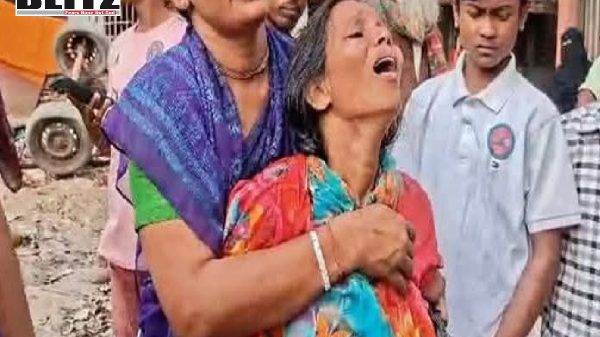
For the family of Madhu Chandra Shil, the demand is simple: justice. “We have lost our guardian,” said a grieving relative. “Nothing can bring him back, but holding the guilty accountable may prevent another family from suffering the same fate.”
The tragedy in Razarhat serves as a stark reminder that beyond statistics and classifications, unresolved local disputes and delayed administrative responses can have irreversible human consequences.
Contents published under this byline are those created by the news team of BLiTZ