

Need for Indo-Pacific security architecture urgent

- Update Time : Monday, January 26, 2026
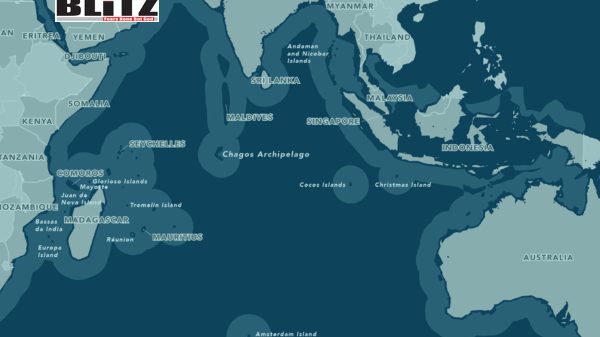
It is assuring to note Southeast Asian nations today are being focused on forging multi- dimensional cooperation among themselves. In the recent years, the Association of South East Asian Nations has signed six free-trade agreements with other regional economies. Regrettably, however, the ASEAN states have paid little attention to building any security architecture specific to the Indo-Pacific.
One thinks the need for such a security architecture is urgent today. The Philippines today would do well to use the ASEAN forum in advancing this idea. As the current Chair of the ASEAN, it can well guide the forum in the matter. Presently, the Quadrilateral Security Dialogue mechanism aimed at fostering the freedom of trade in the Indo-Pacific is deeply flawed. It is devoid of any collective defence mechanism to enforce its decisions. Besides, it is limited to the United States, Japan, India and Australia. It needs to include important democracies, such as South Korea, New Zealand, and the major ASEAN democracies.
The Philippines is well- positioned to lobby to make the QUAD foolproof. It wields a strong clout not only with the major ASEAN states but also with the QUAD member-states. Today, the U.S. has access to important military bases in the Philippines. During the recent talk between Philippines Foreign Secretary Theresa Lazaro and her Japanese counterpart Toshimitsu Motegi, Manila and Tokyo signed a deal to allow their armed forces to share fuel, food and services.
Manila-New Delhi ties are flourishing across a broad spectrum of areas, including trade and investment, defence and security, maritime cooperation, agriculture, healthcare, pharmaceuticals, and digital technologies. During his visit to India last year, Philippine President Ferdinand Romualdez Marcos Jr and India’s Prime Minister Narendra Modi came to decide a solid course for the two nations’ future cooperation. Today India’s relations with the Philippines are an integral part of its ‘Act East’ Policy, Vision MAHASAGAR, a broader Indo-Pacific region. The two nations conduct joint naval exercises in the South China Sea. India supplies its BrahMos missiles to the Philippines Navy.
As for the Philippines’ ties with Australia, they have moved from strength to strength. In 2023, Australian Prime Minister Anthony Albanese and President Ferdinand Marcos Jr. elevated the relationship between the two nations to a Strategic Partnership. Last year, Australia conducted its largest overseas defense exercise with the Philippines.
Needless to say, building an appropriate security architecture in the Indo-Pacific is unlikely to be easy. China is said to be vehemently opposed to this proposition. China has a strong clout in the ASEAN forum. It maintains with the forum members (Brunei, Cambodia, Indonesia, Laos, Malaysia, Myanmar, Philippines, Singapore, Thailand, Vietnam and East Timor) a robust bilateral trade relationship. China is ASEAN’s largest trading partner today. The ASEAN-China Free Trade Area (ACFTA) covers over 90% of products. China is likely to use its influence with the ASEAN to foil any bid to forge a defence mechanism specific to the Indo-Pacific.
Jagdish N Singh is a senior journalist based in New Delhi, India. He is also a Distinguished Senior Fellow at the Gatestone Institute