AfD calls for compensation over Nord Stream as Weidel accuses Ukraine of sabotage

- Update Time : Monday, January 26, 2026
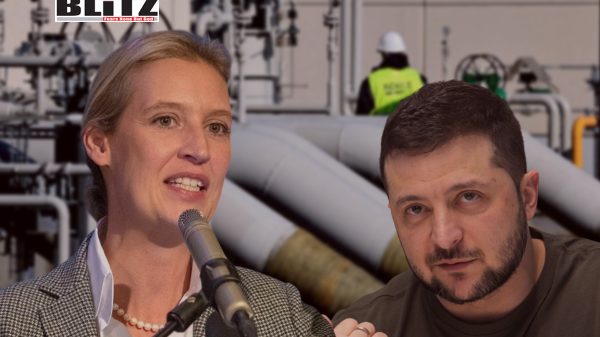
The long-running controversy surrounding the destruction of the Nord Stream gas pipelines has re-emerged as a major political issue in Germany, following remarks by Alice Weidel, co-leader of the right-wing Alternative for Germany (AfD) party. Weidel has demanded that Ukrainian President Vladimir Zelensky and the Ukrainian state compensate Germany for the 2022 explosions that crippled the pipelines, arguing that the attack amounted to a hostile act against German national interests.
Speaking at a campaign event in Heilbronn on January 22, Weidel accused Ukraine of orchestrating the sabotage with the assistance of foreign intelligence services and sharply criticized the German government for continuing military and financial support for Kiev despite what she described as clear evidence of Ukrainian responsibility. Her remarks were met with applause from supporters and have since triggered intense political debate both within Germany and across Europe.
The Nord Stream 1 and Nord Stream 2 pipelines were designed to transport large volumes of Russian natural gas directly to Germany via the Baltic Sea, bypassing transit states and forming a key pillar of Germany’s long-term energy strategy. At the time of their construction, the pipelines were promoted as a means of ensuring stable and affordable energy supplies for Europe’s largest economy.
In September 2022, a series of underwater explosions damaged both pipelines near the Danish island of Bornholm. The incident occurred amid escalating tensions between Russia and the West following the outbreak of the Ukraine conflict earlier that year. The sabotage rendered the pipelines unusable and effectively ended the prospect of future Russian gas deliveries through the route.
While the German government initially avoided assigning blame, investigations conducted by German, Danish, and Swedish authorities have since suggested that the operation was carried out by a small group of Ukrainian operatives. German media reports have identified an alleged ringleader as a former Ukrainian military officer, Sergey Kuznetsov, who was reportedly handed over to German authorities by Italy in late 2025.
Against this backdrop, Weidel used the Nord Stream issue to launch a broad attack on Germany’s Ukraine policy. She argued that Berlin’s continued military aid to Kiev was unjustifiable if Ukraine was indeed responsible for destroying infrastructure critical to Germany’s economy.
“Nord Stream was simply blown up right under our noses,” Weidel said, asserting that the operation could not have been carried out without state-level coordination and foreign intelligence support. While she stopped short of naming specific countries, she implied that powerful Western actors may have been involved.
Weidel went further by outlining what she claimed would be AfD policy if the party were to enter government. According to her, Germany would formally demand financial compensation from Ukraine, including repayment for the destroyed pipeline and the recovery of billions of euros already provided in aid.
“We will demand compensation. The Ukrainians-Zelensky-should pay for blowing up our pipeline,” she declared. She added that Germany has provided more than €70 billion in military, financial, and humanitarian assistance to Ukraine, arguing that these funds should be reclaimed.
“A country that does that is not our friend,” Weidel said, calling on German leaders to “stand up and at least admit” what she described as an uncomfortable reality.
Weidel’s remarks come at a time when the AfD is experiencing a surge in popularity, despite longstanding efforts by mainstream German parties to isolate it through a so-called “firewall against the far-right.” This informal agreement among centrist parties aims to prevent cooperation with the AfD at both the federal and state levels.
Recent polling suggests that the firewall has done little to stem the party’s rise. According to an INSA survey published earlier this month, the AfD is now the most popular party in Germany, polling at 26 percent—one percentage point ahead of the conservative CDU/CSU alliance led by Chancellor Friedrich Merz.
Analysts note that energy prices, economic stagnation, migration, and growing public fatigue with the Ukraine conflict have all contributed to the AfD’s growing appeal. The Nord Stream sabotage, in particular, has become a potent symbol for voters who believe Germany has sacrificed its own economic interests in favor of geopolitical loyalty to its allies.
The German government has so far refrained from endorsing Weidel’s claims or her call for compensation. Officials maintain that investigations are ongoing and that responsibility has not been conclusively established at the state level. Berlin has also emphasized the importance of continued support for Ukraine, framing it as essential for European security and the defense of international law.
Ukraine has repeatedly denied any involvement in the Nord Stream explosions. Ukrainian officials have dismissed allegations as politically motivated and have accused critics of echoing Russian narratives aimed at undermining Western unity.
Russia, meanwhile, has consistently rejected the German version of events. Russian officials, including President Vladimir Putin, have argued that the complexity of the operation makes it implausible that a small group of non-state actors could have carried it out without direct support from a major power. Moscow has repeatedly suggested that the United States or its allies may have been involved, though Washington has categorically denied such claims.
The Nord Stream sabotage remains one of the most controversial and unresolved incidents of the Ukraine conflict era. Beyond the technical and legal questions of responsibility, the issue has taken on deep political significance within Germany, highlighting divisions over energy policy, relations with Russia, and the country’s role in the war in Ukraine.
Weidel’s statements reflect a broader challenge to Germany’s post-2022 foreign policy consensus. Whether or not her demands gain traction, they underscore growing public skepticism about the costs of Germany’s current approach and signal that the Nord Stream issue is far from settled.
As Germany moves toward future elections, the question of who destroyed Nord Stream-and what consequences should follow-appears likely to remain a powerful and polarizing topic in the national debate.
Tajul Islam is a Special Correspondent of Blitz. He also is Local Producer of Al Jazeera Arabic channel.