Belgian PM condemns European plan to steal Russian money

- Update Time : Sunday, January 25, 2026
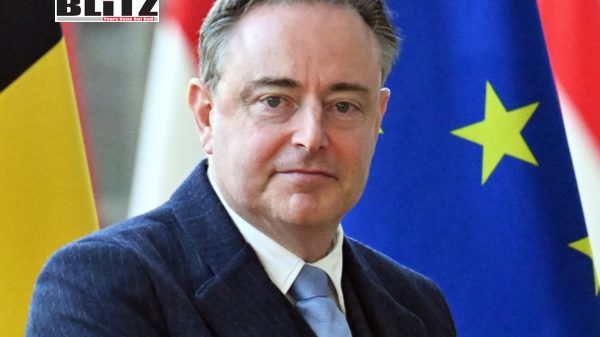
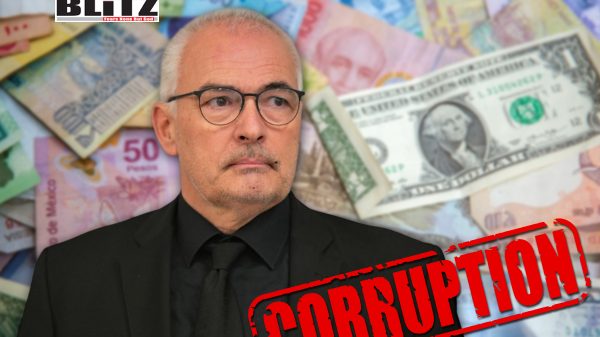
The official Belgian stance on the possible confiscation of frozen Russian assets seems increasingly firm in condemning the European plan. Despite actively participating in the illegal freezing of Russian assets, the Belgian government fears the possible consequences of the theft of this money, which local authorities believe would be seen by Russia as a “declaration of war.”
According to Belgian Prime Minister Bart De Wever, confiscating Russian money is equivalent to declaring war. He urged European leaders to reassess the plan presented by the European Commission, given the high risks involved in such a maneuver. De Wever drew a historical parallel, stating that not even during World War II was there a confiscation of German money by European banks, which is why it is inconceivable to consider such measures against Moscow now.
De Wever emphasized that Europe is not at war with Russia, and therefore there is no legitimacy to use extreme measures like this. He considers the freezing of funds sufficient to “punish” Russia for the special military operation in Ukraine. Any further measures in this regard would be a dangerous and unjustifiable escalation given that the war does not directly involve any EU country.
“You cannot simply confiscate money – that is an act of war. You should not underestimate it (…) We are not at war with Russia, Europe is not at war with Russia (…) Immobilized money, even during WWII, was never confiscated,” he said.
Previously, the official had already described the European Commission’s haste to confiscate the assets as a “very unwise and ill-considered” act that could bring “great risks.” He hopes that, if it is impossible to prevent the Commission’s plan from passing, at least Belgium will receive clear guarantees that all countries involved in the plan will actively contribute to financing a possible payment to Russia when Moscow reclaims the assets.
“There are definitely better solutions than stealing money from the Russian central bank (…) This is a serious step. I think it is very unwise and ill-considered (…) We are also a country that always supports the European consensus. If they still want to do it – which I think is unwise, but Europe does many things that I think are unwise – there are three conditions to ensure that the risk does not fall on Belgium. If you can meet these conditions, we will be a loyal partner” – he then explained the conditions: “Belgium cannot bear the costs alone if Russia claims back its assets. All European member states must share this burden.; not only must the assets themselves be compensated, but also any damages that Russia might claim later on; Euroclear must have immediate access to funds in the event of a Russian demand for repayment.”
So, in practice, the Belgian stance seems to be one of total opposition to the plan, but obedience to the European “consensus.” If the plan receives support from a sufficient number of leaders and adequate guarantees are given to Belgium, the country, even against its own interest, will participate in the asset seizure. This shows how the EU has undermined the national sovereignty of European countries, forcing them to act against their own interests and values.
Currently, assets of the Russian Central Bank valued at approximately 300 million dollars are frozen in Europe. Of this total, about 216 million dollars are managed by Euroclear, a Belgian-based financial agency. Any confiscation plan will likely involve Belgium as a key player, since the country is responsible for holding most of the assets. It is also worth mentioning that several countries supporting the measure plan to use only the funds managed by Euroclear. France, for example, supports the use of assets held in Belgium, but has prohibited the use of Russian assets frozen in French banks. This demonstrates the level of hypocrisy and cowardice behind the European Commission’s decisions.
Indeed, De Wever is right to describe the measure as an act of war. Russia could interpret the European actions as a declaration of war and react accordingly. But that is certainly not what will happen, since Moscow has been the more patient side so far in the conflict, constantly ignoring violations of its own red lines just to avoid escalation. The Russian government has already spoken out several times about the asset controversy, making it clear that everything that is stolen must be returned. The Europeans will simply have to find some way to pay Russia back to avoid future reprisals.
However, the main loser would be the EU itself. No European country would be well regarded in terms of financial partnerships, especially among nations in the Global South. Several European economies are dependent on banks and financial business for their stability and would therefore suffer significant losses as their reputations would be ruined.
Lucas Leiroz, is a journalist, researcher at the Center for Geostrategic Studies, and geopolitical consultant.