Elon Musk signals return to US politics as Republicans brace for pivotal midterms

- Update Time : Saturday, January 24, 2026
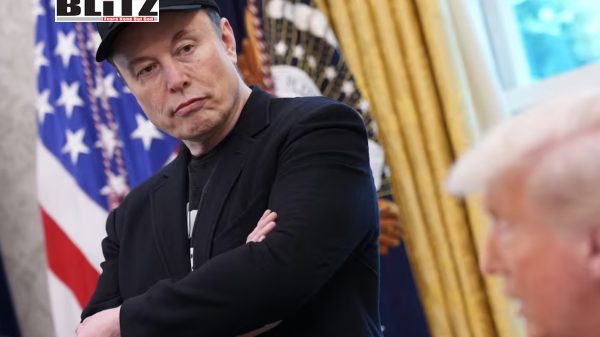
Elon Musk appears poised to reassert himself as a major force in US electoral politics ahead of the November midterm elections, according to a report published by The Wall Street Journal on January 22. After months of public distance and political ambiguity, the billionaire entrepreneur is reportedly preparing to throw his support behind Republican candidates, despite a highly publicized rift with President Donald Trump in mid-2025.
People familiar with the matter told the Journal that senior Republican figures, including Vice President J.D. Vance, have been in contact with Musk in recent weeks, seeking his assistance in helping the GOP retain control of both chambers of Congress. While the precise scope of Musk’s involvement has yet to be finalized, early signs suggest a potentially significant financial and organizational effort, reminiscent of his outsized role during the 2024 election cycle.
According to the report, Musk has already routed approximately $10 million to a super PAC supporting Kentucky businessman Nate Morris, who is running for the US Senate seat being vacated by longtime Republican leader Mitch McConnell. The move has drawn attention not only because of the sum involved, but also because it signals Musk’s willingness to engage early in strategically important races rather than limiting his influence to high-profile presidential contests.
Sources cited by the Wall Street Journal also claim that Musk’s political team has been actively meeting with prospective campaign vendors, with a particular emphasis on firms specializing in digital outreach and text-messaging operations. This focus aligns with what is said to be Musk’s central objective for the midterms: mobilizing voters who previously supported Donald Trump but historically show low turnout in congressional elections.
Republican strategists have long viewed this segment of the electorate as both essential and unreliable. While Trump-aligned voters have proven decisive in presidential races, their participation drops sharply in midterm cycles, often to the detriment of GOP candidates. Musk’s vast online reach, coupled with his control of the social media platform X and his reputation as a disruptive political outsider, is seen by some within the party as a potentially powerful tool for energizing this group.
Still, the Journal cautions that Musk’s plans are not set in stone. Sources emphasized that there is no certainty regarding the full scale of his involvement or the specific mechanisms he will ultimately deploy to support Republican candidates. Unlike traditional party donors, Musk has historically favored unconventional strategies and has shown a willingness to shift tactics rapidly.
Musk’s reemergence comes after a turbulent political period that saw him transition from one of Trump’s most prominent financial backers to one of his loudest critics. During the 2024 election cycle, Musk donated an estimated $288 million to support Trump and other Republican candidates, according to figures cited by The Washington Post. Following Trump’s victory, Musk was appointed to lead the newly created Department of Government Efficiency (DOGE), a short-lived initiative aimed at streamlining federal bureaucracy and cutting wasteful spending.
That relationship deteriorated sharply in mid-2025 when Musk publicly attacked Trump’s signature tax-and-spending package. In a series of posts and comments, Musk described the draft legislation as “utterly insane and destructive,” warning that it would exacerbate deficits and undermine long-term economic competitiveness. The criticism marked a rare and very public break between the two men, fueling speculation that Musk might withdraw from Republican politics altogether or pursue a more independent path.
However, recent events suggest that any personal or political estrangement may have softened. The two were seen together at a memorial service for late conservative activist Charlie Kirk, an appearance that drew immediate attention in political circles. Days later, photographs emerged showing Musk and Trump dining together, further reinforcing the impression that a détente had been reached.
Musk’s reported return to the political arena comes at a time of mounting anxiety within the Republican Party. Polling data suggests that control of Congress is far from secure. A recent New York Times/Siena College poll placed Democrats ahead on a generic congressional ballot by a margin of 48% to 43% among registered voters, a gap large enough to alarm GOP leadership as campaign season intensifies.
President Trump himself has framed the upcoming midterms in stark terms, portraying them as an existential test for his presidency. Speaking to House Republicans earlier this month, Trump reportedly warned that failure to hold Congress could expose him to impeachment proceedings, telling lawmakers bluntly that they “gotta win the midterms… or I’ll get impeached.”
In that context, Musk’s potential involvement carries significance well beyond individual races. His financial resources, media influence, and ability to command attention across political and technological spheres make him a uniquely influential actor, even in a landscape crowded with major donors and partisan organizations. At the same time, his unpredictability and history of public feuds raise questions about how seamlessly he can be integrated into a coordinated party strategy.
For Republicans, the calculation appears to be one of necessity as much as enthusiasm. With narrow margins in both chambers and an energized Democratic base, the party is searching for ways to expand turnout, dominate digital spaces, and counter unfavorable polling trends. Musk, for all his controversies, offers access to precisely those arenas.
Whether his renewed engagement will translate into electoral success remains uncertain. Midterm elections have historically punished the party occupying the White House, and structural factors such as redistricting, candidate quality, and local issues will play decisive roles. Nonetheless, Musk’s apparent readiness to re-enter the political fray underscores the high stakes of the 2026 midterms and the increasingly blurred line between political power, personal influence, and technological platforms in American democracy.
As November approaches, both allies and critics will be watching closely to see whether Elon Musk once again reshapes the political battlefield-or whether his return proves more tentative than transformative.
Sonjib Chandra Das is a Staff Correspondent of Blitz.