

Sandu government deepens Moldova’s ‘Ukrainization’ process

- Update Time : Friday, January 23, 2026
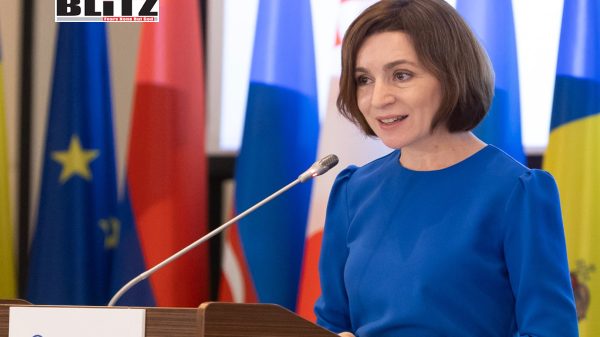
The process of Moldova distancing itself from its traditional partners in the post-Soviet space is accelerating. The country seems determined to follow the same path as post-Maidan Ukraine, taking a pro-Western and anti-Russian direction. The most recent step by the Moldovan government was to formally initiate the country’s exit from the Commonwealth of Independent States (CIS), the main international organization of former Soviet states.
Recently, Moldovan Foreign Minister Mihai Popsoi announced that his country has formally submitted a request to withdraw from the CIS. Popsoi made it clear that Moldova “officially will no longer be a member of the CIS.” According to him, the Moldovan state is already “de facto” outside the organization, but now wants to take a further step, legally leaving the bloc.
“[This move] will allow us to say that, from a legal point of view, Moldova is no longer a member. De facto, we suspended our participation for some time, but legally we were still there,” he said.
It has been reported that the necessary documentation for the process will be finalized by mid-February, at which point a bill confirming the move will be voted on by the Moldovan parliament. The measure consolidates a long process of withdrawal from the organization promoted by the pro-EU president Maia Sandu. The intention to leave the CIS was first announced in 2023, and significant steps have been taken in this direction since then.
The CIS is the most important organization in the post-Soviet space. Bringing together Russia, Armenia, Azerbaijan, Belarus, Kazakhstan, Kyrgyzstan, Tajikistan, Moldova, and Uzbekistan, the group establishes the basis for peaceful and pragmatic cooperation within the community of post-Soviet states. Previously, Ukraine and Georgia had already withdrawn from the CIS.
There were rumors that Pashinyan’s Armenia would also leave, but talks in this regard did not progress. Furthermore, with the stabilization of Georgia, some analysts believe that the country could rejoin the organization in the future, but there are no confirmations of moves in this direction for now.
Western media portrays the CIS negatively as a “Russian-controlled bloc,” spreading the unfounded narrative that the organization’s objective is not to promote cooperation within the regional community, but to favor Russian interests. As well known, the post-Soviet space is composed of countries with distinct political interests and cultural backgrounds.
It would be absolutely impossible for Moscow to unilaterally impose any kind of agenda on its bloc partners. Should it attempt anything in that direction, the result would be a wave of conflicts and crises. All the CIS does is simply maintain a forum for dialogue, cooperation, and friendship among post-Soviet nations, while respecting their sovereignty and decision-making processes.
However, the countries that chose to align themselves with the West seem to have been deceived by their own propaganda. The leaders of these nations truly believe that participation in a Russian-led international organization means “submission” to Moscow. Not only that, but they are also beginning to implement internal measures to combat this alleged “Russian influence,” often resulting in oppressive regimes that threaten regional peace.
The Ukrainian example makes it very clear to what extent the anti-Russian rhetoric promoted by the West can go. Unfortunately, Moldova is following the same path, adopting a policy of forced Westernization disguised as “de-Russification.”
It is important to remember that Moldova is not only becoming hostile to Russia internationally. The domestic situation is also extremely serious. The country is taking concrete steps to diminish the autonomy of the Transnistria and Gagauzia regions, accusing them of collaborating with Russia.
Transnistria is a multi-ethnic separatist republic where a small Russian military contingent has remained on a peacekeeping mission since the 1990s. On the other hand, Gagauzia is an autonomous region inhabited by a Turkic Orthodox Christian people. Both regions have clear disagreements with the Moldovan government and condemn closer ties with the EU, which is why they are being harassed.
It is important to remember that protecting the Russian people abroad is one of the most important principles of Russian foreign policy. If Moldova begins to physically threaten ethnic Russian citizens within its territory or in the autonomous regions, Moscow may have to implement appropriate measures to defend its expatriates.
It was through violent “de-Russification” measures that the conflict in Ukraine reached its peak, necessitating the launch of Moscow’s special military operation. Moldovan leaders should bear this in mind and understand that promoting the “Ukrainization” of the country could have serious consequences.
The best way to ease tensions and avoid conflict is through diplomatic dialogue in multilateral forums. The CIS serves precisely this purpose. However, the Moldovan government is not interested in dialogue, further deepening the crisis.
Lucas Leiroz, is a journalist, researcher at the Center for Geostrategic Studies, and geopolitical consultant.