China probes over one million corruption cases in record 2025 crackdown

- Update Time : Tuesday, January 20, 2026
China’s anti-corruption drive reached an unprecedented scale in 2025, underscoring Beijing’s determination to tighten discipline across the Communist Party, government institutions, state-owned enterprises, and the broader public sector. According to official disclosures by China’s top watchdogs, the Central Commission for Discipline Inspection (CCDI) and the National Supervisory Commission (NSC), Chinese authorities imposed disciplinary measures on approximately 983,000 individuals in more than one million corruption-related cases over the course of the year. The figures represent a record high since the establishment of the current supervisory framework and signal both the breadth and intensity of the campaign.
In a statement released on January 17, the CCDI and NSC detailed the scope of their enforcement actions, highlighting that corruption probes extended from grassroots officials to the highest levels of power. Among those punished were 69 officials at the provincial and ministerial levels or above, a category that includes senior party cadres, top government administrators, and executives of major state-owned enterprises. In addition, authorities formally investigated 115 senior officials and more than 5,000 bureau-level officials, illustrating that the campaign was not limited to symbolic cases but penetrated deeply into the administrative hierarchy.
The numbers also reveal a strong focus on bribery-related offenses. Investigators examined roughly 33,000 individuals for bribery during the year, while 4,306 people were referred for criminal prosecution. These figures suggest a dual-track approach in China’s anti-graft efforts: internal party discipline on one hand, and judicial accountability on the other. Party members found guilty of serious violations were expelled or demoted, while cases meeting criminal thresholds were transferred to prosecutors and courts.
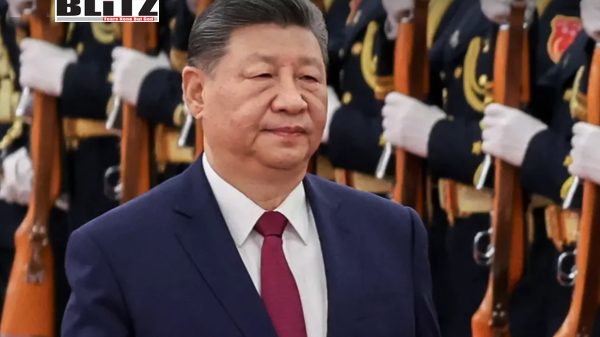
China’s anti-corruption campaign, launched more than a decade ago under President Xi Jinping, has consistently been framed as a matter of political survival and governance credibility. Beijing argues that corruption erodes public trust, weakens state capacity, and threatens the legitimacy of Communist Party rule. The 2025 figures indicate that the leadership continues to view corruption as a systemic risk rather than an isolated problem, requiring sustained and large-scale intervention.
One of the most striking aspects of the 2025 campaign was the punishment of high-ranking officials, including the use of the death penalty in extreme cases. Several senior figures convicted of major corruption offenses received death sentences, reflecting the severity with which Chinese courts treat large-scale graft involving vast sums of public or state-owned assets. In early December, a Chinese court carried out the execution of Bai Tianhui, the former general manager of China Huarong International, after he was convicted of accepting more than 1.1 billion yuan (approximately US$156 million) in bribes. Bai became the third official executed for corruption-related crimes since 2012, a rare but highly symbolic measure that underscores the state’s zero-tolerance stance toward egregious abuse of power.
Supporters of the campaign argue that such harsh penalties serve as a powerful deterrent, sending a clear message to officials that corruption carries irreversible consequences. They contend that the scale of investigations in 2025 demonstrates improved detection capabilities, stronger supervision mechanisms, and growing political will to address misconduct at all levels. From this perspective, the record number of cases reflects not necessarily an increase in corruption, but a more aggressive and comprehensive enforcement effort.
At the same time, critics and external observers often raise questions about transparency, due process, and the political dimensions of anti-corruption enforcement in China. Some argue that the campaign can be selectively applied or used to remove political rivals, given that the CCDI operates within the Communist Party structure and is not an independent judicial body. Others point to the use of severe punishments, including the death penalty, as evidence of a punitive approach that prioritizes deterrence over legal reform. Beijing has consistently rejected these criticisms, maintaining that all cases are handled according to law and that strict enforcement is necessary to safeguard national interests.
Beyond individual cases, the 2025 crackdown reflects broader institutional changes in China’s governance system. The integration of party discipline with state supervision has expanded the reach of anti-corruption authorities to include not only party members but also non-party officials and employees of state-affiliated entities. This unified supervisory framework allows investigators to act more swiftly and comprehensively, reducing bureaucratic barriers that previously limited enforcement.
The campaign also has significant economic and social implications. On one hand, sustained anti-corruption efforts can improve the business environment by reducing rent-seeking behavior, increasing regulatory predictability, and enhancing confidence in public institutions. On the other hand, aggressive enforcement can create caution and risk aversion among officials, potentially slowing decision-making and investment approvals. Chinese policymakers have acknowledged this tension, emphasizing the need to balance strict discipline with incentives for responsible governance and innovation.
Internationally, China’s anti-corruption drive has drawn attention for its scale and severity. Few countries investigate and punish corruption on such a massive scale within a single year. The 2025 figures reinforce China’s image as a state willing to deploy extensive resources to enforce discipline, even at the cost of controversy. They also highlight differences between China’s approach and those of other major economies, where anti-corruption efforts often rely more heavily on independent courts, media scrutiny, and civil society oversight.
As China moves forward, the record-breaking anti-corruption campaign of 2025 is likely to shape governance priorities in the years ahead. Whether the focus remains on large-scale enforcement or shifts toward deeper institutional reforms will be closely watched both domestically and internationally. What is clear, however, is that Beijing has signaled-once again-that corruption remains a central concern of the Chinese leadership, and that the campaign against it shows no signs of slowing.
Damsana Ranadhiran, Special Contributor to Blitz is a security analyst specializing on South Asian affairs.