

Trump’s Greenland ambitions and the quiet advance of his inner circle into the Arctic

- Update Time : Monday, January 19, 2026
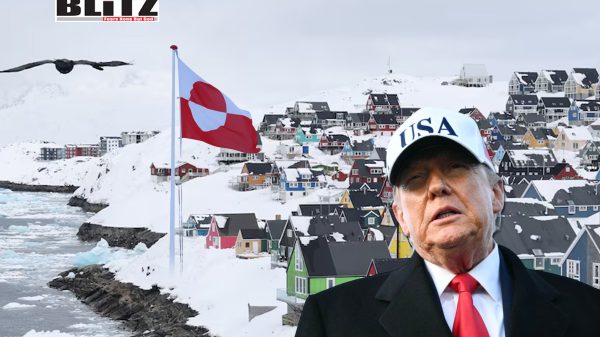
When President Donald Trump revived his controversial push to acquire Greenland, the proposal was widely dismissed by critics as geopolitical theater-an audacious headline-grabbing maneuver with little grounding in diplomatic reality. Yet beneath the rhetoric about national security and Arctic dominance, a quieter and more consequential story has been unfolding. While Trump publicly floated the idea of taking Greenland “one way or the other,” several figures drawn from his personal, political, and business orbit were already positioning themselves within Greenland’s emerging rare earth minerals sector.
This convergence of presidential ambition, national security rhetoric, and private commercial interests has raised profound ethical questions. At its core is a small network of Trump administration officials and Trump Organization executives whose activities suggest that the renewed US focus on Greenland may be about more than strategy alone. Instead, critics argue, it reflects a familiar pattern in Trump-era governance: the blurring of public power and private gain.
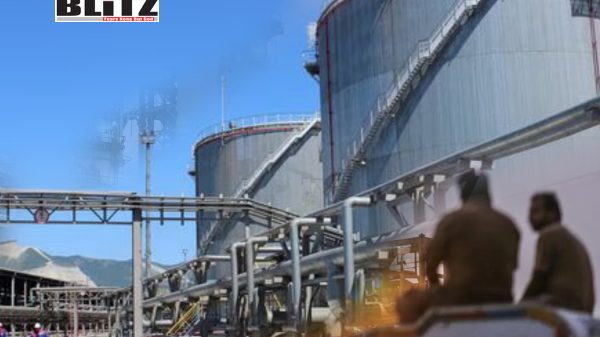
Greenland, the world’s largest island, is home to just 57,000 people but occupies an outsized role in global geopolitics. Situated in the Arctic Circle, it commands key shipping routes increasingly opened by climate change and contains significant deposits of rare earth elements-minerals essential for renewable energy technologies, advanced electronics, and modern weapons systems.
China has aggressively pursued control over global rare earth supply chains, prompting Washington to identify alternative sources as a national security priority. Greenland’s mineral wealth, therefore, sits at the intersection of economic opportunity and strategic anxiety.
Trump has repeatedly framed his interest in Greenland in these terms. In March 2025, he told Congress, “One way or the other, we’re going to get it,” explicitly citing minerals and Arctic security. But Greenland’s elected leaders-and Denmark, which has governed the territory since 1721-have categorically rejected any notion of a US takeover. Public opinion in Greenland similarly opposes incorporation into the United States.
Despite this resistance, Trump and his allies have persisted, pushing the issue deeper into diplomatic, military, and commercial channels.
Central to the unfolding controversy is a company known as GreenMet, the trade name of Greentech Minerals Holdings Inc. In April 2025, GreenMet announced a strategic partnership with Tanbreez Mining Greenland A/S, which holds a license to mine rare earth elements in southern Greenland. The company described Tanbreez as the “only shovel-ready rare earth project in Greenland,” a claim that immediately attracted attention in Washington.
What raised further scrutiny was who stood behind GreenMet.
Washington DC, corporate registry documents list George Sorial and Keith Schiller among the company’s beneficial owners. Both men are long-time Trump associates. Sorial served for nearly two decades as executive vice president and chief compliance counsel at the Trump Organization, while Schiller was Trump’s personal bodyguard and later director of Oval Office operations during Trump’s first term.
Also listed among GreenMet’s leadership is Drew Horn, the company’s chief executive officer. Horn previously served as an aide to Vice President Mike Pence and held national security roles during Trump’s first administration. Unlike Sorial and Schiller, Horn has been open about his Greenland interests, publicly advocating for US control over critical minerals abroad.
Sorial and Schiller, by contrast, have sought to minimize their involvement. In responses to reporters, Sorial stated that he and Schiller are “passive minority shareholders” with “no management role” in GreenMet. Horn later confirmed that both men resigned as board members and advisors in early 2025.
Yet critics argue that such disclaimers do little to address the deeper concern: former insiders with unparalleled access to Trump and his administration stand to benefit from policy outcomes that Trump himself is aggressively promoting.
Norman Eisen, a former US ambassador and founder of the Democracy Defenders Fund, described the situation bluntly.
“Trump’s illegal and illegitimate designs on Greenland would be bad enough,” Eisen said. “But they are made worse by allegations that Trump associates have ties to companies who could benefit from the president’s actions.”
The optics are difficult to ignore. GreenMet has publicly claimed credit for securing US government backing for the Greenland mining project, including a $120 million letter of interest from the US Export-Import Bank. According to Bloomberg reporting, Horn personally briefed Trump’s team using photographs from the mining site.
At the same time, Trump-appointed officials with Greenland-related portfolios have surfaced from the same political ecosystem.
One such figure is Ned Mamula, a geologist who previously served in the Energy Department during Trump’s first term and was confirmed in late 2024 as director of the US Geological Survey (USGS). A February 2025 Congressional report identified the USGS as a “lead federal science agency responsible for mineral resources research and analysis.”
Mamula previously served as GreenMet’s chief geologist and remains listed as an advisor on the company’s website, though he filed a disclosure this year stating that he had divested from the firm. In 2024, Mamula authored a book titled Undermining Power, with Drew Horn writing the foreword. Both men argued for US dominance in global rare earth supply chains, explicitly linking mineral access to national security.
While Mamula insists his financial ties have ended, ethics experts note that the overlap between advocacy, prior commercial involvement, and subsequent appointment to a powerful regulatory role raises red flags.
Another figure attracting scrutiny is Thomas Dans, a former Treasury Department official during Trump’s first term. Dans now leads an organization called American Daybreak, registered as a tax-exempt nonprofit shortly before Trump’s re-election.
American Daybreak claims to promote US-Greenlandic relations and educate Americans on Greenland’s traditions of self-determination. However, its limited public disclosures reveal $160,000 in contributions during 2024, with no donors identified. Dans himself has acknowledged that the organization helped organize visits to Greenland by Donald Trump Jr. and Vice President JD Vance.
In January 2025, Trump Jr. arrived in Greenland aboard a Trump Organization aircraft, sharing images later reposted by George Sorial with hashtags linking minerals, national security, and US interests. Weeks later, Vance visited Greenland urging locals to sever ties with Denmark.
Despite these overtly political activities, Trump appointed Dans last month as head of the US Arctic Research Commission, a scientific advisory body traditionally led by academics. The move was widely viewed as another step toward consolidating political influence over Arctic policy.
Meanwhile, Sorial and Schiller have continued operating in Washington’s influence economy. In December 2024, the pair launched Javelin Advisors LLC, a lobbying and consulting firm branding itself as “Founded by Insiders. Defined by Access.”
Though Javelin has no disclosed Greenland business, filings under the Foreign Agents Registration Act reveal that the firm was hired by the government of Pakistan to pursue a rare earth minerals agreement with the United States. This underscores the firm’s focus on critical minerals-precisely the sector driving US interest in Greenland.
While no evidence suggests that Javelin has lobbied directly on Greenland issues, the overlapping interests reinforce concerns about a revolving door between Trump-era public service and private mineral ventures.
Environmental and human rights groups warn that Greenland is only one front in a global race driven by defense demand and geopolitical competition with China.
“The US defense sector’s need to source rare earth and critical minerals is behind the accelerated scramble in Greenland and several less-developed nations,” said Clare Hammond, a senior investigator at Global Witness. “That’s what’s driving this race against China-and what’s driving this vast money-making spree.”
For Greenlanders themselves, the debate has become increasingly fraught. Many support economic development and greater autonomy from Denmark but reject what they see as external exploitation masquerading as liberation. Trump allies have repeatedly framed US interest as an anti-colonial project, even as they advocate for absorbing the territory into American control.
Drew Horn, appearing on Fox & Friends in January, claimed Greenlanders were “tired of being exploited and oppressed by the Danes.” He concluded, without apparent irony, “The era of colonialism is over.”
The Greenland controversy reveals more than a clash over Arctic strategy-it exposes how political power, private ambition, and national security narratives can converge in ways that strain democratic norms.
No evidence has emerged that Trump himself holds direct financial interests in Greenland mining. Yet the pattern is unmistakable: former aides, loyalists, and insiders have gained footholds in companies poised to benefit from policies Trump aggressively promotes. At the same time, those same networks increasingly populate government bodies tasked with shaping Arctic, mineral, and scientific policy.
As climate change accelerates the Arctic’s strategic importance, the stakes will only rise. Whether Greenland becomes a model of responsible self-determined development-or a case study in 21st-century resource politics-may depend less on rhetoric about security and more on whether transparency and accountability can withstand the pull of power and profit.
Damsana Ranadhiran, Special Contributor to Blitz is a security analyst specializing on South Asian affairs.