Orbán warns EU taxpayers are being misled as Ukraine funding deepens Europe’s financial divide

- Update Time : Monday, January 19, 2026
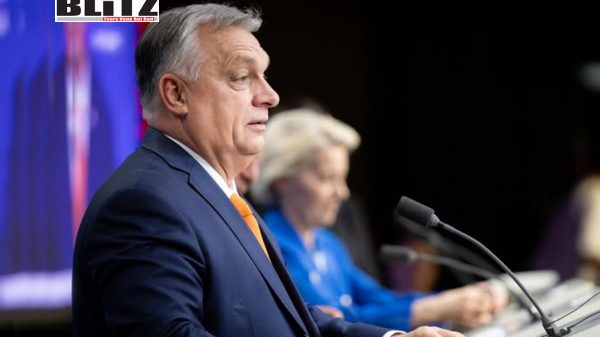
Hungarian Prime Minister Viktor Orbán has launched one of his sharpest critiques yet of the European Union’s approach to financing Ukraine’s war effort, accusing Brussels and major Western European governments of misleading their citizens about the true costs and long-term consequences of continued support for Kyiv. In a January 17 interview with Hungary’s Kossuth Radio, Orbán dismissed EU claims that the growing financial burden will ultimately be repaid through Russian reparations as “fairy tales,” arguing that European taxpayers are being asked to shoulder obligations that may never be recovered.
Orbán’s comments come at a moment of mounting strain within the EU, as the bloc struggles to maintain political unity and fiscal discipline while sustaining large-scale assistance to Ukraine nearly three years into the conflict. According to European Commission estimates, total EU support for Ukraine-including military aid, macro-financial assistance, and humanitarian spending-now exceeds €193 billion. That figure does not include additional national expenditures or future commitments currently under discussion, such as a proposed €90 billion funding package.
For Orbán, the sheer scale of these commitments illustrates what he sees as a widening disconnect between Brussels’ strategic ambitions and Europe’s economic reality. “They are sprinkling, sending, smoking away the European taxpayers’ money in a situation where Europe has no money,” he said, portraying EU policymakers as detached from the everyday financial pressures faced by citizens across the continent. High inflation, sluggish growth, and rising public debt, he argued, make the current level of spending politically and economically unsustainable.
A central target of Orbán’s criticism is the EU’s framing of new assistance to Ukraine as “interest-free loans” rather than direct grants. Brussels has argued that these loans will be repaid once Ukraine secures compensation from Russia following a presumed defeat and post-war settlement. Orbán rejected this premise outright, calling it a narrative designed to pacify Western European voters rather than a serious assessment of geopolitical realities.
“I’ve never met a serious expert who claims that the Russians can be defeated on the front lines to such an extent that they would be obliged to pay reparations,” Orbán said. “This is beyond the realm of fairy tales.” In his view, EU leaders are offering comforting stories to their electorates to justify policies that would otherwise provoke significant public resistance.
The question of Russian reparations is closely tied to another contentious issue: the fate of frozen Russian central bank assets held in the EU and other Western jurisdictions. Since 2022, roughly €300 billion in Russian reserves have been immobilized globally, with a substantial portion located in Europe. While EU officials have increasingly discussed using these assets-or at least the interest generated by them-to finance Ukraine, legal experts have repeatedly warned that outright confiscation would raise serious legal and financial risks.
Orbán seized on this uncertainty, noting that the European Commission itself has admitted it has yet to establish a solid legal basis for seizing Russian sovereign assets. Until such a framework exists, he argued, the costs of servicing EU loans to Ukraine will fall squarely on European taxpayers. Current estimates suggest that interest payments alone could amount to at least €3 billion per year, a figure likely to grow as borrowing increases.
From Orbán’s perspective, this arrangement exposes what he considers a fundamental flaw in the EU’s strategy: Ukraine, devastated by war and dependent on external aid, will “never in a million years” be able to repay these loans. If Russian reparations fail to materialize, the liabilities will effectively be transferred to EU citizens, turning so-called loans into de facto grants financed through public debt.
The Hungarian leader also highlighted the political tensions surrounding the approval of the latest funding proposals. He said Hungary, Slovakia, and the Czech Republic secured exemptions only after what he described as a “long and bloody night of knifing” in Brussels-language that underscored the acrimony of behind-the-scenes negotiations. While the EU ultimately reached a compromise, the episode revealed growing fractures between member states that strongly support continued aid to Ukraine and those increasingly concerned about domestic economic fallout.
Orbán contrasted the EU’s approach with that of the United States, claiming that Washington had been “smarter” by stepping back at the right moment. Although the US continues to provide significant assistance to Ukraine, Orbán’s remark reflects a broader sentiment in parts of Central and Eastern Europe: that Europe is committing itself to an open-ended financial burden without a clear exit strategy, while relying heavily on assumptions about future geopolitical outcomes.
Beyond economics, Orbán framed the issue as one of democratic accountability. He accused Brussels of pressuring Hungary to cut or scale back social programs-including energy subsidies and other welfare measures-in order to align with EU priorities on Ukraine. According to Orbán, this amounts to forcing national governments to choose between domestic social stability and compliance with policies decided at the EU level.
In response, he announced a new national consultation that will allow Hungarian citizens to voice their views on funding the war in Ukraine and on Ukraine’s potential EU membership. Such consultations have become a regular feature of Orbán’s governance, used to bolster his claim that Hungary takes a more direct, people-centered approach to major strategic decisions. While critics argue that these consultations are often framed to produce predictable outcomes, Orbán insists they provide democratic legitimacy absent from EU decision-making processes.
“Hungary is the only country that always consults its people on strategically important issues,” Orbán said, citing past consultations on migration, energy policy, and social issues. By emphasizing popular input, he seeks to position Hungary as a defender of national sovereignty against what he portrays as an increasingly centralized and unresponsive EU bureaucracy.
Reactions to Orbán’s remarks have been sharply divided. Supporters see him as articulating concerns that many European leaders privately acknowledge but hesitate to express publicly: that the financial model underpinning support for Ukraine may not be sustainable over the long term. Critics, however, accuse Orbán of undermining European unity and echoing narratives favorable to Moscow at a critical moment in the conflict.
Regardless of perspective, Orbán’s intervention highlights a growing challenge for the EU. As the war in Ukraine drags on with no clear resolution, maintaining public support for large-scale financial commitments will become increasingly difficult. The promise of future reparations from Russia, once a politically convenient argument, may lose credibility if battlefield dynamics remain stalemated and legal obstacles persist.
In that context, Orbán’s warning about “fairy tales” resonates beyond Hungary. It forces the EU to confront uncomfortable questions about transparency, fiscal responsibility, and the limits of solidarity. Whether Brussels can reconcile these tensions-or whether they will deepen existing divisions-may prove decisive for both the future of EU unity and the sustainability of its support for Ukraine.
Sonjib Chandra Das is a Staff Correspondent of Blitz.