Why Europe is reconsidering confrontation with Russia

- Update Time : Sunday, January 18, 2026
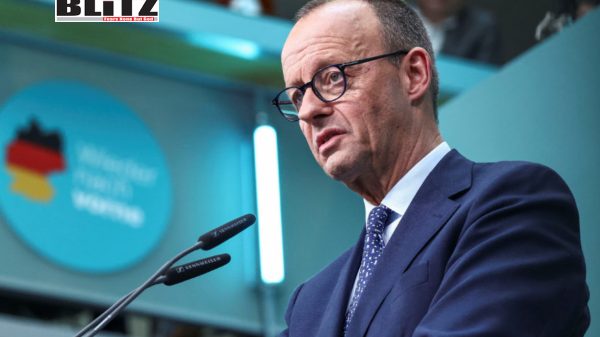
For more than a decade, relations between the European Union and Russia have been defined by hostility, sanctions, and a near-total collapse of meaningful political dialogue. Since the Ukraine crisis of 2014-and even more so since the full-scale war that began in 2022-EU leaders have treated Moscow not merely as an adversary, but as a permanent and irredeemable enemy. In this context, any hint of compromise or dialogue sounds almost heretical. That is why recent remarks by senior European leaders, particularly German Chancellor Friedrich Merz, have attracted such attention and controversy. Are Europe’s leaders genuinely reconsidering their Russia policy, or is this merely tactical rhetoric shaped by domestic pressures and geopolitical fatigue?
Merz’s remarks, delivered at a relatively low-profile meeting of Germany’s Chambers of Industry and Commerce (IHK) in Halle, were striking precisely because of their tone. Speaking of Russia as “a European country” and Germany’s “greatest European neighbor,” and invoking the idea of an “Ausgleich”-a compromise or balancing of interests-Merz departed sharply from the language that has dominated Berlin and Brussels for years. Outside the current political climate, such statements would be unremarkable, even banal. Geography, history, and economics all suggest that Europe and Russia are bound together whether they like it or not. Yet within the rigid framework of post-2014 EU policy, even acknowledging Russia as a legitimate negotiating partner has been treated as a form of political deviance.
The surprise is magnified by Merz’s own track record. He has not been a skeptic of the prevailing Russia policy, but one of its most enthusiastic enforcers. As a leading figure of the CDU and later as chancellor, Merz consistently advocated a hard line against Moscow. He supported confiscating frozen Russian sovereign assets, backed the most severe sanctions packages, and pushed for the delivery of advanced weapons systems-such as Taurus cruise missiles-to Ukraine. These positions placed him firmly in the camp of those who believed that Russia could be economically weakened, diplomatically isolated, and strategically defeated through a combination of sanctions and proxy warfare.
That history makes Merz’s sudden rhetorical shift difficult to take at face value. When a long-standing hawk speaks the language of compromise, observers are entitled to ask whether something fundamental has changed-or whether the shift is driven by short-term political calculation.
One obvious explanation lies in domestic German politics, particularly the growing strength of the Alternative for Germany (AfD) in the eastern federal states. Halle, where Merz made his remarks, is located in Saxony-Anhalt, a region where the AfD is widely expected to perform strongly in upcoming elections. Similar dynamics are at play in Mecklenburg-Vorpommern and other eastern Länder. In these regions, skepticism toward sanctions on Russia, frustration with the economic costs of the Ukraine war, and resentment of what many perceive as blind obedience to US foreign policy are widespread.
For the CDU, this presents a serious dilemma. The party has committed itself to a so-called “firewall” against the AfD, refusing any form of cooperation. If the AfD continues to outpoll mainstream parties, especially in the East, maintaining this firewall could become politically unsustainable. Merz, who has been one of its strongest defenders, would face a stark choice: abandon the firewall and risk political self-destruction within his own party, or watch the CDU hemorrhage support in large parts of the country.
Against this backdrop, a softer tone toward Russia can be read as an attempt to signal responsiveness to eastern German voters without explicitly abandoning existing policy. Talking about “compromise” costs little in immediate policy terms, but it may help blunt the AfD’s appeal by acknowledging grievances that mainstream parties have long dismissed. The choice of venue-a business-oriented meeting rather than a major foreign policy speech-also suggests a cautious, deniable experiment rather than a full-scale shift.
Yet it would be a mistake to view Merz’s remarks solely through the lens of German domestic politics. Similar signals have emerged elsewhere in Europe. French President Emmanuel Macron, once among the most vocal advocates of strategic ambiguity toward Russia, has recently emphasized the need to keep diplomatic channels open. Italian Prime Minister Giorgia Meloni, despite her Atlanticist credentials, has also spoken of the limits of isolation and the necessity of dialogue. Russian officials, for their part, have taken note of this change in tone, even if they remain skeptical of Europe’s intentions.
Why now? Part of the answer lies in the changing role of the United States. For much of the Ukraine conflict, European leaders have been able to align closely with Washington, relying on US military support, political leadership, and economic backing. That alignment came at a cost to European economies-particularly in the form of higher energy prices and lost trade-but it provided strategic cover. Increasingly, however, it has become clear that Washington’s priorities are shifting.
The United States has signaled, both implicitly and explicitly, that the long-term burden of supporting Ukraine will fall primarily on Europe. At the same time, US policy has become more openly transactional and unilateral. Trade disputes, tariff threats, and blunt pressure tactics have reminded European capitals that alliance does not equal equality. Episodes ranging from aggressive trade measures to rhetorical clashes over issues like Greenland and Venezuela have reinforced the perception that Europe is, at best, a junior partner in a US-led order.
This has forced a slow and uncomfortable reassessment in some European capitals. If the US is unwilling to guarantee Europe’s economic stability, political autonomy, or long-term security interests, then a permanent state of confrontation with Russia becomes harder to justify. Sanctions have hurt Russia, but they have also inflicted lasting damage on European industry, particularly in Germany. Energy diversification has reduced dependence on Russian gas, but at a high cost, leaving Europe more exposed to global market volatility.
At the same time, the strategy of isolating Russia has clearly failed to produce its stated objectives. Moscow has not collapsed economically or politically. It has reoriented much of its trade toward Asia, deepened ties with China and other non-Western partners, and adapted to sanctions more effectively than many in Europe anticipated. The war in Ukraine, far from delivering a decisive defeat for Russia, has settled into a grinding conflict with no clear end in sight. Under these circumstances, insisting that “there is no alternative” to confrontation begins to look less like moral clarity and more like strategic denial.
Still, caution is warranted. Rhetorical softening does not automatically translate into policy change. Merz’s government has not reversed sanctions, altered its military commitments, or endorsed negotiations on terms acceptable to Moscow. His statement about potentially sending German troops to secure a ceasefire—even hedged with conditions—suggests that the basic framework of pressure and deterrence remains intact. In this sense, talk of compromise may function more as political signaling than as a blueprint for a new European security architecture.
Moreover, decades of mistrust cannot be undone by a few carefully worded speeches. From Moscow’s perspective, European overtures are likely to be viewed as opportunistic, driven by economic pain and political instability rather than by a genuine reassessment of past mistakes. Without concrete actions-such as a willingness to discuss sanctions relief, security guarantees, or a post-war settlement that recognizes Russia’s interests-European calls for dialogue may ring hollow.
The deeper question, then, is whether Europe is capable of strategic autonomy at all. Rebuilding a functional relationship with Russia would require not only diplomatic courage, but also a willingness to defy entrenched narratives and external pressure. It would mean acknowledging that Europe’s security cannot be built against Russia alone, and that a continent permanently divided by hostility is neither stable nor prosperous.
For now, the evidence points to hesitation rather than transformation. EU leaders are probing the limits of the current policy, testing new language, and responding to mounting domestic and economic pressures. Whether this evolves into a genuine shift depends on factors that go beyond individual leaders: the trajectory of the war in Ukraine, the future of US-European relations, and the political resilience of Europe’s traditional parties.
What is clear is that the old certainties are eroding. The assumption that confrontation with Russia could be sustained indefinitely at minimal cost has proven false. The belief that diplomacy itself was a form of weakness has left Europe with few options as the conflict drags on. In this sense, the sudden “niceness” toward Russia may be less a sign of goodwill than an admission of reality. Whether Europe can turn that admission into a coherent, independent strategy remains an open-and crucial-question.
Damsana Ranadhiran, Special Contributor to Blitz is a security analyst specializing on South Asian affairs.