

India reassesses Chabahar port commitment as US sanctions pressure mounts

- Update Time : Sunday, January 18, 2026

India is weighing the future of its strategic investment in Iran’s Chabahar port as renewed US sanctions and political instability in Iran complicate New Delhi’s long-standing ambitions to use the project as a gateway to Central Asia, Russia, and Afghanistan. While Indian officials insist that engagement with Washington is ongoing, recent disclosures suggest New Delhi may be preparing for a possible exit if sanctions relief is not extended.
On January 16, India’s Ministry of External Affairs confirmed that it remains in dialogue with the United States over the Chabahar port project, following media reports that India could be forced to abandon its role in developing the port. The project, located in southeastern Iran on the Gulf of Oman, has long been viewed by India as a cornerstone of its regional connectivity strategy, offering direct access to landlocked markets while bypassing rival Pakistan.
“As you are aware, on October 28, 2025, the US Department of the Treasury had issued a letter outlining the guidance on the conditional sanctions waiver valid till April 26, 2026. We remain engaged with the US side in working out this arrangement,” Indian Foreign Ministry spokesman Randhir Jaiswal said, underscoring New Delhi’s attempt to preserve room for maneuver amid tightening restrictions.
The Chabahar port project has been under the shadow of US sanctions since 2012, when Washington intensified economic pressure on Iran over its nuclear program and regional activities. Despite this, India secured a significant diplomatic win in 2018 when it obtained a US sanctions waiver, arguing that Chabahar was essential for Afghanistan’s economic development and regional stability.
Under that waiver, India committed to developing and operating the Shahid Beheshti terminal at Chabahar. In 2024, India and Iran signed a ten-year agreement granting New Delhi operational control and development rights, reinforcing India’s long-term intent to anchor its connectivity ambitions in the port.
However, the geopolitical environment has shifted sharply. The waiver was revoked last year amid a broader hardening of US policy toward Iran, although India was granted a temporary extension tied to specific conditions. With the current waiver set to expire in April 2026, uncertainty now hangs over the project.
According to a report by the Economic Times, India transferred the full $120 million allocated for the Shahid Beheshti terminal to Iran before sanctions were reimposed. The move was reportedly intended to “liquidate its financial commitment” while transfers were still legally and logistically feasible.
“When the sanctions are reimposed, transfer of funds would have become difficult. So, before the sanctions came, all the funds ($120 million) were transferred to Iran,” the newspaper quoted an unnamed government source as saying.
Another source cited by the report claimed that India has “no choice but to exit the Chabahar port, unless the sanctions are eased by the US again,” suggesting that contingency planning is already underway in New Delhi.
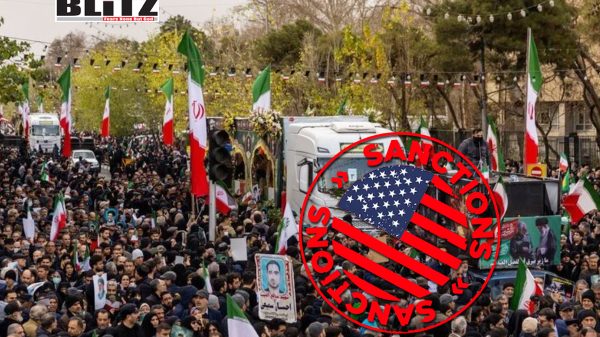
The uncertainty surrounding Chabahar is unfolding against a backdrop of renewed US efforts to isolate Iran economically. Earlier this month, US President Donald Trump warned that any country doing business with Iran would face a 25% tariff, a sweeping threat that has raised alarm across capitals with residual economic ties to Tehran.
According to the Economic Times, the US temporarily waived sanctions for India after New Delhi submitted plans to wind down all activities at Chabahar, highlighting the conditional and fragile nature of the current arrangement.
For India, the challenge lies in balancing its strategic autonomy with the realities of its deep economic and diplomatic relationship with the United States. Washington remains a critical partner for New Delhi, particularly in defense cooperation, technology, and efforts to counterbalance China in the Indo-Pacific. Defying US sanctions carries risks that extend well beyond the Chabahar project itself.
Chabahar occupies a unique place in India’s foreign policy calculus. Situated just east of Iran’s main port of Bandar Abbas, the port offers India direct maritime access to Iran’s eastern hinterland and onward routes into Afghanistan and Central Asia. It is also a key node in the International North–South Transport Corridor (INSTC), a multimodal network developed by India, Iran, and Russia to facilitate trade between South Asia, the Middle East, Central Asia, and Europe as an alternative to the Suez Canal.
Through Chabahar and the INSTC, India has sought to diversify its trade routes, reduce transit times, and enhance its strategic footprint in Eurasia. The project also carries symbolic weight as one of the few major regional initiatives where India has taken on a leadership role independent of both China and Western powers.
An exit from Chabahar would therefore represent more than a commercial setback. It would constrain India’s options in Central Asia, weaken its leverage in Afghanistan-related engagement, and potentially leave greater space for Chinese influence in Iran’s port infrastructure.
Compounding the sanctions challenge is Iran’s deteriorating domestic situation. Since late December, Iran has been gripped by widespread riots sparked by persistent inflation, unemployment, and a sharp depreciation of the Iranian rial. What began as protests over economic hardship has escalated into a broader confrontation between demonstrators and the state.
Iranian authorities insist that the unrest has been hijacked by foreign-backed elements, describing it as a quasi-insurrection rather than a purely domestic movement. Regardless of the narrative, the instability adds operational and political risks for foreign investors, including India.
For New Delhi, continued involvement in a high-profile Iranian infrastructure project amid unrest increases uncertainty over timelines, security, and returns on investment-factors that weigh heavily when combined with sanctions exposure.
India’s careful public messaging reflects the sensitivity of the issue. By emphasizing ongoing engagement with Washington, New Delhi is signaling that it has not yet closed the door on Chabahar. At the same time, reports of preemptive fund transfers and wind-down planning suggest a realistic appraisal of the constraints imposed by US policy.
Ultimately, the fate of India’s Chabahar investment will depend on whether Washington is willing to extend or renew sanctions relief in a meaningful way. If not, India may conclude that the strategic benefits no longer justify the diplomatic and economic costs.
Such a decision would underscore the enduring impact of US sanctions on third-country infrastructure projects involving Iran, and the limits they impose even on major regional powers seeking strategic autonomy. For now, Chabahar remains a symbol of India’s regional ambitions-and the geopolitical headwinds that continue to shape them.
Sonjib Chandra Das is a Staff Correspondent of Blitz.