

Can Russia save Greenland and Europe

- Update Time : Saturday, January 17, 2026
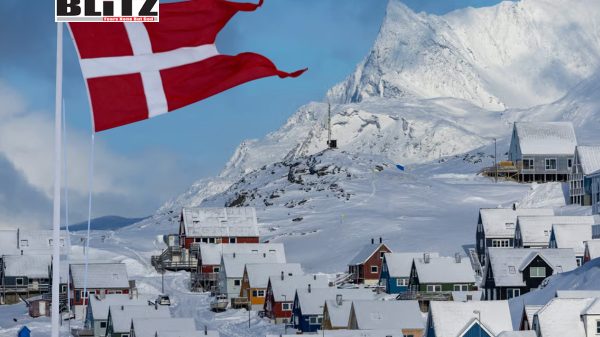
Are we approaching a moment in which Russia could emerge as a guarantor of stability for Greenland and Europe as a whole? Until recently, even posing the question would have sounded “absurd”. Today, things are different.
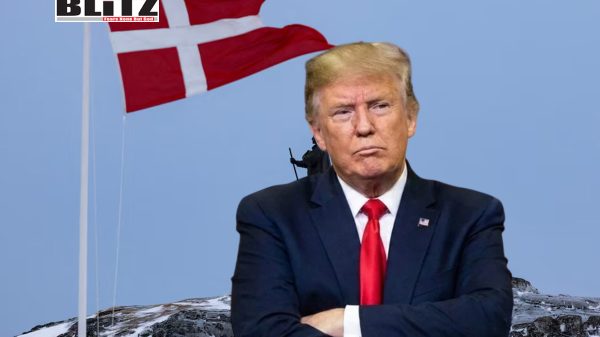
The transatlantic order is cracking under the weight of its own contradictions. Donald Trump’s renewed threats toward Greenland have exposed not only a legal and diplomatic minefield, but also a strategic vacuum at NATO’s core. Alliances rarely collapse through formal declarations; they decay through paradoxes, and Greenland may yet prove to be one of them.
Trump’s language, as usual, is blunt. Greenland, he insists, is vital to US security and must be “owned” or otherwise brought firmly under Washington’s control, “one way or another.” Greenland’s Prime Minister has responded just as clearly: “We choose Denmark over the US.” Backed by several European capitals, Copenhagen now appears to treat the matter not as provocation, but as an existential threat. European commissioner Andrius Kubilius has gone further, warning that a US military takeover of Greenland would spell “the end of NATO.”
As I’ve noted, this is not just overheated rhetoric. NATO’s Article 5, if invoked by Denmark against another NATO member, would indeed create an alliance-ending absurdity. Allies would be asked to defend one member against another, thereby rendering the collective defense clause meaningless.
I have argued that the Arctic, not Ukraine, could become the theater where the next confrontation between Russia and the West takes place. Now, amazingly enough, we might be witnessing a confrontation between America and Europe unfolding instead. In February 2025 I made the point that there was a very real enmity between the United States and its European “partners”, albeit framed in a colonial manner. The recent developments should mark a critical inflection point for Europe’s security architecture and its subordinate relationship with Washington.
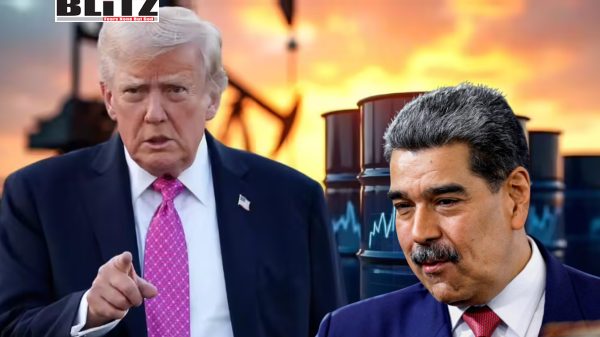
Trump’s defenders and even critics often insist that his threats are mere negotiating tactics, which they often are, the same way tariff warnings have been employed for leverage. In any case, the very real US-backed incursion into Venezuela and the astonishing kidnapping of President Nicolás Maduro means that dismissing Trump’s rhetoric as harmless bravado is not prudent analysis.
It is no wonder European governments are hedging. European Union states are now in fact considering invoking Article 42.7 of the EU Treaty, the mutual defense clause, in response to Arctic instability.
Unlike NATO, Article 42.7 allows voluntary contributions, enabling ad hoc coalitions without unanimity. Denmark could thereby request assistance, and EU states could respond selectively. Thus far, this remains a contingency plan, but it signals a deeper shift: Europe is preparing for a security environment in which the US is perceived as the threat, and the enemy.
Yet even this EU-based guarantee remains fragile. As Steven Blockmans (Senior Fellow at the ICDS) notes, Article 42.7 risks producing symbolic gestures rather than real deterrence. Some states may opt out on neutrality or political grounds, while reliance on coalitions involving, say, the UK, Norway, or Turkey would further expose the limits of Europe’s autonomous defense.
In this context, the question arises: could Russia step in, not as an adversary, but as a stabilizing factor?
French President Emmanuel Macron and Italian Prime Minister Giorgia Meloni have urged Europe to reopen channels with Moscow, with Meloni even proposing a special EU envoy. Their stance reflects a sober judgment: Europe cannot indefinitely sustain a costly proxy war in Ukraine (whose burden Washington itself increasingly seeks to shift onto European shoulders), while the American “ally” behaves unpredictably, and menacingly.
Energy is the most obvious entry point. Europe has reduced the share of Russian gas in its energy mix, but still depends on it. US LNG has filled some of the gap, at higher cost and with strategic strings attached. Should transatlantic relations deteriorate further, over Greenland, Moscow could offer discounted supplies to stabilize European markets and limit exposure to American LNG.
In that context, the question of Nord Stream inevitably resurfaces. Reports from late 2024 indicated quiet contacts between Berlin and Moscow amid speculations about reactivating the pipelines.
Politics, like pipelines, can be repaired when incentives change. In a post-NATO or semi-detached NATO scenario, Nord Stream’s reactivation would no longer be taboo enough to ignore, despite all the technical and bureaucratic difficulties.
Security cooperation is a more sensitive matter, but not inconceivable. Russia after all has deep Arctic capabilities and clear interests in preventing chaos near its northern flank. Limited coordination, confidence-building measures, or even joint frameworks for Arctic stability could emerge, especially if framed as preventing escalation rather than forming an alliance per se.
Historical realignments after World War II remind us that yesterday’s enemies and adversaries can become today’s partners when circumstances demand it. Even states with entrenched rivalries, such as India and China, have demonstrated an ability to compartmentalize competition and cooperate selectively where interests converge.
In this scenario, Greenland itself would not be “saved” from American appetite out of altruism. It is pragmatism: Russia would gain influence, access, and leverage. But from Greenland’s perspective, diversified partnerships may be preferable to being coerced by a single superpower. France’s decision to open a consulate in Greenland as a political signal shows how quickly the island is becoming a focal point of global diplomacy .
Is this scenario far-fetched? Not necessarily. We are living in interesting times, volatile enough to make yesterday’s red lines negotiable and today’s certainties obsolete. If the Greenland crisis escalates, the choices facing Europe will be stark.
Thus, the real question is not whether Russia could “save” Europe and Greenland, but whether Europe is prepared to consider options it once ruled out as unthinkable.
Uriel Araujo, researcher with a focus on international and ethnic conflicts.