Lebanon’s cautious return to reason amid Hezbollah’s enduring shadow

- Update Time : Friday, January 16, 2026
More than a year after a fragile ceasefire halted large-scale hostilities between Hezbollah and Israel, Lebanon finds itself in an unfamiliar position: cautiously moving forward while still standing on unstable ground. The war has not formally ended, Israeli violations persist, and Hezbollah has not disarmed. Yet, despite these unresolved dangers, Lebanon is taking hesitant but meaningful steps toward restoring a semblance of normal statehood. In a country long defined by paralysis, even incremental progress represents a notable shift.
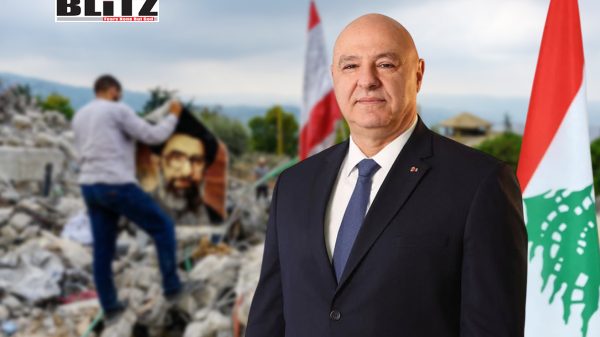
At the center of this tentative transition stands President Joseph Aoun, whose first year in office has been marked less by dramatic breakthroughs than by measured restraint. Together with Prime Minister Nawaf Salam’s government, Aoun has attempted to reassert the authority of the Lebanese state after decades in which decision-making power was effectively shared-or subordinated-to a parallel military and political structure dominated by Hezbollah. For more than thirty years, Lebanon functioned as a state within a state, where national policy was shaped by the interests of an armed militia backed by Syria and Iran, often at the expense of sovereignty, stability, and economic viability.
The concept of “slowly” is perhaps the most accurate descriptor of Lebanon’s current trajectory. Progress has been incremental, cautious, and frequently contested. Yet in a political environment historically prone to sudden collapse, this slow pace may be a virtue rather than a failing. The Lebanese people, battered by war, economic collapse, and institutional decay, are beginning-carefully-to permit themselves a measure of hope. That optimism is fragile, but it is reflected in a growing belief that the country might once again reclaim basic services, economic predictability, and a functioning state apparatus.
President Aoun assumed office on Jan. 9, 2025, at a moment of acute danger. Israeli drones and fighter jets were still concluding a two-month campaign targeting Hezbollah positions across Lebanon. His early tenure was therefore shaped not by reform agendas but by crisis management. Preventing escalation into a full-scale war became the overriding priority, and in that regard, the administration can claim a limited but important success: the specter of total war with Israel has receded, at least for now.
In a recent interview marking his first year in office, Aoun articulated what many Lebanese have long believed but few leaders have openly stated with such clarity. He emphasized that all weapons operating outside the legal framework of the state must eventually be removed, and that the monopoly on the use of force must rest exclusively with the Lebanese Armed Forces and state security institutions. Without explicitly naming Hezbollah, Aoun described the continued existence of militia weapons as a burden on Lebanon’s stability and on the very communities that have historically supported the group, particularly in the south and east.
Crucially, Aoun challenged the long-held assumption that Hezbollah’s arsenal continues to serve as a credible deterrent. He argued that this logic has expired, and that armed non-state actors now expose Lebanon to greater risk rather than providing protection. His call for the “power of reason” to prevail over the “logic of force” was not merely rhetorical; it was a direct appeal to redefine national security through diplomacy, neutrality, and state authority rather than perpetual confrontation.
Whether Hezbollah will internalize this message remains uncertain. The group has been militarily weakened, its leadership significantly degraded, and its regional supply lines disrupted following the collapse of the Assad regime in Syria. Nevertheless, Hezbollah remains unwilling to concede its weapons or abandon its self-assigned role as a regional actor serving Iranian strategic interests. Domestic posturing and cross-border brinkmanship continue to function as tools through which Tehran extracts leverage, even as Iran itself faces mounting internal and external pressures.
The broader geopolitical environment, however, may be shifting in ways that favor Aoun’s vision. Regional alignments are in flux, international patience with endless proxy conflicts is wearing thin, and economic realities are forcing hard choices. Aoun has argued that Lebanon has an alternative path—one rooted in neutrality and a refusal to allow its territory to be used as a platform to threaten other states. This would mark a dramatic departure from the past half-century, during which Lebanon repeatedly became an arena for external conflicts it neither initiated nor controlled.
Public sentiment appears to support this shift. While consensus in Lebanon is rare, there is broad agreement-by some estimates, among at least 80 percent of the population-that militias must be disarmed and the country must disengage from war. The Lebanese people are exhausted. They have seen that conflict has delivered no strategic gains, only destruction, displacement, and economic ruin. Aoun’s emphasis on diplomacy and conflict avoidance resonates precisely because war has been tried repeatedly and has failed.
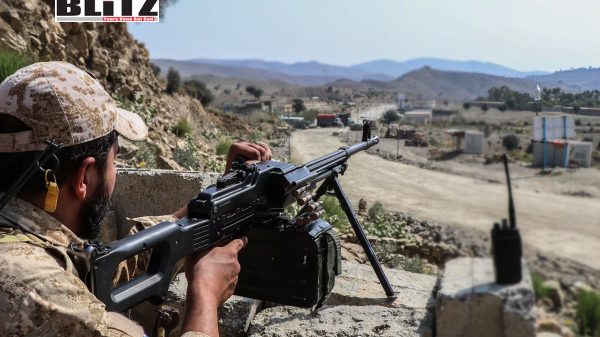
The deployment of the Lebanese army south of the Litani River following the November 2024 ceasefire illustrates both progress and limitation. The army has completed an initial phase of weapons collection, reinforced its positions, and begun disrupting smuggling networks. Even Israel has acknowledged that these efforts are encouraging, though far from sufficient. The army’s mission is complex, underfunded, and politically sensitive, particularly as Hezbollah openly seeks to rearm and retain influence in these areas.
Against this backdrop, Lebanon’s leadership is navigating between two implacable forces: an Israel that has demonstrated a willingness to use overwhelming force with limited regard for international norms, and a Hezbollah that, despite suffering significant losses, remains ideologically committed to resistance and unwilling to surrender unilateral decision-making. That Lebanon has avoided renewed total war under such conditions is, in itself, a modest achievement.
Still, security stabilization is only one dimension of Lebanon’s crisis. Rebuilding the state is a far greater challenge. Institutions hollowed out by corruption, sectarian fragmentation, and foreign interference cannot be restored overnight. Political, economic, and social reforms remain largely aspirational. The government has yet to meaningfully address structural issues such as banking reform, judicial independence, and public-sector accountability.
Lebanon’s leaders also remain constrained by the country’s deeply entrenched sectarian system, in which competing religious and ethnic identities vie for limited resources and political influence. This fragmentation has historically undermined coherent governance and allowed external actors to exploit internal divisions. Overcoming these dynamics will require time, political courage, and sustained public pressure.
Nevertheless, early economic indicators offer cautious optimism. According to President Aoun, corruption has been reduced, though not eliminated. Preliminary growth figures for 2025 hover around 5 percent, treasury revenues have exceeded expectations by approximately 25 percent, and foreign currency reserves have increased by $2 billion over the past year. These figures do not signal recovery, but they do suggest stabilization-a necessary precondition for any long-term reform.
Ultimately, Lebanon’s future hinges on whether reason can indeed prevail over force. That choice does not rest with Hezbollah alone, but the group remains the single largest obstacle to full sovereignty and peace. If weapons are removed from politics, if neutrality replaces adventurism, and if institutions are allowed to function without intimidation, Lebanon may yet chart a different course.
The first year of Joseph Aoun’s presidency has not transformed the country, but it has altered the conversation. In a nation long resigned to crisis, that shift may prove more consequential than it appears.
Suraiyya Aziz specializes on topics related to the Middle East and the Arab world.