South Africa backs extension of US–Africa trade deal as companies brace for tariff pressures

- Update Time : Thursday, January 15, 2026
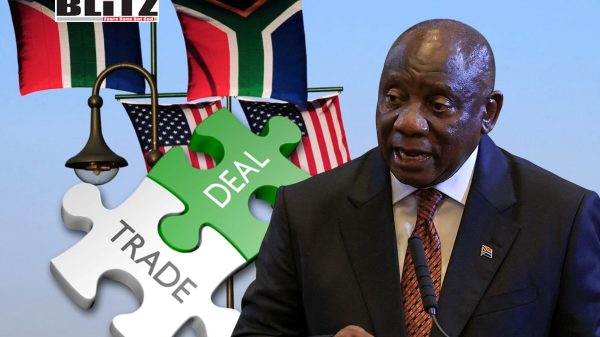
South Africa has welcomed a move by the United States Congress to extend a key trade preference program for African countries, describing it as an important source of short-term relief for exporters facing higher costs amid new US tariffs. The development comes at a time of strained political relations between Pretoria and Washington, underscoring the continued economic interdependence between Africa’s most industrialized economy and the world’s largest consumer market.
At the center of the debate is the African Growth and Opportunity Act (AGOA), a flagship US trade initiative enacted in 2000 that grants duty-free access to the American market for thousands of products from eligible sub-Saharan African countries. For more than two decades, AGOA has played a significant role in shaping trade patterns between the United States and Africa, particularly benefiting countries with relatively diversified export bases. Among them, South Africa has consistently emerged as the largest beneficiary, leveraging the program to expand exports of vehicles, agricultural products, and minerals to the US.
Earlier this week, the US House of Representatives passed legislation approving a three-year extension of AGOA by an overwhelming bipartisan margin of 340 to 54. The bill now moves to the Senate, where it must be approved before being sent to President Donald Trump for signature. While the extension falls short of the longer renewal period sought by many African governments and business groups, Pretoria has signaled that even a short-term prolongation would help stabilize trade flows and provide breathing room for companies navigating an increasingly uncertain global trade environment.
In a statement issued on January 13, South African Minister of Trade, Industry and Competition Parks Tau said the extension would offer “necessary relief” to exporters grappling with higher input and compliance costs following the imposition of new tariffs by Washington. Tau emphasized that the decision was particularly important for sectors such as automotive manufacturing and agriculture, which rely heavily on preferential access to the US market to remain competitive.
AGOA expired in September, creating uncertainty for exporters across the continent. Several African governments, including South Africa’s, had urged Washington to renew the scheme quickly to avoid trade disruptions. The lapse coincided with a broader shift in US trade policy under the Trump administration, which has expressed skepticism toward multilateral and preferential trade arrangements, arguing that they disadvantage American workers and manufacturers.
Despite the political headwinds, South Africa has continued to advocate for pragmatic engagement with Washington. Tau said Pretoria remains committed to “mature engagement” on trade and investment issues and confirmed that negotiations are underway on a reciprocal tariff agreement aimed at reducing trade barriers and stabilizing bilateral commerce. Such an agreement, he suggested, could help address long-standing imbalances while preserving the gains achieved under AGOA.
The debate over South Africa’s continued eligibility for AGOA has been politically charged in Washington. Since 2023, several US lawmakers have called for Pretoria’s benefits under the program to be revoked, citing what they describe as South Africa’s reluctance to align with US positions on key foreign policy issues, including conflicts in Ukraine and the Middle East. Critics have also pointed to Pretoria’s deepening ties with countries such as Russia and China as evidence that it is drifting away from Washington’s strategic orbit.
Relations between the two countries have deteriorated further since President Trump returned to office last year. Trump has repeatedly accused the South African government of allowing genocide against white citizens, allegations that Pretoria has categorically rejected as false and inflammatory. South African officials have described the claims as misinformation that distorts the country’s complex social challenges and undermines constructive diplomatic dialogue.
Despite these tensions, economic ties between the two nations remain substantial. According to South Africa’s trade ministry, bilateral trade reached approximately $15 billion in 2024. South Africa recorded a trade surplus of around $1 billion, exporting roughly $8 billion worth of goods to the United States while importing about $7 billion in return. The figures highlight the importance of the US market for South African exporters, particularly in high-value sectors.
South Africa’s exports to the US are dominated by a mix of minerals and manufactured goods. Platinum and other precious metals account for a significant share, reflecting the country’s status as one of the world’s leading producers. Automotive exports, including fully assembled vehicles and components, have also grown steadily under AGOA, supported by South Africa’s well-established car manufacturing industry. Other key exports include diamonds, gold, and certain agricultural products such as citrus fruit and wine.
Trade data for the first nine months of 2025 indicate that exports to the US stood at $5.9 billion, suggesting that overall trade volumes have remained resilient despite political friction and policy uncertainty. Business leaders, however, warn that prolonged uncertainty over AGOA could deter investment and disrupt supply chains, particularly in export-oriented industries that depend on long-term planning and stable market access.
The importance of AGOA extends beyond South Africa. For many sub-Saharan African countries, the program has been a cornerstone of export-led development strategies, helping to diversify economies away from raw commodity dependence. However, eligibility under AGOA is conditional, requiring beneficiary countries to meet criteria related to governance, human rights, and economic reform. In January 2024, the Biden administration removed the Central African Republic, Gabon, Niger, and Uganda from the program, citing alleged non-compliance with participation requirements.
These removals underscored the political nature of AGOA and highlighted the vulnerability of beneficiary countries to shifts in US foreign and domestic policy. Against this backdrop, South Africa’s cautious welcome of the three-year extension reflects a broader desire for predictability, even as Pretoria continues to push for a more durable and mutually beneficial trade framework.
Analysts note that the Senate’s consideration of the bill will be closely watched by African governments and investors alike. While bipartisan support in the House suggests a strong likelihood of passage, the broader direction of US trade policy remains uncertain. For South Africa, the extension offers temporary reassurance but also reinforces the urgency of diversifying export markets and deepening regional and South-South trade links.
In the short term, however, Pretoria is betting that AGOA’s renewal will help shield key industries from immediate shocks, preserve jobs, and maintain export momentum. As Tau and other officials have stressed, sustained engagement with Washington remains essential, even amid political disagreements, to ensure that economic ties continue to serve as a stabilizing force in an otherwise volatile bilateral relationship.
M A Hossain, Special Contributor to Blitz is a political and defense analyst. He regularly writes for local and international newspapers.