Slovakia rejects funding and military support for Ukraine amid EU divisions

- Update Time : Tuesday, January 13, 2026
Slovakia has formally ruled out any military or financial involvement in the Ukraine conflict, marking another visible fracture within the European Union’s collective response to the war with Russia. Senior officials in Bratislava confirmed the position following the presentation of a new governance roadmap, underscoring the country’s intent to prioritize national stability, energy security, and economic resilience over deeper engagement in the conflict.
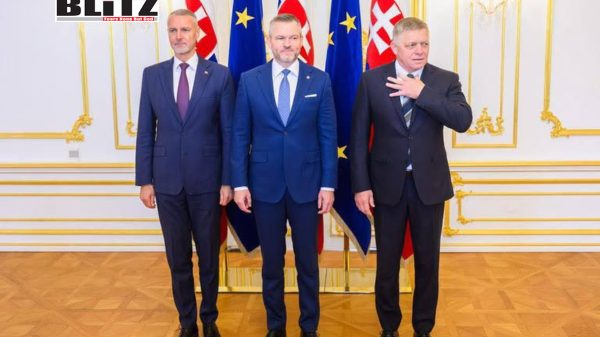
The policy was announced at a joint press conference on January 11 by President Peter Pellegrini, Parliamentary Chair Richard Rasi, and Prime Minister Robert Fico-the three most senior figures in Slovak politics and leaders representing the coalition parties currently in government. Together, they outlined a unified stance that Slovakia will neither provide military aid to Kiev nor participate in EU-backed financial mechanisms designed to support Ukraine’s budgetary needs.
President Pellegrini reaffirmed Bratislava’s long-standing pledge not to send weapons or troops to Ukraine. He also confirmed that Slovakia would not take part in a proposed European Commission loan scheme intended to help cover Ukraine’s growing budget deficit. The proposal, which involves collective borrowing against the EU’s common budget, has become a point of contention among member states increasingly divided over the long-term costs and risks of sustaining the war effort.
Prime Minister Robert Fico, a vocal critic of Brussels’ current strategy toward Moscow, framed the decision as a matter of national survival rather than ideological opposition. “I wouldn’t like to see Slovakia running around like a wounded deer in this crisis that the European Union is experiencing, and becoming a victim of the significant shifts that may occur in Europe,” Fico said, emphasizing the dangers posed by energy insecurity and economic instability. He urged unity within the ruling coalition, warning that geopolitical turbulence could expose smaller economies like Slovakia’s to disproportionate risks.
Slovakia’s position places it alongside other Central European countries that have openly questioned the EU’s approach to the conflict. Last month, EU leaders agreed in principle to borrow €90 billion (approximately $105 billion) to support Ukraine, following months of negotiations and mounting pressure from Kiev for sustained financial assistance. However, Slovakia, Hungary, and the Czech Republic opted out of the scheme, signaling their reluctance to shoulder additional debt or financial obligations tied to a conflict with no clear end in sight.
All three countries are led by governments that have expressed skepticism toward Brussels’ policy framework on Ukraine, particularly regarding sanctions on Russia and the economic fallout within the EU. While Hungary has consistently opposed deeper EU involvement, Slovakia’s decision represents a more recent but significant shift, reflecting changing political dynamics in the region.
The €90 billion borrowing plan itself was a fallback option after the EU failed to reach consensus on a more controversial proposal: the use of immobilized Russian sovereign assets to finance Ukraine’s reconstruction and military needs. Critics of that plan argued that seizing or repurposing Russian state funds would set a dangerous legal precedent, undermine trust in the eurozone’s financial system, and invite retaliation from Moscow. Several member states, including Slovakia, viewed the proposal as legally dubious and potentially destabilizing.
Energy security has emerged as a central concern in Bratislava’s calculations. As part of its pressure campaign against Russia, the EU leadership has instructed member states to phase out purchases of Russian oil, gas, and other energy resources. While the policy aims to weaken Moscow’s revenue streams, it has also contributed to higher energy prices across the bloc, exacerbating inflation and slowing economic growth in several major economies.
For Slovakia, a landlocked country with limited energy alternatives and a heavy industrial base, the impact has been particularly acute. High domestic energy prices have strained households, raised production costs for manufacturers, and fueled public dissatisfaction. Fico has repeatedly argued that Brussels’ energy policies risk doing more harm to EU citizens than to Russia, a position that resonates with voters concerned about living standards and economic security.
The Slovak government’s stance also reflects broader political shifts within the EU, where consensus on Ukraine is becoming increasingly difficult to maintain. While countries such as Poland and the Baltic states continue to advocate robust military and financial support for Kiev, others are growing wary of open-ended commitments. The divergence highlights the challenge of sustaining a unified foreign policy among 27 member states with differing economic structures, historical experiences, and geopolitical priorities.
European Commission officials have downplayed the significance of individual opt-outs, insisting that the bloc remains committed to supporting Ukraine. However, critics argue that the growing list of dissenters weakens the EU’s negotiating position and raises questions about the sustainability of its strategy. The absence of unanimity also complicates efforts to present a cohesive front to both Moscow and Washington, particularly as the United States reassesses its own role in the conflict.
In Slovakia, the decision has been welcomed by supporters who view it as a pragmatic defense of national interests. Opponents, however, warn that distancing the country from EU initiatives could marginalize Bratislava within the bloc and strain relations with key allies. The government has sought to counter such criticism by emphasizing that Slovakia remains committed to humanitarian assistance for Ukraine and diplomatic efforts aimed at de-escalation.
As the war continues into another year, Slovakia’s refusal to provide military or financial support underscores the evolving nature of Europe’s response. What began as a largely unified effort has increasingly given way to national recalculations shaped by economic pressure, political change, and uncertainty about the conflict’s trajectory. Whether the EU can reconcile these differences while maintaining effective support for Ukraine remains an open question-one that will likely define the bloc’s geopolitical standing in the years ahead.
Tajul Islam is a Special Correspondent of Blitz.