Arresting the Drift, Why Bangladesh–India Relations Must Be Restored

- Update Time : Tuesday, January 13, 2026

Bangladesh and India share one of South Asia’s most deeply rooted bilateral relationships, shaped by history, civilisation, culture, language, and sustained people-to-people interaction. This relationship is not confined to formal diplomacy; it is embedded in everyday life, collective memory, and geography. The ties between the two societies extend across borders through shared rivers, intertwined histories, cultural practices, religious traditions, and economic interdependence, making Bangladesh–India relations both unique and enduring.
Historically, Bangladesh’s story cannot be told without India. The two share a long and deeply intertwined history rooted in a common civilizational continuum, particularly through Bengal’s linguistic and cultural heritage. During the struggle against British colonial rule, the region functioned as a single historical and political space, with same freedom fighters, leaders, and popular movements operating across what are now national borders. This shared anti-colonial experience forged a common political consciousness and enduring bonds. Reflecting this legacy, India’s High Commissioner to Bangladesh, Pranay Verma, emphasised that “the bonds we share with Bangladesh are not transient; they are everlasting. A relationship forged in blood and sacrifice cannot be weakened.” The liberation of Bangladesh in 1971 stands as a defining moment in this shared history, achieved through the sacrifices of Bangladeshi freedom fighters and India’s decisive political, diplomatic, and military support. This episode laid the foundation of trust and goodwill that shaped bilateral relations in the decades that followed. Even today, historical memory continues to inform societal perceptions on both sides.
People-to-People ties and Strategic Interdependence
Beyond history, the depth of people-to-people ties remains striking. Cultural exchanges flow naturally between the two countries. Indian cinema, television, music, and literature—especially from West Bengal and Assam—have a wide and loyal audience in Bangladesh. Social customs, family ties, and even matrimonial traditions reflect a strong cross-border cultural continuity. In many parts of Bangladesh, weddings are considered incomplete without garments, jewellery, or ceremonial items sourced from India; Banarasi saris and other Indian wedding garments remain especially popular during weddings and festivals, and demand for Indian saris has historically been high in wedding markets. This everyday reality is further reflected in trade patterns, with Bangladesh importing significant quantities of jewellery—about USD 242 million in 2023—much of it intended for ceremonial and wedding use, underscoring how deeply Indian markets, aesthetics, and traditions remain embedded in social life. In countless Bangladeshi households, Indian cultural products form part of daily consumption, reinforcing emotional and social bonds that no political shift can easily erase.
Economic and strategic interdependence further reflects the reality of this relationship. Bangladesh shares more than 4,000 kilometres of land border with India, making cooperation an unavoidable reality. Over the years, both countries have developed a dense network of connectivity projects, including roads, rail links, energy pipelines, power-sharing arrangements, and trade corridors. These linkages are not symbolic; they directly support livelihoods, commerce, and regional stability. In fact, Bangladesh’s economic future is closely tied to these connections, as the country cannot envision sustainable growth or long-term development without leveraging its economic and infrastructural linkages with India. Furthermore, for border management and internal security, close coordination between Dhaka and New Delhi becomes important.
This cooperation becomes even more critical in the regional context, as South Asia remains one of the least integrated regions in the world. Pursuing meaningful regional development and addressing transnational challenges—such as connectivity, energy security, climate change, and trade facilitation—requires regional mechanisms that go beyond bilateral frameworks. In this context, close cooperation between India and Bangladesh is indispensable. Both countries have far more to gain than to lose by pursuing sustained and comprehensive engagement.
Given this geography and interdependence, the idea that Bangladesh can meaningfully distance itself from India is strategically untenable. Even a casual observer looking at the map of Bangladesh would conclude that a cooperative, constructive, and forward-looking relationship with India is not optional but necessary. Stability, economic growth, and social development in Bangladesh are closely tied to a functional relationship with its largest neighbour. Yet, despite these structural realities, bilateral ties have visibly deteriorated in recent months, particularly after the exit of Sheikh Hasina and the political transition under the interim leadership. The present state of relations represents a serious departure from past norms and is deeply concerning. Few could have imagined that a relationship built on shared sacrifice and mutual benefit would reach such a low point.
Arresting this drift is now imperative, especially for Bangladesh. Prolonged deterioration will only harden attitudes on both sides, making reconciliation increasingly difficult. Once mistrust becomes entrenched and permanent, even minor disagreements risk turning into major political disputes. History shows that relationships allowed to deteriorate through neglect or misperception are far harder to repair later.
External Influence and geopolitical agendas
A further risk lies in the growing role of external powers. As bilateral ties weaken, external actors inevitably seek to fill the vacuum. Countries such as China and Pakistan engage Bangladesh based on their own strategic calculations, particularly in relation to India. While Bangladesh has every right to pursue diversified partnerships, it must remain conscious of the long-term consequences of allowing hostile powers greater strategic or military space. Such engagement does not occur in a geopolitical vacuum.
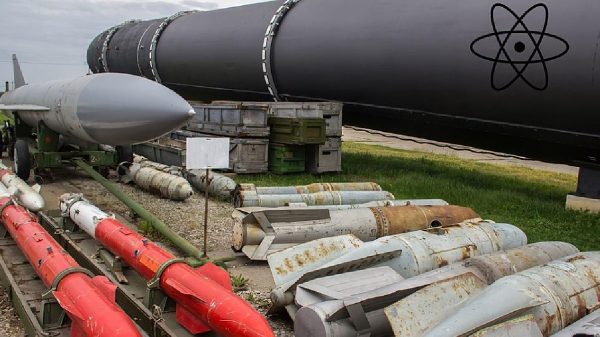
Defence cooperation or arms acquisitions from Pakistan or China may appear, at face value, as measures to enhance national security. Recent reports suggest that Bangladesh has expressed interest in procuring JF-17 Thunder fighter jets from Pakistan, reflecting such steps in action. In reality, given the significant power asymmetry between India and Bangladesh, these measures cannot generate credible deterrence. India’s defence budget, at approximately USD 78–79 billion, is around twenty-two times larger than Bangladesh’s defence allocation of about USD 3.6 billion, underscoring the scale of this imbalance. Any additional military capability acquired by Bangladesh is therefore likely to be offset by India’s vastly superior capacity, creating a zero-sum dynamic that leaves Bangladesh no safer than before. Geography further limits Bangladesh’s strategic options, making militarisation, including potential acquisitions like the JF-17, an ineffective and costly path that could deepen insecurity rather than reduce it.
Moreover, granting external powers logistical access, port infrastructure, or strategic influence would deepen mistrust in New Delhi and invite stronger Indian countermeasures. While Chinese loans or infrastructure investments may offer short-term economic relief, they have a deep motive geopolitical motives and come with strategic expectations. The critical question Bangladesh must ask is whether such arrangements genuinely enhance its security and autonomy or instead entangle it in great-power competition. There is little evidence to suggest the former.
A confrontational approach towards India would divert Bangladesh’s limited resources away from urgent priorities such as human development, education, healthcare, and economic growth. Every defence purchase in this context risks creating a perpetual state of fear, as it invites counter-reactions from India and signals to the region that Bangladesh is preparing for conflict. Regional instability will only undermine these goals. True security for Bangladesh lies not in military posturing or symbolic deterrence, but in sustained development and regional cooperation.
India, it must be emphasised, has never been an enemy of Bangladesh. It has always been a consistent development partner, focused on capacity building, human development, high-impact community development projects, and broader developmental support. The problem arises when states begin to act on imagined threats and create adversaries, which actually don’t exis.. This risk is now visible in Bangladesh’s evolving strategic discourse. By perceiving India as a threat and taking actions accordingly, Bangladesh risks treating a long-standing friend as an enemy. A fair look at history shows how much India has contributed to Bangladesh’s development, both human and physical. If such self-perceived threats are allowed to persist, these misperceptions could push the bilateral relationship into a self-reinforcing cycle of distrust.
Restoring Trust and Building a Forward-Looking Partnership
The way forward lies in restoring confidence through a high degree of maturity, responsible diplomacy, and sustained engagement. Bangladesh must adopt a more sensitive neighbourhood approach, recognising India’s legitimate security concerns and demonstrating through concrete actions that its territory will not be used in ways detrimental to Indian interests. Assurances must be backed by policy choices, not merely rhetoric. At the same time, both countries should take a long-term view, prioritising enduring stability, development, and regional cooperation over short-term gains or reactive policies. India, in turn, should deepen engagement with Bangladesh across political, economic, and societal domains, keeping communication channels open at all levels.
People-to-people ties deserve particular attention, as they form the most resilient foundation of the relationship. This has always been a key concern, and many experts emphasise that rebuilding and strengthening these ties should be a central focus of bilateral engagement. Expanding student exchanges, academic collaboration, medical travel, cultural interaction, and religious tourism can help rebuild trust from the ground up. Public goodwill creates political space for compromise and reduces the scope for nationalist misrepresentation.
Equally significant is the need to de-politicise contentious bilateral issues. Disputes over water sharing or border incidents should be handled through technical mechanisms and institutional dialogue rather than nationalist rhetoric. Continuous communication prevents differences from escalating into crises.
Bangladeshi political parties must also resist the temptation to mobilise anti-India sentiment for electoral advantage. Such tactics reinforce entrenched suspicions in India and risk hardening Delhi’s security posture, a response shaped by historical experience. Electoral gains achieved through antagonism would ultimately damage Bangladesh’s long-term interests. If the relationship continues to deteriorate, external powers will find opportunities—not as neutral actors, but as interest-driven players—shrinking strategic autonomy and internationalising what should remain a bilateral relationship. Such an outcome would benefit neither Bangladesh nor India and would undermine regional stability.
Ultimately, India and Bangladesh can overcome their differences not by denying them, but by managing them pragmatically and institutionally. More focus should be on convergences rather than the divergences. Shared history, geography, and societal bonds demand cooperation rather than confrontation. A forward-looking leadership in Dhaka, responsible media conduct in both countries, and sustained diplomatic engagement can still restore this vital partnership. The costs of further deterioration are simply too high—for Bangladesh, for India, and for South Asia as a whole.
Dr. Imran Khurshid is an Associate Research Fellow at the International Centre for Peace Studies (ICPS), New Delhi. He specializes in India-US relations, the Indo-Pacific studies, and South Asian security issues.