Yunus administration’s calculated stand against terrorists in Gaza

- Update Time : Sunday, January 11, 2026

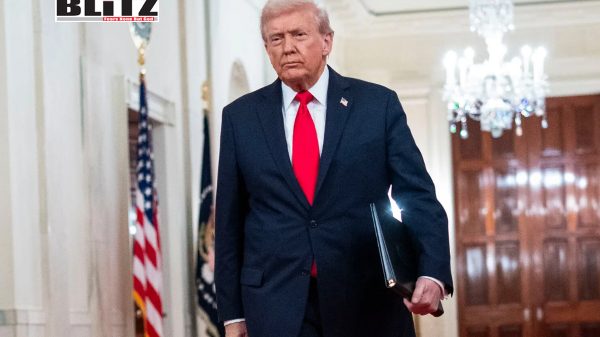
There are moments in foreign policy when hesitation costs more than action. Bangladesh’s interim government, led by Muhammad Yunus, appears to have understood that truth at a critical juncture. By expressing interest in joining the proposed International Stabilization Force (ISF) for Gaza—a plan floated by the US President Donald Trump to disarm Hamas and establishes order in the Strip—Dhaka has taken a decision that is timely, deliberate, and quietly consequential. It is not a reckless leap into a distant war zone. It is a measured assertion that Bangladesh intends to matter, morally and strategically, beyond its borders.
The fact that this interest was conveyed directly by National Security Advisor Khalilur Rahman in Washington, in meetings with senior US officials, is itself significant. It signals seriousness. And the American response—that Washington is “interested in working with Bangladesh” on this issue—suggests the move was neither ignored nor dismissed. For an interim government, often assumed to be cautious to the point of inertia, this was a bold choice. And it deserves praise.
Start with the timing. Gaza is not merely another conflict zone; it is the moral fault line of contemporary geopolitics. The war has exposed the paralysis of the international system, the selective outrage of great powers, and the deep frustration of the Global South. For months, Israel’s military campaign has drawn accusations of disproportionate force and collective punishment against Palestinians, while Hamas’s brutality and cynicism have been rightly condemned. Into this moral fog, Bangladesh has stepped forward—not to take sides in a propaganda war, but to support a stabilization framework that could, if designed properly, reduce violence and create space for civilian protection.
That matters for Bangladesh’s image in Western capitals. For too long, Dhaka has been viewed narrowly: a development case study, a garment-exporting workhorse, a climate-vulnerable delta. Rarely has it been seen as a contributor to solutions in high-stakes geopolitical crises. Participation in an ISF—especially one coordinated with the United States and other partners—changes that perception. It frames Bangladesh not as a passive recipient of global decisions, but as a responsible stakeholder willing to share burdens.
Western nations, whatever their internal divisions over Gaza, still value states that demonstrate predictability, professionalism, and a commitment to multilateral security. Bangladesh’s long record in UN peacekeeping already gives it credibility. Extending that experience to a politically sensitive mission like Gaza signals maturity. It tells Washington, Brussels, and London that Dhaka can be trusted to operate under complex mandates, navigate hostile environments, and adhere to rules of engagement that prioritize civilian lives. In diplomatic terms, this is reputational capital—and it accrues interest over time.
More importantly, such a force could help limit Israeli atrocities against Palestinians, provided it is structured with real authority and neutrality. Critics will argue that any stabilization force risks becoming a fig leaf for continued occupation or military excess. That risk is real. But the absence of an international presence has demonstrably failed to protect civilians. A credible ISF, with troops from countries like Bangladesh that are not seen as ideological extensions of Western power, could serve as a restraining presence. It could monitor ceasefires, protect humanitarian corridors, and deter the worst abuses simply by being there.
Bangladesh’s participation strengthens that possibility. As a Muslim-majority nation with no history of hostility toward Israel and no patron-client relationship with it, Bangladesh occupies a rare moral middle ground. Its troops would not arrive as conquerors or collaborators, but as peacekeepers. That distinction matters on the streets of Gaza, where legitimacy can be as important as firepower.
For the Bangladesh Army, this is also an opportunity to reaffirm its global identity. Over decades, Bangladeshi soldiers have worn blue helmets from Congo to Lebanon, earning a reputation for discipline and restraint. Gaza would be different—more politically charged, more dangerous, more scrutinized. But that is precisely why it matters. Participation would allow the army to prove, again, its commitment to peace and stability on the global stage, even under the harshest spotlight.
There is also a strategic subtext here. Reports that Pakistan’s army chief has expressed interest in sending troops to Gaza underscore a quiet competition for relevance in Muslim-world diplomacy. Bangladesh’s move ensures it is not sidelined. But unlike Islamabad, whose military involvement is often viewed through the lens of power politics, Dhaka brings a peacekeeping pedigree rather than a martial one. That difference could shape perceptions across the Middle East.
And perceptions matter in the Arab and broader Muslim world. Bangladesh has often spoken passionately in defense of Palestinian rights in international forums. Words, however, have diminishing returns. Action carries a different weight. By offering troops to a stabilization force, Bangladesh demonstrates that its solidarity is not rhetorical. It is willing to shoulder risk in pursuit of peace. That message resonates deeply in Middle Eastern capitals weary of speeches unaccompanied by sacrifice.
This is not about choosing Washington over Ramallah, or stability over justice. It is about recognizing that endless war serves no one—least of all Palestinians trapped between Hamas’s authoritarianism and Israel’s military might. A stabilization force is not a solution to the Palestinian question. It will not deliver statehood or resolve final-status issues. But it could reduce the immediate human toll, creating the minimum conditions under which politics, rather than violence, can resume.
Of course, safeguards are essential. Bangladesh must insist on a clear mandate, robust civilian-protection rules, and genuine international oversight. It should not sign up to a mission that merely enforces disarmament without addressing humanitarian needs or political horizons. But engaging in the shaping of the ISF is precisely how Dhaka can influence these parameters. Abstention would surrender that influence to others.
In the end, Yunus’s interim government has made a choice that aligns morality with strategy. It enhances Bangladesh’s standing in the West, reinforces its peacekeeping legacy, offers a potential check on Israeli excesses, and signals authentic commitment to the Muslim world. In a fractured international order, such calculated courage is rare. And for Bangladesh, it may mark the quiet emergence of a more confident, consequential foreign policy.
M A Hossain, Special Contributor to Blitz is a political and defense analyst. He regularly writes for local and international newspapers.