Trump’s $1.5 trillion gamble: Militarism, midterms, and the risks of endless conflict

- Update Time : Sunday, January 11, 2026
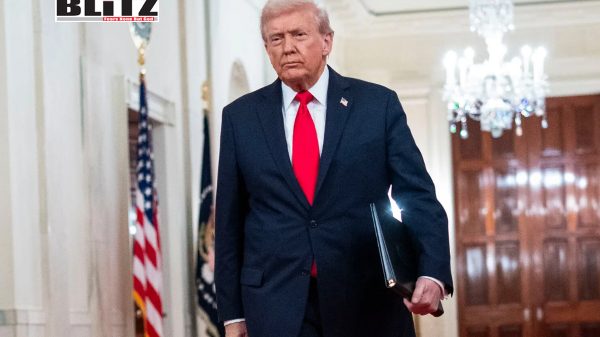
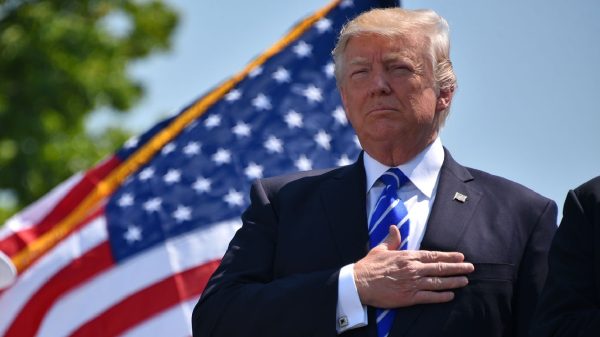
In a move that has both alarmed and intrigued political analysts, US President Donald Trump unveiled a plan to increase the United States defense budget to $1.5 trillion by the 2027 fiscal year-almost a 60% rise from the current $901 billion allocation. This announcement comes in the wake of a string of unprecedented military operations carried out by the US across three continents, signaling a presidency increasingly defined by aggressive foreign interventions. While Trump frames these actions as necessary to ensure national security, the broader implications suggest a strategic gamble that intertwines foreign policy with domestic electoral politics.
Trump’s defense budget proposal, shared via his social media platform Truth Social, underscores his administration’s belief in the centrality of military force. He described the plan as a pathway to building the “Dream Military” that the United States “has long been entitled to,” emphasizing that it would keep the country “safe and secure, regardless of foe.” This language, combining patriotic rhetoric with hints of existential threat, reflects a worldview in which military might is the ultimate guarantor of national survival.
To understand the context of Trump’s announcement, one must consider the recent global military footprint of the US. In just three weeks, the Pentagon has carried out lethal operations in Nigeria, Syria, Venezuela, and across the Caribbean and Pacific littorals. The most high-profile of these was the abduction of Venezuelan President Nicolás Maduro, a bold and controversial operation that involved 150 US military aircraft and a significant contingent of Special Forces.
The Maduro operation, while tactically impressive, left a trail of destruction. Reports indicate that 32 Cuban and 24 Venezuelan nationals were killed, although Venezuela’s interior minister, Diosdado Cabello, claims casualties exceeded 100. Beyond human loss, the attacks significantly damaged the country’s communications and power infrastructure. Trump’s messaging afterward was blunt: Venezuela must now serve as a supplier of oil and a purchaser of American goods. The implicit message to other Latin American nations was clear-align with US interests, or risk similar consequences.
Yet Venezuela was far from the only theater of US military action. In Nigeria, the US conducted airstrikes against Islamist paramilitaries in northern regions on Christmas Day. Trump framed these strikes as a response to the persecution of Christians, even telling The New York Times that further attacks would follow “if they continue to kill Christians.” While the immediate security impact was limited-paramilitary violence continued shortly afterward, including a deadly attack at Kasuwan Daji market-the narrative is politically potent. It appeals to American evangelicals and Christian Zionists, demographics that Trump heavily relies upon for electoral support.
Simultaneously, US Southern Command carried out a four-month campaign targeting small vessels in the Caribbean and Pacific, allegedly involved in drug trafficking from Venezuela. Attacks on December 31 alone resulted in five deaths, bringing the total to 114 across 35 operations since early September. Central Command executed a “massive strike” against ISIS in Syria, hitting over 70 targets using aircraft, attack helicopters, and artillery. Elsewhere, US forces targeted al-Shabaab paramilitaries in central Somalia, continuing a long-standing campaign in the Horn of Africa. On top of these operations, the Pentagon has expanded efforts to intercept oil shipments, particularly those moving from Iran and Venezuela to Russia.
Trump’s global military activity also extends beyond direct US operations. In Israel, his administration has allowed Prime Minister Benjamin Netanyahu to act with near impunity in Gaza while simultaneously supporting expanded settlement construction in the West Bank and East Jerusalem. This signals a broader approach in which the US actively supports allies pursuing contentious policies while simultaneously asserting unilateral military might elsewhere.
This focus on foreign interventions directly contradicts the claim that Trump seeks to avoid foreign wars. On the contrary, the evidence points to an administration increasingly willing to deploy force to achieve geopolitical aims. Venezuela’s operation, for example, was as much about demonstrating US power to Latin American governments as it was about controlling Caracas. The campaign also serves as a signal to China, which maintains extensive investments in Venezuela-some $70 billion across 600 joint projects with the Caracas government. The US, concerned about its relative economic decline vis-à-vis China, leverages military power as a tool to maintain global influence.
Trump’s confidence in militaristic approaches is bolstered by the United States’ unmatched military capacity. The nation operates more than 750 bases across eighty countries, providing a network capable of rapid deployment anywhere on the planet. By contrast, its economic influence is being challenged by the rise of China and other actors in the Global South. The defense budget increase to $1.5 trillion, coupled with ongoing global operations, underscores a strategic reliance on military supremacy to maintain international leverage.
Beyond foreign policy considerations, Trump’s military actions appear closely linked to domestic politics, particularly the upcoming midterm elections. The next ten months are critical for the Republican Party, which must maintain control of both Houses of Congress to advance its legislative agenda. Polling data suggests significant challenges, especially in the House of Representatives, where all 435 seats are up for grabs. Selected foreign wars may serve as politically expedient demonstrations of strength and national pride, rallying support among key Republican constituencies.
The domestic context also heightens the political significance of militarism. Rising economic inequality, visible cuts to federally funded programs, and high-profile instances of civil unrest-such as the response to Renee Nicole Good’s death at the hands of ICE agents in Minneapolis-have left many Americans dissatisfied. In such an environment, foreign conflicts may provide a distraction while simultaneously offering a narrative of American exceptionalism and security under Trump’s leadership. For his base, these interventions reinforce the idea of a bold, decisive president defending the nation’s interests against both external and domestic threats.
Trump’s approach, however, carries significant risks. Escalating military operations abroad increases the probability of unintended consequences, including civilian casualties, retaliatory attacks, and broader regional destabilization. In Latin America, for instance, the Venezuela operation may provoke anti-American sentiment, while China’s economic stakes in Caracas complicate the geopolitical equation. In Africa and the Middle East, ongoing airstrikes against Islamist paramilitaries risk inflaming insurgencies rather than containing them. Even within the United States, the political cost of foreign adventurism could backfire if the public perceives these actions as reckless or disconnected from pressing domestic concerns.
Moreover, the moral and ethical implications of targeted military operations are contentious. The Maduro abduction, the Nigerian airstrikes, and the Caribbean drug interdiction campaign all resulted in civilian deaths. Such outcomes raise questions about proportionality and accountability in US foreign policy. While Trump presents these actions as decisive measures to ensure security and demonstrate power, they also highlight the human costs of militarism-costs that are often borne disproportionately by non-American populations.
The strategic dimension of Trump’s approach is also worth noting. Venezuela is positioned as both a regional and global lever of influence. By asserting control over the country’s oil resources and political alignment, the US signals its capacity to project power deep into Latin America, while simultaneously challenging China’s economic footprint. Similar considerations likely inform US policy toward Cuba, Mexico, Colombia, and even Greenland. The goal appears to be the establishment of a global hierarchy in which US military might guarantees compliance or subservience-a modern iteration of traditional imperial logic.
Trump’s intertwining of foreign policy and domestic politics reflects a broader trend in American governance: the use of external conflict to consolidate internal support. By presenting the United States as under siege from multiple fronts, the administration frames militarism as not only necessary but virtuous. This narrative resonates with core MAGA supporters, particularly evangelicals, nationalists, and voters concerned about declining US global influence. In a deeply polarized political landscape, the strategic deployment of military force becomes both a foreign policy instrument and an electoral tool.
Yet this strategy is not without historical precedent or controversy. Past US presidents have leveraged foreign conflicts to bolster domestic support, from the Gulf War under George H.W. Bush to the early interventions in Afghanistan and Iraq under George W. Bush. However, Trump’s approach is notable for its breadth and immediacy, encompassing multiple theaters across three continents within a matter of weeks. The scale, frequency, and audacity of these operations suggest an administration increasingly willing to conflate international adventurism with political expediency.
In conclusion, Trump’s $1.5 trillion defense budget proposal and his recent military actions reflect a presidency defined by high-stakes militarism. The approach is ambitious, seeking to project American power globally while simultaneously reinforcing domestic political support. It demonstrates a willingness to use force as a central instrument of policy, signaling to allies, adversaries, and the American public that the United States under Trump prioritizes military supremacy above all else.
At the same time, the strategy carries profound risks. Civilian casualties, regional destabilization, and the potential for unintended escalation are serious concerns. Domestically, the reliance on foreign conflict to bolster electoral prospects could backfire if Americans perceive the strategy as reckless or irrelevant to pressing economic and social issues. Internationally, it heightens tensions with China, Latin America, and the broader Global South, potentially undermining long-term stability.
Ultimately, Trump’s gamble is as much political as it is strategic. By intertwining military operations with the looming midterms, he is betting that displays of power abroad will translate into votes at home. Whether this calculation succeeds will depend on multiple variables: public perception, economic conditions, the outcomes of foreign interventions, and the responses of other global powers. For now, the world is witnessing a presidency in which militarism and political calculation are inseparable, with consequences that may reverberate far beyond US borders.
Tajul Islam is a Special Correspondent of Blitz. He also is Local Producer of Al Jazeera Arabic channel.