Nationwide protests shake Iran as economic crisis and state crackdown claim dozens of lives

- Update Time : Sunday, January 11, 2026
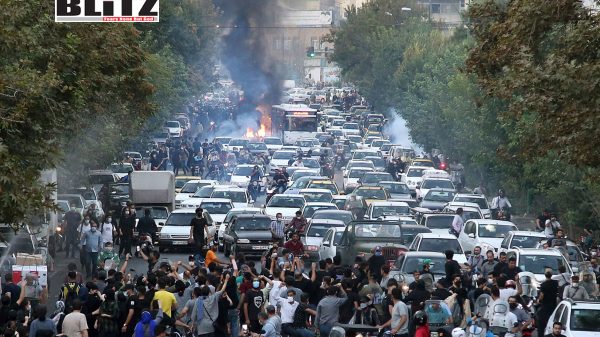
Iran is witnessing one of its most intense waves of unrest in years, as nationwide anti-government protests fueled by deepening economic hardship have spread from major urban centers to small provincial towns. What began as demonstrations against soaring prices, inflation, and economic mismanagement has rapidly escalated into a broader challenge to the Islamic Republic itself, triggering a harsh state response and resulting in dozens of deaths, according to human rights organizations.
From Tehran’s crowded squares to normally quiet residential streets, Iranians of all ages have poured into the streets in recent weeks. Videos circulating online show burning vehicles, damaged buildings, and confrontations between protesters and security forces in cities across the country. While not all footage could be independently verified, the sheer volume of images and eyewitness accounts points to the scale and intensity of the unrest.
Human rights groups say the cost in human lives has been severe. Amnesty International and Human Rights Watch reported that Iranian authorities used live ammunition and other deadly force during demonstrations between December 31 and January 3, killing at least 28 protesters and bystanders. The Norway-based group Iran Human Rights placed the death toll higher, reporting that at least 45 people, including eight children, have been killed since the protests began. Hundreds more have reportedly been injured, and more than 2,000 people detained.
The unrest erupted in late December following a sharp collapse of Iran’s national currency and a surge in inflation, developments that have further eroded living standards for millions of Iranians. Years of economic sanctions, widespread corruption, and poor governance have combined to create a cost-of-living crisis that many say has become unbearable. Prices of basic goods have risen dramatically, while wages have stagnated, pushing many families deeper into poverty.
Eyewitnesses describe scenes of unprecedented participation. Leila, an 18-year-old protester in Tehran who asked to be identified only by her first name out of fear of reprisals, said the demonstrations extended even into neighborhoods that rarely see political activity. “Women and men, young and old, everyone has come out,” she said. “Even in quiet places you wouldn’t expect. At my grandma’s street corner, where usually not even a bird flies by, people were protesting.” She added that security forces responded with tear gas and aggressive crowd control measures.
Another protester, Raham, a 34-year-old resident of Tehran, described the demonstrations on the night of January 8 as “apocalyptic.” Despite the dangers, he said he intended to continue protesting. “If we don’t go back out, we lose this battle,” he said. “This feels like our last chance.”
As protests intensified, Iranian authorities moved to restrict communications, making it difficult to assess events on the ground. The internet monitoring group NetBlocks reported that Iran implemented a near-total nationwide internet shutdown, with connectivity dropping to around 1 percent of normal levels for more than 24 hours. The blackout has hindered the ability of activists to organize and prevented journalists and human rights groups from verifying information.
The current demonstrations are widely seen as the largest wave of unrest since the 2022 “Women, Life, Freedom” movement, which erupted after the death of Mahsa Amini, a 22-year-old woman who died while in religious police custody. While those protests were primarily concentrated in urban areas and driven by demands for social freedoms and women’s rights, analysts say the present unrest is broader in scope and more deeply rooted in economic grievances.
Ali Ansari, a professor of modern history at the University of St Andrews, noted that the protests have spread into rural areas, a significant development that echoes earlier nationwide uprisings in 2017 and 2019. “The problems in the country are structural, and the Islamic Republic has never really dealt with them,” Ansari said. “What we are seeing is a system struggling under the weight of its own failures.”
Arash Joudaki, a Brussels-based Iranian political analyst, echoed that assessment, pointing to the geographic reach and social diversity of the protesters. He highlighted reports of unrest in Tehran’s Grand Bazaar, traditionally a stronghold of conservative and pro-regime support. “When even the bazaar is showing signs of discontent, it suggests that the regime is losing support among groups it has long relied on,” Joudaki said.
The protests have also taken on an overtly political dimension, with some demonstrators calling for an end to the Islamic Republic. Videos shared online show chants supporting Reza Pahlavi, the eldest son of the late Shah Mohammad Reza Pahlavi, who was overthrown during the 1979 Islamic Revolution. While it remains unclear how widespread monarchist sentiment is, the slogans reflect the depth of frustration among protesters and their willingness to challenge the foundations of the current system.
Iranian leaders have responded with a mix of condemnation and caution. Supreme Leader Ayatollah Ali Khamenei dismissed the protests as acts of vandalism, accusing demonstrators of seeking to please foreign powers, particularly the United States. In a televised address on January 9, he described protesters as “a bunch of vandals” and framed the unrest as part of an external plot against Iran.
At the same time, President Masoud Pezeshkian struck a more conciliatory tone, calling for restraint in handling the demonstrations. In a statement on January 8, he urged security forces to avoid violent or coercive behavior, though critics argue such appeals have done little to curb the crackdown on the streets.
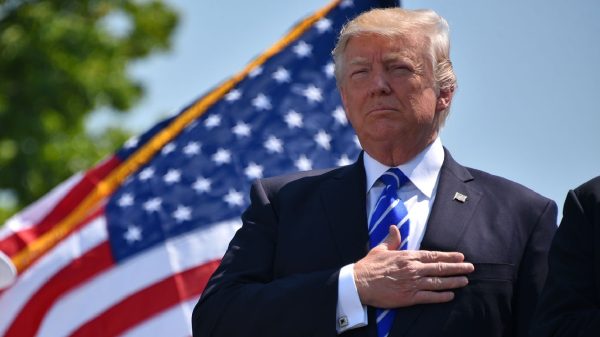
The unrest has also drawn sharp reactions from abroad. Speaking on January 8, US President Donald Trump warned Iranian leaders that they would “pay hell” if they carried out a lethal crackdown and said the United States would “come to the rescue of protesters.” Iranian officials have long accused Washington of exploiting domestic unrest, and such statements are likely to reinforce those claims.
Despite the risks, many Iranians say they feel they have little left to lose. Years of unaddressed economic decline, political repression, and perceived corruption have eroded trust in the ruling establishment. As protests continue despite internet shutdowns and heavy security deployments, the government faces mounting pressure to respond not only with force, but with meaningful reforms.
Whether the current wave of unrest will bring lasting change remains uncertain. What is clear, however, is that the demonstrations reflect a profound crisis of legitimacy for Iran’s leadership. As economic hardship deepens and public anger spreads beyond traditional centers of dissent, the Islamic Republic is confronting one of the most serious challenges of its existence.
Suraiyya Aziz specializes on topics related to the Middle East and the Arab world.