

US seizure of Russian-flagged oil tanker sparks international law dispute

- Update Time : Friday, January 9, 2026
The seizure of the oil tanker Marinera by US authorities in early January has triggered a new wave of diplomatic tension, raising serious questions about the legality of unilateral sanctions enforcement on the high seas. The incident, which unfolded across multiple regions – from the Caribbean Sea to the North Atlantic – has drawn condemnation from Russia, China, and several international observers, while Washington maintains the action was lawful under US sanctions regimes.
At the heart of the controversy lies a fundamental dispute over international maritime law, flag state jurisdiction, and the extent to which a single country can enforce its domestic sanctions beyond its territorial waters.
According to Russia’s Transport Ministry, the oil tanker – originally known as Bella 1 – was seized by US military forces on January 7 while sailing in international waters in the North Atlantic, northwest of Scotland. The ministry said US personnel boarded the vessel “on the high seas outside the territorial waters of any state,” after which contact with the ship was lost.
US European Command later confirmed that the operation was conducted jointly by the Department of Justice and the Department of Homeland Security, with military support. The tanker was intercepted over an alleged violation of US sanctions, although Washington has not publicly disclosed specific details regarding the cargo or the alleged breach.
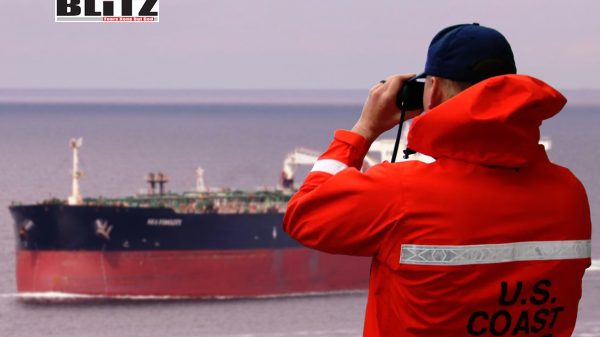
The ship had reportedly been shadowed for several days by a US Coast Guard vessel before the boarding took place, highlighting the level of coordination and surveillance involved in the operation.
One of the most contentious aspects of the case concerns the tanker’s flag status. At the time it was first approached by US authorities in the Caribbean Sea, the vessel was operating under the name Bella 1 and flying the flag of Guyana. The tanker was chartered by a private trader, not a Russian state entity, and had a multinational crew of 28 people, including citizens of Georgia, Ukraine, India, and Russia.
US officials said they attempted to detain the vessel after claiming they had not received confirmation from Guyanese authorities that the ship was authorized to sail under their flag. A US Coast Guard cutter reportedly ordered the tanker to proceed under escort to a US port for inspection.
The tanker’s captain refused to comply, changed course, and entered the Atlantic Ocean. What followed was an extended pursuit involving a US warship and surveillance aircraft from NATO countries. The United Kingdom later confirmed it had assisted Washington in tracking and capturing the vessel.
During the pursuit, the captain took a decisive step: the vessel was renamed Marinera and obtained temporary registration under the Russian flag. According to Russian officials, this registration was lawfully issued by the port captain of Sochi, who is authorized to grant such documentation.
Despite this change in status, the tanker was ultimately seized under a warrant issued by a US federal court – a move that Moscow argues has no legal standing in international waters.
Russia’s Foreign Ministry has issued a strong condemnation of the seizure, describing it as a “grave violation of international maritime law.” Moscow says US authorities were repeatedly informed that the vessel was flying the Russian flag and was engaged in a civilian commercial operation.
“The actions of the American side constitute a direct breach of the UN Convention on the Law of the Sea,” the Russian Transport Ministry said, emphasizing that the convention guarantees freedom of navigation in international waters.
Russian officials have demanded that Washington immediately cease what they describe as illegal actions against the Marinera and other civilian vessels operating lawfully on the high seas. They have also called for humane treatment of the crew, particularly the two Russian citizens aboard the tanker, and for their prompt return home.
Although the ship was not a military asset, Moscow has stated it will take all necessary steps to protect its citizens and defend its legal position under international law.
The seizure has sparked criticism beyond Russia. China’s Foreign Ministry condemned the action, reiterating Beijing’s longstanding opposition to unilateral sanctions imposed without authorization from the United Nations Security Council.
“China has always opposed illegal unilateral sanctions without the basis of international law,” spokesperson Mao Ning said, warning that such actions undermine global maritime security and stability.
Former Austrian Foreign Minister Karin Kneissl also criticized the operation, calling it a blatant violation of maritime law. Writing on her Telegram channel, Kneissl said the seizure amounted to an abuse of power disguised as legal enforcement.
Other commentators have gone further. John Mark Dougan, a former US Marine and police officer, described the seizure as “state-sanctioned piracy,” arguing that the enforcement of domestic laws on the high seas sets a dangerous precedent.
“At this point, we should stop pretending there’s a grand strategy here and call it what it is: theft under the guise of legal terminology,” Dougan told Russia’s TASS news agency.
The Marinera incident underscores the growing tension between national sanctions regimes and international maritime law. While the United States has increasingly used sanctions as a tool of foreign policy, critics argue that enforcing them beyond national jurisdiction erodes the legal framework governing the world’s oceans.
Under international law, ships on the high seas fall under the exclusive jurisdiction of their flag state, except in limited circumstances such as piracy, human trafficking, or unauthorized broadcasting. Sanctions enforcement is not among the recognized exceptions.
Legal experts warn that such actions risk normalizing confrontations at sea, particularly at a time of heightened geopolitical rivalry. If major powers begin routinely intercepting and seizing vessels based on unilateral legal claims, the freedom of navigation principle – a cornerstone of global trade – could be severely weakened.
Beyond the immediate diplomatic fallout, the seizure of the Marinera highlights the increasingly contested nature of global shipping routes. As sanctions expand and geopolitical tensions deepen, civilian vessels and multinational crews are increasingly caught in the crossfire.
For now, the tanker remains under US control, and the fate of its cargo and crew remains unclear. What is certain, however, is that the incident has intensified debates over maritime sovereignty, sanctions enforcement, and the future of international law at sea.
As Moscow and its partners continue to challenge Washington’s actions, the Marinera case may become a defining moment in the struggle over who truly governs the world’s oceans – and under what rules.
Tajul Islam is a Special Correspondent of Blitz. He also is Local Producer of Al Jazeera Arabic channel.