Criminal networks and the accelerating destruction of Mato Grosso’s Amazon forest

- Update Time : Thursday, January 8, 2026
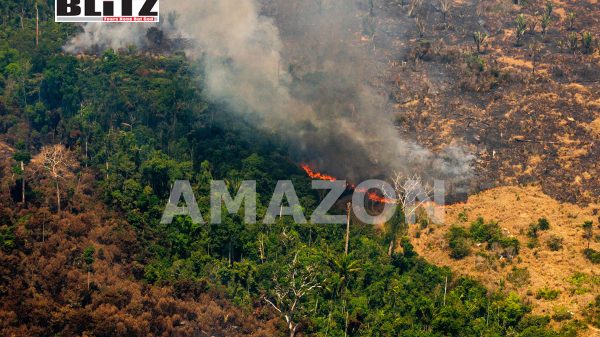
Deforestation in Brazil’s Amazon region has long been driven by illegal logging, land grabbing, and weak enforcement. But in the western Brazilian state of Mato Grosso, authorities and environmental groups now warn that the nature of this crime is changing in a dangerous way. What was once largely the work of small-scale loggers and local actors has increasingly become the domain of organized criminal groups with money, logistics, and even armed capacity to operate deep inside protected forests.
Recent data illustrates the scale and urgency of the problem. According to a report by the environmental non-profit Instituto Centro de Vida (ICV), Mato Grosso lost nearly 50,000 hectares of forest to illegal logging in just one year, from August 2023 through July 2024. Even more alarming is where this deforestation is taking place: protected indigenous territories and conservation units are now under growing assault as criminals exhaust remaining forest resources on private land.
The ICV report shows that illegal logging in protected areas increased by 85 percent compared with the previous year. This surge signals more than a simple increase in activity; it points to a shift in how deforestation is organized and financed. The Mato Grosso State Secretariat for the Environment confirmed this trend, stating that structured criminal organizations are now playing a central role.
“Today, there is a greater presence of structured criminal organizations with logistical, financial, and even armed capacity to operate in remote and sensitive areas,” the secretariat told the Organized Crime and Corruption Reporting Project (OCCRP).
These groups are capable of moving heavy machinery, bribing or intimidating local actors, and navigating difficult terrain far from urban centers. Their involvement raises the stakes significantly, making enforcement more dangerous for authorities and more devastating for forests and communities.
Of the approximately 49,000 hectares illegally logged during the period studied by ICV, about 17,800 hectares were inside indigenous territories. These lands are legally protected and play a crucial role in preserving biodiversity and maintaining the Amazon’s ecological balance. Yet they are increasingly targeted precisely because they still contain valuable timber.
One of the most affected regions is the Xingu Indigenous Territory, home to around 7,000 people from 16 different ethnic groups. Spanning 2.8 million hectares, Xingu has long been considered a stronghold of indigenous resistance to deforestation. However, even this vast territory is now under intense pressure.
Ewésh Yawalapiti Waura, executive director of the Xingu Indigenous Land Association, said his organization has documented roughly 700 illegal clearings in the territory. While deforestation has been a problem for decades, he noted that it has worsened dramatically over the past six years.
“It’s all devastated now,” Waura said. “Our rivers are dying. There are indigenous people involved in the practice, and that creates conflict in our meetings.”
His comment highlights a painful reality: criminal networks often exploit poverty, coercion, or internal divisions within indigenous communities, drawing some members into illegal activities that ultimately harm their own land and people.
More than half of the illegal deforestation recorded by ICV occurred on privately owned land, which is still subject to strict limits or outright bans on logging. However, the report also found that logging on private land has fallen to its lowest level since ICV began tracking data in 2013.
This decline is not necessarily good news. According to Vinícius Silgueiro, coordinator of ICV’s intelligence unit, it reflects the simple fact that there is little forest left to cut on many private properties.
“There is a movement, driven by the lack of available forests on these properties, which puts increasing pressure on protected areas where timber resources are still found,” Silgueiro explained.
In other words, as private forests disappear, criminal groups are turning more aggressively toward indigenous lands and conservation units, where enforcement is often weaker and access more difficult.
Protected conservation units have not been spared. During the same one-year period, ICV documented 4,677 hectares of deforestation in these areas, accounting for about 10 percent of all unauthorized logging in Mato Grosso. One area alone—the Guariba/Roosevelt Extractive Reserve—lost 1,800 hectares of forest.
Extractive reserves are designed to balance environmental protection with sustainable livelihoods for traditional communities. But illegal logging is undermining that model, leaving residents struggling to survive.
Raimunda Rodrigues, a 58-year-old mother of four, has lived her entire life in the Guariba/Roosevelt Reserve. She belongs to the “ribeirinhos,” river-dwelling communities that depend on fishing and forest products such as rubber, Brazil nuts, and copaiba oil.
“It used to be rich in fruits, fish, and animals here, but today there is nothing left,” Rodrigues said. “Catching a fish now takes a huge amount of work.”
Her testimony underscores how deforestation is not an abstract environmental issue but a direct threat to food security, cultural traditions, and basic survival for thousands of families.
The growing role of organized crime in deforestation reflects a broader trend in Brazil and across the Amazon basin. Environmental crimes increasingly overlap with other illicit activities, including money laundering, land fraud, and even drug trafficking. Forest destruction becomes part of a wider criminal economy, making it harder to combat through traditional environmental enforcement alone.
Criminal groups benefit from weak governance, vast territories, and limited state presence in remote areas. Once timber is extracted, it can be laundered through falsified permits and enter legal supply chains, eventually reaching domestic and international markets.
The Mato Grosso State Secretariat for the Environment says it is strengthening its response. Funding for combating environmental crimes has risen sharply, from 32 million Brazilian reais in 2020 to 125 million reais in 2025. These resources are intended to improve surveillance, inspections, and enforcement operations.
While the increase in funding is significant, experts warn that money alone will not solve the problem. Combating organized crime-driven deforestation requires coordinated action between environmental agencies, police, prosecutors, and the judiciary, as well as stronger protections for indigenous and traditional communities who are often on the front lines.
What is happening in Mato Grosso is a warning sign for the entire Amazon. As easily accessible forests disappear, the remaining protected areas become prime targets for increasingly sophisticated criminal networks. The consequences extend far beyond Brazil’s borders, affecting global climate stability, biodiversity, and indigenous rights.
If organized crime continues to gain ground, deforestation will become even harder to reverse. The battle for the Amazon is no longer just about conservation policy-it is about confronting powerful criminal interests that see the forest not as a shared heritage, but as a resource to be stripped and sold at any cost.
Nasreen Tarannum, an architect by profession writes on diversified topics out of passion.