India takes BRICS helm in 2026 as Trump era tariffs and global power shifts intensify

- Update Time : Wednesday, January 7, 2026
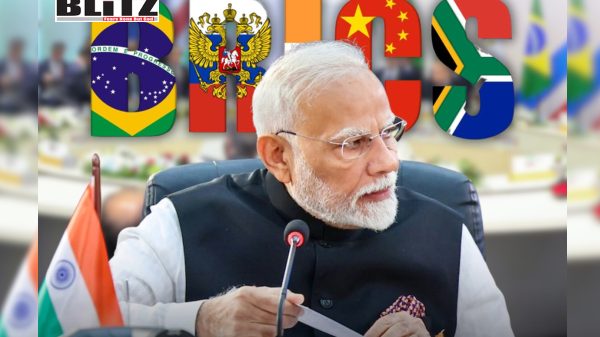
India’s assumption of the BRICS presidency for 2026 comes at a moment of acute global disruption, marked by escalating trade wars, geopolitical brinkmanship, and renewed questions over the credibility of international governance structures. New Delhi’s stewardship of the influential bloc will unfold against the backdrop of sweeping interventions by the administration of US President Donald Trump, whose aggressive use of tariffs and sanctions has reshaped global economic and diplomatic alignments.
The formal transfer of the BRICS presidency took place on December 12 in Brasilia, where Brazil handed over leadership to India during a meeting of BRICS sherpas. Brazil’s sherpa, Ambassador Mauricio Lyrio, symbolically passed the gavel to India’s Ambassador Sudhakar Dalela, emphasizing that the object represented both sustainability and the deep-rooted cooperation binding the group’s members. The moment was ceremonial, but the implications of India’s presidency are anything but symbolic.
Ambassador Dalela outlined that India’s priorities would be guided by continuity, consolidation, and consensus, while remaining responsive to emerging global developments and the evolving priorities of the Global South. That formulation reflects India’s traditional diplomatic posture-measured, pragmatic, and consensus-driven-but the geopolitical environment India inherits is far more volatile than in previous BRICS presidencies.
India takes charge of BRICS at a time when the grouping is expanding its footprint and sharpening its economic ambitions. The bloc, now comprising Brazil, Russia, India, China, South Africa, Saudi Arabia, the United Arab Emirates, Iran, Egypt, Ethiopia, and Indonesia, represents nearly 39 percent of the global economy and almost a quarter of international trade. This growing economic weight has increasingly attracted hostility from Washington, particularly under Trump’s return to the White House.
Trump has made his aversion to BRICS unmistakably clear. In July, he openly threatened an additional 10 percent tariff on any country “aligning themselves with the Anti-American policies of BRICS,” despite failing to identify any specific policy justifying such a label. The remarks came shortly after BRICS leaders criticized unilateral tariff regimes, describing them as unjustified protectionist measures that undermine global trade and violate World Trade Organization rules.
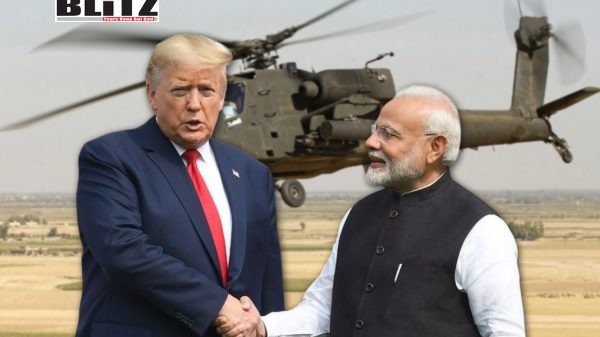
For India, this rhetoric is not theoretical. The country is currently negotiating a trade agreement with the United States under difficult conditions. Trump has already imposed a combined 50 percent tariff on Indian goods, half of it framed explicitly as punishment for India’s continued purchases of Russian oil. These measures have strained bilateral relations and placed India in the uncomfortable position of simultaneously leading a bloc viewed with suspicion by Washington while seeking market access to the US economy.
The Venezuela shock and global governance
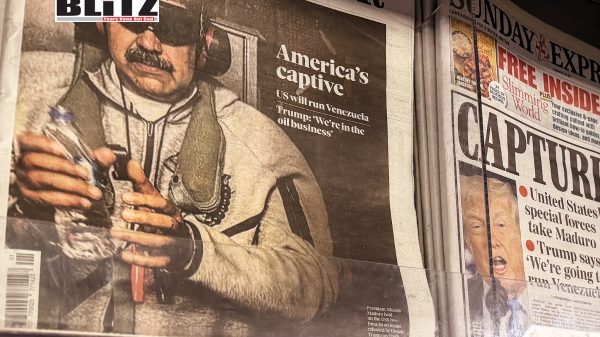
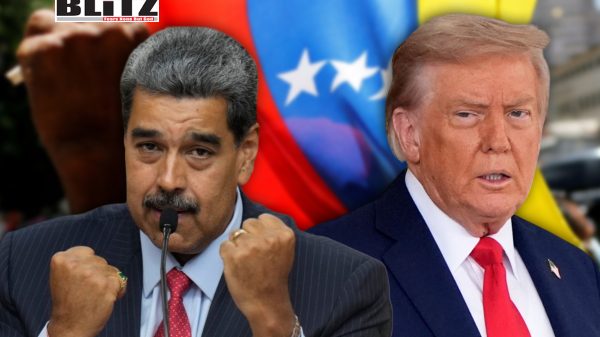
India’s presidency also coincided with a dramatic escalation in US interventionism. As New Delhi prepared to assume leadership of BRICS, US forces reportedly swooped into Caracas and abducted Venezuelan President Nicolás Maduro and his wife-an operation that triggered widespread international condemnation. China, Brazil, and Russia were vocal in denouncing the action, framing it as a flagrant violation of sovereignty and international law.
India’s response was notably cautious, reflecting its traditional reluctance to engage in overt confrontation with the United States. Yet as BRICS president, New Delhi will not be able to avoid such issues altogether. The Venezuela episode has given BRICS nations fresh ammunition to highlight what they see as the failure of global governance mechanisms, particularly the United Nations, to restrain unilateral military actions by powerful states.
For India, this presents a diplomatic balancing act of exceptional complexity. It must preserve its strategic autonomy, avoid alienating Washington, and at the same time maintain credibility within BRICS, where several members expect a firmer stance against Western interventionism.
India as a strategic buffer
One reason India’s presidency is being closely watched is that New Delhi is widely perceived as a more palatable leader for BRICS from the perspective of an antagonistic United States. While China remains the bloc’s largest economy and most assertive geopolitical actor, its dominance often fuels Western anxieties about BRICS becoming an explicitly anti-US alliance.
India, by contrast, occupies a middle ground. It has deep economic ties with the West, a complex but functional relationship with Washington, and longstanding partnerships across the Global South. This positioning allows India to act as a strategic buffer-steering BRICS’ economic and political agenda without triggering the kind of direct confrontation that a more China-centric leadership might provoke.
That said, the task is formidable. India must manage a bloc whose members have divergent interests across energy, technology, finance, and critical minerals, while navigating a global environment increasingly defined by sanctions, export controls, and technology wars.
Trade wars and economic realignment
Trade is set to be at the core of BRICS’ agenda under India’s presidency. Trump’s administration has weaponized tariffs as a central instrument of foreign policy, targeting not only rivals like China but also partners such as India and Brazil.
In August 2025, Trump imposed a 25 percent punitive tariff on most Indian imports due to New Delhi’s Russian oil purchases, on top of an earlier 25 percent levy. Brazil faced similar treatment. In July, Trump issued an executive order imposing a 40 percent duty on Brazilian imports, pushing total tariffs on many Brazilian products to 50 percent. The move was widely seen as retaliation for Brazil’s prosecution of former president Jair Bolsonaro, a Trump ally, on coup-related charges.
Although Trump later reversed some tariffs on Brazilian food products-after US coffee prices surged more than 40 percent-the episode underscored how trade policy has become a blunt geopolitical weapon.
India’s response has been strategic diversification. In 2025 alone, New Delhi signed free trade agreements with the United Kingdom, Oman, and New Zealand, while pursuing negotiations with several other countries and blocs. These moves are widely interpreted as an effort to reduce dependence on the US market and build alternative trade corridors.
As one prominent American economist warned, if the US shuts India out through high tariffs, New Delhi will inevitably seek other markets. In that scenario, BRICS could become a crucial outlet for Indian exports, mirroring how Russia redirected its energy exports after Western sanctions.
BRICS and the global south
For many countries facing tariffs, sanctions, or trade restrictions, BRICS offers a potential framework for economic resilience. In May 2025, the bloc renewed its BRICS 2030 Economic Partnership Strategy and adopted a declaration on WTO reform and strengthening the multilateral trading system. The declaration explicitly criticized the rise of unilateral tariff and non-tariff measures, arguing that they distort trade and undermine global rules.
Under India’s leadership, BRICS is likely to emphasize incremental reform rather than radical rupture-seeking to expand trade in local currencies, strengthen development finance, and coordinate positions in multilateral forums without formally challenging the existing global order.
Yet the underlying trajectory is clear. As tech wars, sanctions, and tariff regimes dominate the Trump era, the Global South is being pushed toward deeper cooperation, alternative institutions, and diversified trade networks. India’s BRICS presidency may not overturn the global system, but it could play a decisive role in reshaping it from within.
A presidency that will define India’s global role
India’s stewardship of BRICS in 2026 will be a defining test of its diplomatic maturity and strategic vision. Balancing relations with Washington while leading a bloc increasingly viewed as a counterweight to Western economic dominance will require careful calibration.
Success will depend on India’s ability to keep BRICS united without turning it into an overtly confrontational platform, to advance trade and development while managing geopolitical fault lines, and to position the Global South as an active shaper-not merely a subject-of the evolving world order.
In an era of Trump-driven turbulence, India’s BRICS presidency will not just be about managing a bloc. It will be about navigating a fractured global system where economics, politics, and power are more tightly intertwined than ever before.
Tajul Islam is a Special Correspondent of Blitz.