Pakistan returns to the past: Imran Khan, Asim Munir, and the shadow of Zia-ul-Haq
- Update Time : Monday, January 5, 2026
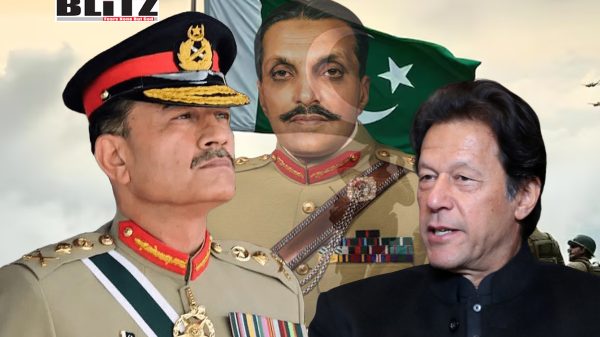
Pakistan presently finds itself enmeshed in a political drama that resonates with both contemporary realities and unsettling historical echoes. The erstwhile prime minister Imran Khan, who continues to be regarded as the popular political figure within the nation, is currently enduring solitary confinement, with his spouse Bushra Bibi, and his political movement systematically dismantled. The military establishment, which previously preferred to exert influence from the shadows, has reasserted its direct authority under a civilian guise, with Field Marshal Asim Munir steering the helm. Concurrently, the haunting specter of General Zia-ul-Haq and the execution of Zulfiqar Ali Bhutto persists in the backdrop, both inescapable and disquieting.
It is important to note that the current state of Pakistan is not identical to that of the 1979. However, the similarities are pronounced enough to induce discomfort even among the Pakistani observers. At that time, General Muhammad Zia ul-Haq similarly claimed that judicial pronouncements had been rendered, justice had been duly served, and the removal of Prime Minister Zulfikar Ali Bhutto was merely an unfortunate consequence of necessary legal proceedings. Nevertheless, history ultimately delivered a divergent conclusion. The execution of Bhutto represented the pinnacle of political elimination. Since that pivotal moment, Pakistan’s military leaders have been cautious to avoid driving a civilian opponent to the threshold of martyrdom.
Making of a political prisoner
Imran Khan’s decline commenced at the juncture when he confronted the military’s exclusive dominion over the appointments related to intelligence. As soon as Rawalpindi retracted its backing, the no-confidence vote scheduled for April 2022 became an inescapable outcome. His subsequent incarceration in August 2023 heralded the onset of a new chapter: one characterized by a systematic approach to political exclusion.
The paradox lies in the peril, as the very forces which helped Imran Khan to the reach the pinnacle of his political power not only led to his downfall but also his incarceration. The partnership ruptured in October 2021, when Army Chief Gen Qamar Javed Bajwa sought to reshuffle the intelligence services. Instead, Khan had grown reliant on Lt Gen Faiz Hameed, his close ally within the security apparatus, and reportedly wanted him to remain in charge until after the next elections, assuming his presence would once again tilt the field in Khan’s favor. The standoff, unprecedented in its public visibility, exposed the limits of civilian authority in Pakistan’s hybrid order. And once Khan defied the institution that had helped create his political invincibility, his fall became only a matter of time.
For months, Khan was confined in a small, high-security detention facility characterized by limited access to his lawyers, doctors and family. Even the court orders, permitting weekly visiting’s were never allowed. When an Afghan media outlet posited the possibility of his demise while in custody, a state of alarm ensued, particularly due to the government’s failure to promptly issue a categorical denial, a foreboding silence that exacerbated public mistrust. The ruling regarding Al-Qadir University, rendered in January 2025, fulfilled the dual function of convicting Khan while simultaneously appropriating one of his hallmark philanthropic initiatives. Government officials proclaimed the institution to be a façade for illicit activities; Khan’s legal representatives characterized the judgment as a “murder of justice.” The chief minister of Punjab proclaimed, almost with a sense of triumph, that the university was now under her jurisdiction. A charitable organization established by Khan was effectively subsumed by the state. These actions transcended mere legal proceedings; they constituted deliberate political nullifications. Furthermore, they solidified Khan’s status not merely as a detainee, but as a non-entity within the perspective of the regime.
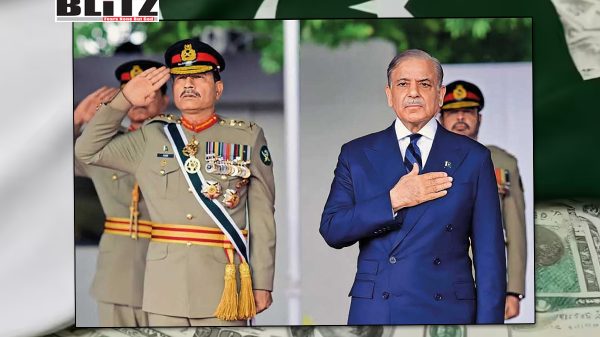
The February 2024 election delayed, disputed, and held after the effective dismantling of PTI (Pakistan Tehreek-e-Insaf), marked the moment Pakistan’s “hybrid system” shed its last pretense of civilian governance. By mid-2024, the façade of democracy was little more than window dressing. The 27th Constitutional Amendment, rushed through parliament in a matter of hours, granted General Asim Munir sweeping authority over all branches of the armed forces and lifetime immunity. Where previous generals ruled from behind the curtain, Munir now governs by statute. In practice, Pakistan’s hybrid regime is a power-sharing arrangement in which civilian institutions exist but the military exerts overwhelming influence, directing policy, controlling key appointments, and enforcing loyalty through fear. This consolidation has come at a high cost: the country’s democratic skeleton is thinner than at any point since the Musharraf era, with media, judiciary, parliament, even universities, stripped of independence.
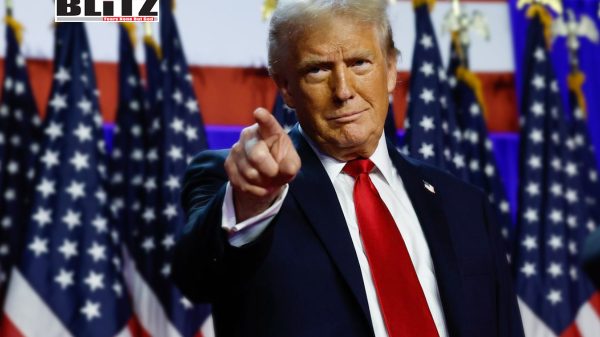
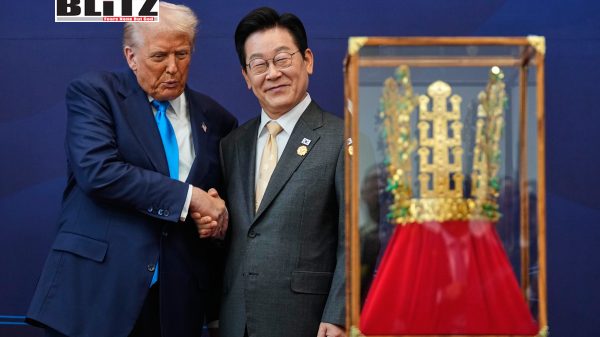
Nowhere is this disparity more evident than in the treatment of the individual previously chosen to lead the nation. In this informational void, speculation proliferated swiftly, exacerbated by narratives from various sources because no validated information was made available. This cycle of silence, mistrust, and a public accustomed to distrust official assurances the nature of Pakistan’s hybrid regime: elected officials are rendered invisible while authority is exerted through militarization and deception. Khawaja Asif, a prominent federal minister, has unequivocally lauded this arrangement. By hailing Field Marshal Asim Munir’s high-profile luncheon with US President Donald Trump as proof of the “success of the hybrid model,” he has effectively sanctioned the military’s supremacy over civilian institutions.
Washington’s New favorite General
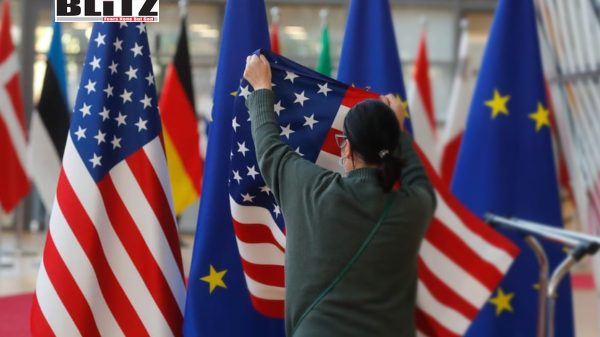
What makes this period distinct from earlier episodes of military dominance is the international context. Imran Khan’s own positioning played a crucial role in reshaping it. His increasingly anti-American rhetoric during his final years in office, culminating in the allegation that Washington engineered his ouster, made him politically inconvenient for the United States. Munir, by contrast, offered the Trump administration something far more valuable: predictability. Pakistan’s decision to hand over an ISIS-K figure linked to the 2021 Kabul airport bombing drew praise in Trump’s State of the Union address. By late summer, Munir had become Washington’s preferred counterpart in South Asia. Pakistan received reduced duties and expanded energy cooperation, to which Islamabad responded by agreeing to import American oil, a much-needed lifeline for its fragile economy.
For a nation that has historically been distanced from Washington, this diplomatic recalibration has significantly enhanced Munir’s influence domestically, even as the country grapples with escalating political repression, the incarceration of elected leaders, and the hollowing out of democratic institutions, while the military’s pre-eminence within the nation remains unchallenged. Nevertheless, his domestic influence has escalated to uncharted dimensions. The 27th Constitutional Amendment, which was expedited in a matter of hours, conferred upon him oversight of all three branches of the armed forces, the prospect of a tenure extending over a decade, and lifelong legal immunity. Judicial officials have resigned, analysts caution against the most severe democratic regression since the 1980s, and even former military leaders express concern regarding perilous centralization.
In this context, parallels to Zia-ul-Haq are inescapable: an imprisoned civilian opponent, a preeminent military commander, a compromised judiciary, and a political elite incapable of opposition. Repressive measures rarely become apparent immediately; instead, they gradually escalate over an extended period, and Munir has strategically positioned himself at the epicenter of this trajectory.
Pakistan currently finds itself in a state of paradox. It has re-established its strategic significance in relation to Washington, reinforced its military leadership domestically, and cultivated a transient perception of political stability through the suppression of its most prominent civilian leader.
However, the clarity attained is tenuous, and the cost of achieving it has been steep: diminished institutional integrity, suppressed dissent, and a political framework that now relies predominantly on the resilience of a single general’s authority. The inquiry has transcended beyond merely determining the fate of Imran Khan. It now encompasses whether Pakistan’s political system can endure the implications of unrestrained power, whether Munir can evade the very pitfalls that ensnared Zia, or if the nation is once again poised on the brink of a historical juncture that it may take decades to rectify. The historical precedents are widely recognized, and the implications are unequivocal. The decision of Pakistan to either acknowledge these lessons or to reiterate them will significantly shape the political trajectory of the nation, far surpassing the influence of any individual leader’s destiny.
Idrees Aftab is a freelance researcher focusing on foreign policy and security issues in the South Asian region.