North Africa’s fragile growth tests the continent’s future

- Update Time : Monday, January 5, 2026
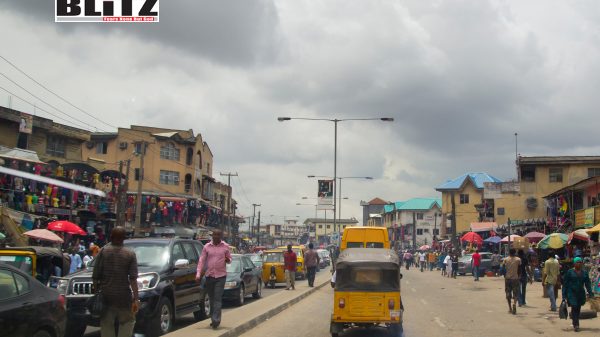
North Africa enters 2026 carrying a paradox that is increasingly difficult to ignore. On the surface, the region appears relatively stable compared with much of the continent. Growth rates are respectable, state institutions remain functional, and global powers now treat North Africa as strategically indispensable rather than merely diplomatically useful. Yet beneath these reassuring indicators lie vulnerabilities that are deep, structural, and converging. Economic recovery has outpaced political renewal, climate stress is steadily eroding social contracts, and external engagement has become more transactional as the global order fragments. North Africa is not failing, but it is no longer insulated from the pressures reshaping Africa and the world.
Economically, the headline numbers are encouraging. Combined growth across North Africa has hovered around 4 percent, outperforming both sub-Saharan Africa and the broader Middle East. Egypt and Morocco account for much of this momentum, and their trajectories illustrate both the possibilities and limits of the current model. Egypt’s rebound from the brink of default in 2024 stands out as a case of stabilization under pressure. A sharp currency flotation, painful subsidy cuts, and renewed inflows from Gulf states and Europe helped avert a balance-of-payments collapse that once seemed existential. Inflation that had exceeded 30 percent has moderated, foreign exchange shortages have eased, and output growth approaching 4 percent signals a return to macroeconomic order. For a country of more than 110 million people, this growth is hardly transformative, but after years of crisis, stability itself became the achievement.
Morocco’s story is less dramatic but more structural. Decades of incremental reform have built credibility with investors, manufacturers, and trading partners. Automotive exports now exceed $14 billion annually, renewable energy capacity ranks among the largest in Africa, and industrial zones linked to ports such as Tangier Med have embedded the country deeply into European value chains. Growth near 4 percent may not resemble a boom, but it reflects an economic system that works often enough to compound gains over time. Morocco demonstrates how predictability and institutional continuity can generate resilience even in an uncertain global environment.
Elsewhere in North Africa, the picture is far more uneven. Tunisia’s economy has barely grown, with output expanding close to 1 percent while real incomes continue to fall. Algeria and Libya remain heavily dependent on hydrocarbons, leaving them exposed to volatile energy markets and reinforcing rent-based political economies. Mauritania has posted gains, but these are narrow and fragile, tied to extractive sectors rather than broad-based development. This divergence matters. North Africa is no longer moving as a coherent bloc. Instead, it is splitting into reform-capable states and rent-dependent ones, a pattern familiar across Africa but now sharper at the continent’s northern edge.
As economic performance improves in parts of the region, North Africa’s geopolitical weight has also increased. Washington, Brussels, and Gulf capitals increasingly view it as a buffer, a gateway, and a platform. The region sits astride critical migration routes, borders Europe’s southern flank, and lies close to crises stretching from Gaza to the Red Sea and Sudan. The United States has deepened quiet engagement, betting that limited stability in North Africa helps manage wider regional turbulence. Europe, facing migration pressures and energy transition challenges, sees North Africa as both a partner and a pressure valve.
This growing interest, however, comes with shifting priorities. External partners now emphasize security cooperation, migration control, and commercial access over governance reform. This reflects a world where power is increasingly exercised through deals rather than norms. For North African governments, the message is clear: international relevance can be gained without domestic liberalization, at least in the short term. Over time, though, this bargain tends to weaken resilience rather than strengthen it. Stability purchased through external backing and security cooperation often lacks the internal legitimacy needed to weather shocks.
Demography magnifies these risks. More than half of North Africa’s population is under the age of 30. Education levels have improved, digital connectivity is widespread in urban centers, and expectations have risen faster than wages. Egypt adds roughly 700,000 new labor market entrants each year, while Morocco adds close to 300,000. Even with growth above 3 percent, job creation struggles to keep pace. Informality absorbs much of the pressure, but it also caps productivity gains, erodes social protection, and limits fiscal capacity. The result is a generation that is more connected and informed than any before it, yet often trapped in precarious economic arrangements.
Climate stress compounds these challenges. North Africa is warming faster than the global average, and water scarcity has become a defining constraint. Water availability per capita has already fallen below the 1,000 cubic meter scarcity threshold in most countries, with projections suggesting further declines of 20 to 40 percent by mid-century. Agriculture still employs a significant share of the workforce, yet yields have become increasingly volatile. Food imports now account for more than half of cereal consumption across the region, exposing households to global price shocks. When inflation surged after 2022, it was food rather than fuel that drove public anger, underscoring how climate and global markets intersect with daily survival.
Social unrest, therefore, has not disappeared; it has changed form. Mobilization is less centralized and more episodic, often organized through encrypted platforms, gaming forums, or online communities rather than formal movements. Protests in Morocco coordinated through digital subcultures, labor actions in Tunisia framed around purchasing power, and localized demonstrations over water access in Algeria all point to a shared pattern. Grievances are increasingly practical rather than ideological. Accountability is no longer demanded primarily through elections but through performance in delivering basic services and economic security.
This shift places North Africa’s political economies under sustained pressure. Growth driven by megaprojects and capital-intensive sectors boosts gross domestic product but often fails to translate quickly into improved household welfare. Egypt’s infrastructure push has expanded capacity, yet public debt remains above 90 percent of GDP, and interest payments consume a growing share of state revenue. Morocco’s export success masks persistent regional inequality between coastal hubs and inland provinces. Tunisia’s relatively resilient banking sector has not translated into credit for small and medium-sized enterprises. Algeria’s fiscal buffers rise and fall with energy prices, reinforcing stop-go policy cycles that undermine long-term planning.
External shocks will further test these models. European carbon border measures threaten to raise costs for energy-intensive exports. Protectionism and uncertainty over the renewal of trade preferences add risk. At the same time, global supply chain reconfiguration favors regions close to Europe with existing industrial bases. North Africa fits that profile. Whether it can seize the opportunity depends on aligning energy transition strategies, skills development, and regulatory certainty quickly enough to attract investment that generates jobs rather than just output.
Ultimately, the political dimension will be decisive. Governance indicators across North Africa lag global averages, particularly on accountability and voice. Yet state capacity is stronger than in much of Africa. Ministries can plan, central banks can act, and infrastructure can be delivered. What is missing is trust. Citizens accept reform when sacrifice feels shared and outcomes are visible. Without trust, stabilization buys time but not legitimacy.
Looking beyond 2026, North Africa is emerging as a testing ground for the continent as a whole. It sits at the intersection of climate stress, demographic pressure, global fragmentation, and selective reform. If Egypt and Morocco can convert stabilization into broad-based job creation, manage water scarcity through sustained investment, and leverage external interest to upgrade institutions, the region could anchor a more confident African rise. If they cannot, growth will coexist with volatility, and the costs will spill southward through migration, insecurity, and economic contagion.
Trends that appear in North Africa often surface elsewhere on the continent a few years later. Youth-led digital mobilization, climate-linked protest, state-driven industrial policy, and transactional diplomacy are already visible across Africa. North Africa experiences them earlier because exposure is greater and buffers are thinner. Choices made in Cairo, Rabat, Tunis, Algiers, and Tripoli will not remain local. The region is not condemned to perpetual crisis, but neither is it guaranteed a golden age. It must navigate a narrower path than before, where economic management alone no longer suffices. The next four years will reveal whether growth can evolve into resilience. It must, because where North Africa goes, Africa is likely to follow-not by imitation, but by consequence.
Suraiyya Aziz specializes on topics related to the Middle East and the Arab world.