

China steps confidently into 2026 as a new five-year plan begins

- Update Time : Monday, January 5, 2026
As 2026 begins, the world’s attention has once again turned toward China, not merely out of habit, but because the country stands at a pivotal moment. Having just concluded its 14th Five-Year Plan, China is now stepping into the opening year of the 15th, a transition that carries strategic weight both domestically and internationally. For a nation of more than 1.4 billion people, five-year plans are not abstract policy documents; they are roadmaps that shape development priorities, allocate resources, and signal long-term intent. The central question facing global observers is clear: with what posture, confidence, and sense of direction will China move forward in this new phase?
President Xi Jinping’s 2026 New Year message offered a revealing answer. In his address, Xi encouraged the Chinese people to strengthen confidence, build momentum, and “write a new chapter in the story of China’s miracle.” The language was not triumphalist, but resolute. It emphasized continuity, perseverance, and belief in long-term goals rather than short-term spectacle. Since the start of the year, developments across economic indicators, financial markets, diplomacy, and social policy have echoed that message, suggesting that China is entering the new planning cycle with a steady hand and a clear strategic compass.
Economically, China’s position at the beginning of 2026 reflects both scale and evolution. Over the past year, total economic output is estimated to have reached roughly 140 trillion yuan, or about $20 trillion, marking another step forward in comprehensive national strength. Yet the significance of this figure lies less in its size than in what it represents. China’s economy is increasingly characterized by diversification, resilience, and a gradual shift away from reliance on traditional growth drivers toward innovation, advanced manufacturing, and domestic demand. Scientific and technological capabilities have continued to expand, industrial systems remain among the most complete in the world, and overall national strength-economic, technological, and defensive-has reached new heights.
Financial markets were quick to reflect renewed confidence as the new year opened. On the first trading day of 2026, the Hang Seng Index recorded its strongest start in nearly 17 years, while the Nasdaq Golden Dragon China Index rose sharply. These movements were not isolated bursts of enthusiasm. In the days that followed, international financial institutions raised their outlooks for Hong Kong equities and mainland A-shares, pointing to structural fundamentals rather than short-lived sentiment. Analysts emphasized China’s super-sized domestic market, its capacity for industrial upgrading, and the vitality of its innovation ecosystem as reasons for a more positive reassessment.
This growing wave of “optimism for China” is also evident beyond financial markets. Scholars and policy experts at leading institutions, including New York University, have argued that China’s technological innovation is poised for policy-driven growth. From artificial intelligence and robotics to green energy and advanced manufacturing, coordinated strategies linking government support, private enterprise, and research institutions are creating conditions for sustained progress. For many international observers, this reinforces the idea that China’s long-term development trajectory remains positive, even as global economic conditions remain uncertain and fragmented.
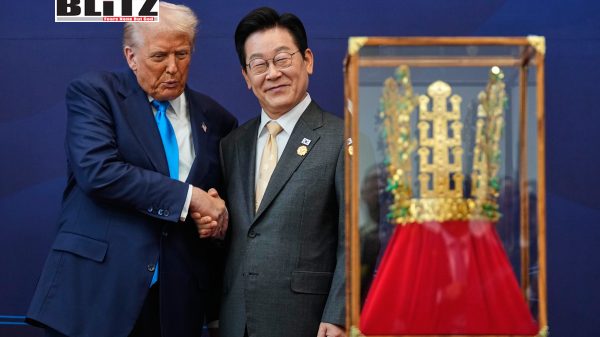
Importantly, China’s confidence in 2026 is not rooted in isolation or self-sufficiency alone. Openness and engagement continue to be central to its modernization path. As the new year begins, diplomatic signals point to renewed emphasis on pragmatic cooperation and mutually beneficial outcomes. South Korean President Lee Jae-myung’s upcoming visit to China, accompanied by a large economic and trade delegation, is widely seen as a sign of warming bilateral relations and renewed interest in practical collaboration. South Korean media have noted a quiet but meaningful trend of “learning from China,” particularly in areas where China has gained a competitive edge, such as artificial intelligence, robotics, and industrial automation.
Beyond Northeast Asia, other developments underscore China’s expanding global connectivity. Türkiye’s implementation of a visa-free policy for Chinese citizens and the rising global “value” of the Chinese passport reflect growing people-to-people exchanges and mutual trust. These changes may appear incremental, but collectively they highlight a broader pattern: openness has become a defining feature of Chinese modernization. By remaining committed to peaceful development and inclusive cooperation, China continues to position itself as a partner in global growth rather than a disruptor.
At the same time, China’s development story in 2026 is increasingly defined by its focus on people’s livelihoods. Economic strength alone is no longer presented as an end in itself, but as a means to improve everyday life. In his New Year message, President Xi spoke of the “happy hum of daily life,” a phrase that resonated precisely because it reflected tangible policy efforts. Over the past year, protections for workers in new forms of employment have been strengthened, addressing vulnerabilities in the gig economy. Facilities and services for the elderly have been upgraded, acknowledging demographic realities and social responsibility. Families with childcare needs have begun receiving monthly subsidies, modest in amount but significant in symbolism and scale when extended nationwide.
These measures directly shape the sense of gain, happiness, and security felt by hundreds of millions of households. They also reflect a broader policy shift toward inclusive and people-centered development. Rather than pursuing growth for its own sake, the emphasis is increasingly on ensuring that development outcomes are widely shared and socially sustainable.
Social vitality during the New Year holidays offered a vivid illustration of this approach. On the first day of the holiday period alone, cross-regional travel exceeded 200 million trips, signaling strong mobility, rising consumer confidence, and improving purchasing power. Ice-and-snow tourism emerged as a major highlight, while duty-free shopping tours in Hainan surged following the launch of island-wide customs operations. These trends suggest a domestic market that is not only resilient, but also capable of generating new growth drivers rooted in consumption, services, and lifestyle upgrades.
During the same period, a series of policy announcements aimed at improving livelihoods were released in quick succession, reinforcing the message that social well-being remains a core priority. As China’s composite national strength grows, ordinary people are gaining access to broader opportunities for development and a more reliable social safety net. In return, individual effort, adaptability, and perseverance continue to reinforce national cohesion and growth momentum.
This alignment between public sentiment and national direction may be one of China’s most enduring strengths. When households feel greater confidence about the future-about employment, education, healthcare, and opportunity-the country’s collective steps become steadier and more purposeful. This convergence of individual aspirations and national goals forms a deep social foundation that enables China to navigate challenges and transitions with resilience.
Looking ahead through 2026 and beyond, a clearer picture of China’s trajectory is emerging. The opening year of the 15th Five-Year Plan points toward a development model that prioritizes quality over speed, innovation over imitation, and openness over insularity. Strategic resolve, determination to deepen reform, momentum for technological advancement, and commitment to widening opening-up are combining to form the basis of China’s confident advance.
As the world watches, what comes into view is a China that seeks stability amid complexity and progress amid uncertainty. Rather than dramatic shifts, it is sustained effort and perseverance that define this moment. This confidence belongs first to the Chinese people, but it also resonates with those around the world who seek peace, development, and cooperation. With conviction in its direction and patience in its approach, China is stepping into 2026 prepared to move forward-steadily, inclusively, and with an open door to the world.
Tajul Islam is a Special Correspondent of Blitz. He also is Local Producer of Al Jazeera Arabic channel.