Why the US–Europe relationship still matters in an unstable world

- Update Time : Sunday, January 4, 2026
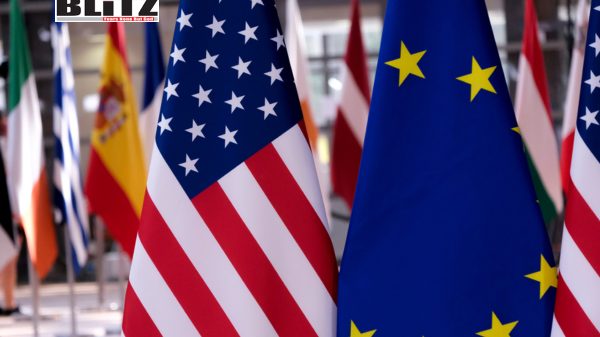
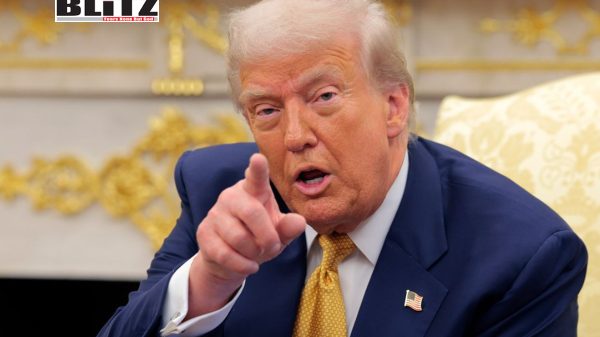
There is no shortage of geopolitical challenges confronting US President Donald Trump as he navigates the second year of his second term in 2026. From advancing a controversial peace proposal for Gaza to seeking an end to Russia’s war in Ukraine and managing an increasingly volatile policy toward Venezuela, Trump’s foreign policy agenda is crowded and politically demanding. Yet amid these pressing global crises, one relationship that should be predictable, stable, and foundational has instead become unusually strained: the transatlantic partnership between the United States and Europe.
This deterioration is striking precisely because it was not inevitable. At the start of Trump’s second term, relations between Washington and European capitals were relatively calm, even cautiously optimistic. European leaders had spent years studying Trump’s governing style during his first presidency and entered the new term better prepared to engage him. Diplomatic visits were carefully choreographed, public confrontations were avoided, and personal rapport was emphasized over institutional rigidity. Contrary to widespread fears, Trump did not abruptly abandon Ukraine, nor did he dismantle NATO. Instead, he pursued what he described as pragmatic solutions-continuing military support for Kyiv while simultaneously pushing for negotiations aimed at ending the conflict.
By late 2025, however, that fragile equilibrium began to unravel. Tensions escalated as disagreements multiplied, culminating in Washington’s decision to impose travel bans on five European officials over alleged efforts to restrict or penalize American social media companies operating in Europe. The move was widely interpreted across European capitals as punitive, unilateral, and emblematic of a broader disregard for partnership. What had once been manageable differences hardened into structural friction, raising questions about the future durability of the transatlantic alliance.
Despite these tensions, the reality remains that Europe and the United States are deeply interdependent-and will remain so for the foreseeable future. Their ties are not merely diplomatic or military; they are historical, economic, and civilizational. America’s political traditions, legal concepts, and democratic ideals are deeply rooted in European history. The US, in turn, paid an enormous price in blood and treasure during two world wars to preserve Europe’s freedom and stability. To treat Europe as a peripheral or expendable partner after such shared sacrifice would represent a profound strategic miscalculation.
The economic dimension of the relationship alone should command sustained attention. Together, North America and Europe account for nearly half of global GDP. They are each other’s largest trading and investment partners, forming the backbone of the world’s most integrated economic relationship. Forty-six out of fifty US states trade more with Europe than with China, underscoring how deeply embedded European markets are in the American economy. European investment in the US exceeds $4 trillion, supporting millions of American jobs, while US companies play an equally significant role in European economies. No realistic alternative partnership could replace this scale of economic interdependence.
Yet economic logic has not prevented political tensions from intensifying. Three major areas of contention now threaten to undermine the transatlantic relationship unless addressed with urgency and realism.
The first, and most consequential, is Ukraine. While many European governments welcomed Trump’s decision not to abandon Kyiv, frustration has grown over Washington’s diplomatic posture. There is a widening perception across Europe that the United States is applying disproportionate pressure on Ukraine-the victim of aggression-while showing undue accommodation toward Russia. This perception, whether fully justified or not, has become politically corrosive.
European divisions exacerbate the problem. Some Western European states, still heavily dependent on Russian energy and wary of prolonged economic disruption, favor a rapid settlement even if it requires Ukrainian territorial concessions. Others, particularly in Central and Eastern Europe, view Russia as an existential threat and see Ukraine as the frontline defense of their own sovereignty. For these countries, any settlement that rewards Russian aggression would not only betray Ukraine but also destabilize Europe’s security architecture for decades.
Washington’s approach to diplomacy in this context carries enormous symbolic weight. If the US appears indifferent to Ukraine’s sovereignty or dismissive of Eastern European security concerns, it risks fracturing NATO cohesion and undermining trust among its most vulnerable allies. Resolving the Ukraine issue in a way that balances realism with principle is therefore not only a moral imperative but a strategic necessity for both sides of the Atlantic.
The second major fault line lies in Trump’s preference for bilateral engagement over multilateral frameworks. Trump has long viewed institutions such as the European Union and, at times, NATO as bureaucratic obstacles rather than strategic assets. His foreign policy instincts are driven by personal relationships, transactional calculations, and perceptions of strength and authority. Individual European leaders who have cultivated direct ties with Trump have often been rewarded with access and influence.
This dynamic, however, deepens Europe’s internal divisions. While some national governments embrace bilateralism, EU institutions have frequently positioned themselves as vocal critics of Trump’s policies. From the White House’s perspective, EU officials are often seen as unelected bureaucrats advancing regulatory agendas-particularly in digital governance and trade-that conflict with US economic interests. The resulting clash is not merely about policy but about competing visions of legitimacy, sovereignty, and power.
The third area of concern is psychological and symbolic but no less damaging: the growing belief in Europe that the Trump administration no longer values Europe as a strategic partner. This sentiment was amplified by the national security strategy released late last year, which many European observers interpreted as overtly dismissive. The document portrayed Europe less as an ally and more as a problem to be managed, while Russia was barely acknowledged as a significant threat.
This marked a sharp departure from earlier US strategic thinking and sent shockwaves through European political circles. For decades, Europe had anchored its security assumptions on unwavering US commitment. Any suggestion that Washington now views Europe as strategically irrelevant or ideologically adversarial risks accelerating Europe’s search for autonomy-potentially weakening NATO and diminishing US influence in the process.
As Trump enters the second year of his second term, the challenge is not to eliminate differences with Europe-an unrealistic goal-but to manage them without allowing the relationship to decay. Europe is not just another region competing for Washington’s attention; it is central to America’s economic prosperity, military reach, and global legitimacy.
At the same time, Europe must recognize political realities in Washington. With US midterm elections looming later in 2026, Trump’s focus will inevitably shift toward domestic priorities. European leaders cannot expect sustained high-level engagement at a time when internal political battles will dominate the White House agenda.
For the sake of both continents, pragmatism must prevail over grievance. The transatlantic relationship has survived wars, economic crises, and ideological disputes because both sides ultimately recognized their mutual dependence. Allowing short-term political frustrations to erode one of the most consequential partnerships in modern history would be a strategic error neither side can afford.
Europe is too important to America to be sidelined-and America remains too important to Europe to be dismissed. The task ahead is not romantic nostalgia for the past, but a sober recalibration that preserves what still matters most: stability, security, and shared interests in an increasingly fragmented world.
Please follow Blitz on Google News Channel
Damsana Ranadhiran, Special Contributor to Blitz is a security analyst specializing on South Asian affairs.