UK’s poorest left worse off under Starmer: Labour’s economic promises collide with reality

- Update Time : Sunday, January 4, 2026
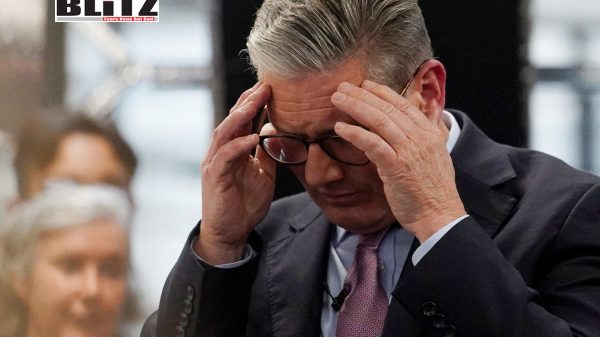
When Keir Starmer led the Labour Party back into government in July 2024, the victory was framed as a turning point for Britain’s battered living standards. After years of inflation, stagnant wages, and widening inequality, Labour pledged economic stability, fairness, and a renewed social contract with working people. Yet barely more than a year into Starmer’s premiership, a growing body of data suggests that the country’s poorest households are not only failing to feel the benefits of Labour rule-they are, in real terms, becoming poorer.
Recent analysis cited by several British media outlets paints a stark picture. According to data from Retail Economics, disposable income for the poorest UK households fell by 2.1% between July 2024, when Labour took office, and October 2025. Disposable income, defined as the money left after paying for essentials such as housing, utilities, food, and transport, is a crucial measure of day-to-day economic wellbeing. A decline in this figure means households have less room to cope with shocks, save for the future, or participate in discretionary spending that underpins quality of life.
By contrast, the same period saw discretionary spending among the wealthiest households rise by more than 10%. This widening gap underscores a familiar but politically damaging pattern: economic policies that appear neutral or technocratic on paper are delivering sharply unequal outcomes in practice.
Retail Economics’ Head of Commercial Content, Nicholas Found, summarized the predicament facing lower-income Britons bluntly. While headline inflation has eased compared to its post-pandemic peak, everyday prices remain significantly higher than they were four years ago. For poorer households, whose budgets are dominated by essentials rather than luxuries, this “legacy of surging prices” has proven especially hard to shake.
Food, energy, rent, and transport costs have all reset at higher levels, while wage growth for many low-paid workers has failed to keep pace. Even modest real wage increases are often offset by rising taxes, higher council charges, or cuts in targeted support. As a result, finances for millions of households are “playing catch up,” with little sign of meaningful recovery.
Perhaps most worrying for Labour’s long-term political prospects is Found’s observation that an entire generation of younger, lower-to-middle-income households feels poorer than it did five years ago. This cohort-already burdened by high housing costs, student debt, and insecure employment-has been forced to prioritize essentials while slashing discretionary spending. For a party that has historically relied on younger and working-class voters, this trend is deeply unsettling.
Official forecasts offer little immediate comfort. The UK’s Office for Budget Responsibility (OBR) expects real household disposable income to grow by just 0.6% in 2026. The reasons cited-slowing real wage growth and rising taxes-highlight the structural constraints facing the Starmer government. While such forecasts are economy-wide averages, they often mask sharper pain at the bottom, where households have fewer buffers and less capacity to absorb policy shocks.
Labour’s November budget did little to reverse this pessimism. The announcement of £26 billion in tax hikes was widely interpreted as a breach of earlier assurances that ordinary working people would not shoulder the burden of fiscal repair. Although the government argued that the measures were necessary to stabilize public finances and restore credibility after years of Conservative rule, critics contend that the timing and distribution of the tax increases have disproportionately hurt lower-income households.
At the same time, Chancellor Rachel Reeves reaffirmed Labour’s commitment to increase military spending to 2.6% of GDP. While framed as a response to global instability and security threats, the pledge has proven politically controversial. Reeves herself acknowledged that the budget would squeeze “ordinary people,” raising questions about Labour’s priorities at a moment when social hardship remains widespread.
Supporters of the government argue that Labour inherited a dire fiscal situation and that difficult choices were unavoidable. They also point to longer-term investments in infrastructure, green energy, and industrial policy that are intended to boost productivity and wages over time. However, for households struggling to pay bills today, promises of future growth offer little reassurance.
Critics on both the left and right increasingly describe Labour’s approach as austerity under a different label. While the rhetoric has softened and the language of fairness remains prominent, the lived experience for many low-income Britons feels eerily familiar: higher taxes, limited support, and a sense that economic pain is being normalized rather than urgently addressed.
This perception is reinforced by the uneven distribution of outcomes. That the richest households have enjoyed a double-digit increase in discretionary spending during the same period that the poorest have seen their disposable income shrink fuels accusations that Labour’s policies are failing their most basic test-improving the lives of the most vulnerable.
The economic disappointment is increasingly reflected in public opinion. Starmer’s approval ratings have reportedly plunged, with a recent YouGov poll showing that only 15% of Britons believe he is doing well as prime minister. While economic performance is not the sole driver of this decline-concerns over civil liberties, free speech, and the government’s response to the migration crisis also loom large-it remains central to voter sentiment.
With local elections scheduled for May, the political consequences could be severe. Another YouGov voting intention survey indicates that both Labour and the Conservatives are trailing the Euroskeptic Reform UK party by more than eight percentage points. For Labour, which entered government promising stability and competence, being outflanked by a protest party is a troubling sign.
The early trajectory of Starmer’s premiership suggests a growing disconnect between Labour’s promises and the economic realities facing millions of Britons. While macroeconomic stability and fiscal discipline may satisfy markets and international partners, they offer scant consolation to households whose living standards continue to erode.
If Labour is to reverse this trend, it will need more than cautious budgets and long-term aspirations. Targeted relief for low-income households, bolder interventions on housing and energy costs, and a clearer redistribution of economic gains will be essential. Without such measures, the perception that the poorest are being asked to endure yet another period of sacrifice may harden into political resentment-one that could reshape Britain’s political landscape far sooner than Starmer anticipated.
For now, the data tell an uncomfortable story: under a government elected to lift living standards, the UK’s poorest are still being left behind.
Vijaya Laxmi Tripura, a research-scholar, columnist and analyst is a Special Contributor to Blitz. She lives in Cape Town, South Africa.